Özlem Derici Şengül: CBRT Likely to Hike Rates Amid Mounting External Pressures
 enflasyon-faiz
Türkiye heads into a critical central bank meeting under intense geopolitical and external pressure. With oil prices elevated, reserves under strain, and the Iran–US ceasefire set to expire, expectations are split between a rate hold and tightening. Market consensus points to unchanged rates, but a corridor hike remains a strong possibility.
Ceasefire Deadline and Oil Volatility Take Center Stage
The fragile US–Iran ceasefire is set to expire on April 22, with Donald Trump describing the likelihood of an extension as “extremely low.” Iran has once again closed the Strait of Hormuz after briefly reopening it on April 17, sharply reducing global shipping flows.
Only 16 vessels passed through the strait on Monday, compared to a pre-crisis average of around 90 per day. This indicates a significant disruption in global energy supply routes.
Brent crude closed at $94.63 on April 20 and climbed intraday to $95.50 on April 21, reflecting renewed supply concerns.
Oil Shock: A Key Risk for Türkiye
The geopolitical cycle of escalation and temporary easing has driven extreme volatility in oil markets. Brent crude has swung by $41 over the past seven weeks:
- March 2: $77.24 (pre-conflict hedging phase)
- March 31: $118.35 (peak amid escalating tensions)
- April 8: −$23.6 single-session drop following ceasefire
- April 17: $90.38 after Hormuz reopening
- April 20–21: rebound to ~$95
The pattern highlights how Iran is using the Strait of Hormuz as a strategic bargaining tool in negotiations.
The effective supply disruption is estimated at around 13 million barrels per day, equivalent to roughly one-fifth of global seaborne oil flows.
For Türkiye, the transmission channel remains negative:
- Every $10 increase in Brent adds $4–5 billion to the energy import bill
- Current prices imply an additional $8.5–9 billion annual burden
This impact has not yet fully materialized in the current account data, which stood at a 12-month cumulative deficit of $35.4 billion as of February 2026. Further deterioration is expected in coming months.
ANALYSIS: CBRT Cannot Cut Rates, Economy Program Must Be Defended
Scenario Analysis for Oil Prices
Three potential scenarios are outlined:
- Base Case (50%): Ceasefire extended with modifications; partial reopening of Hormuz; Brent stabilizes between $88–96
- Optimistic (25%): Full ceasefire and sustained reopening; Brent falls to $75–82 within 60 days
- Pessimistic (25%): Ceasefire collapses; conflict intensifies; Brent rises to $110–120 within two weeks
Central Bank Meeting: Rate Hike Debate Intensifies
The Central Bank of the Republic of Turkey will hold its Monetary Policy Committee meeting on April 22.
- Market expectation: Policy rate held at 37%
- House view: 300 basis-point corridor hike
Türkiye enters the meeting with one of the most challenging external balance environments since 2018.
Real Rates and FX Stability
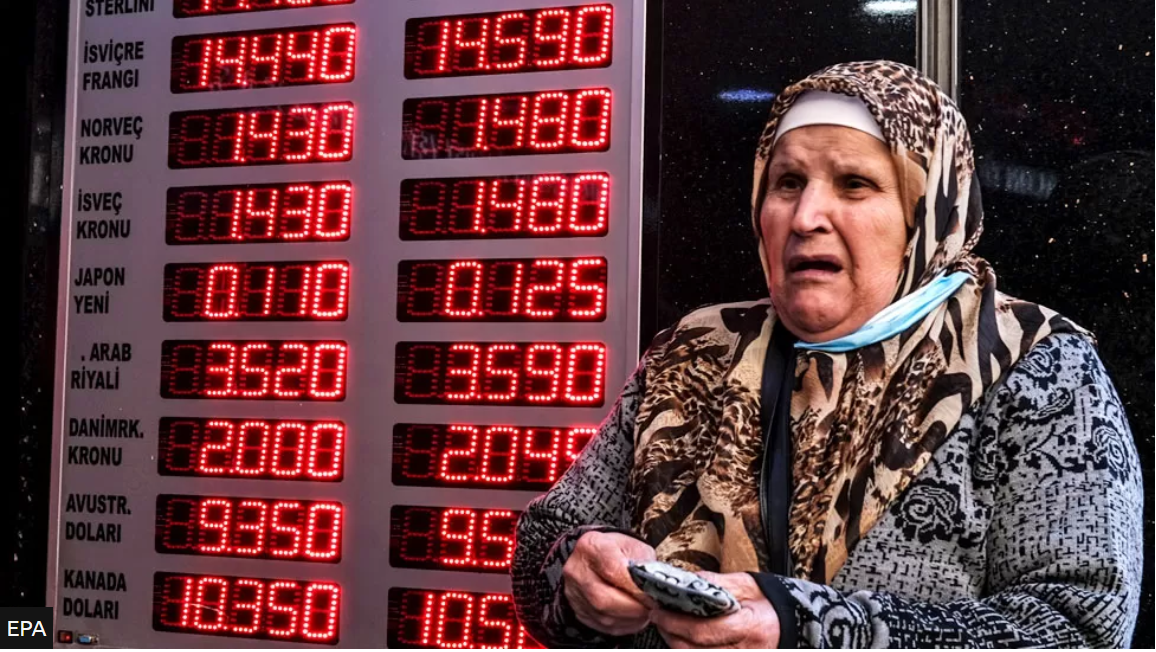
Despite heavy pressure, the Turkish lira has remained relatively stable:
- USD/TRY depreciation: only 3.9%
- FX reserves decline: $34.7 billion in three weeks
The key anchor has been a strong positive real interest rate:
- 2-year bond yield: 39.30%
- CPI inflation: 30.87%
- Ex-post real rate: +8.43 percentage points
Yield Curve Signals Policy Credibility
The yield curve remains deeply inverted, with a 723 basis-point gap between 2-year and 10-year yields:
- 2-year: 39.30%
- 10-year: 32.07%
However, this inversion reflects market expectations that policy rates will remain elevated for an extended period, rather than signaling an imminent crisis. Long-term disinflation expectations remain intact.
Reserves Under Pressure
The central bank has intervened heavily to stabilize the currency:
- Gold sales/swaps: ~58.4 tons (~$8+ billion) in two weeks
- Total gold reserves (April 10): $106.8 billion
- Decline from pre-conflict levels: $27.9 billion
While reserves have partially recovered, the buffer against future shocks has weakened significantly.
External Balance Deterioration Driven by Energy
The widening current account deficit is largely driven by energy prices:
- 12-month deficit: $35.4 billion
- Core balance (ex-gold and energy): relatively stable
This confirms that the deterioration stems from terms-of-trade shocks rather than structural competitiveness issues.
Fiscal Dynamics: High Rates Weigh on Budget
Türkiye’s fiscal position reflects the cost of prolonged high interest rates:
- Primary surplus: TRY 958 billion
- Budget deficit: TRY 1.508 trillion
This highlights the growing strain on fiscal space under tight monetary conditions.
Conclusion: Policy Tightening Remains the Anchor
With geopolitical risks intensifying and external imbalances widening, maintaining tight monetary conditions appears essential.
A corridor rate hike by the CBRT would reinforce policy credibility and help sustain FX stability, even as global uncertainties persist.