Emerging Market FX Rally Strengthens Case for Türkiye’s “Strong Lira” Policy
 TL3
TL3
A sharp rebound in emerging-market currencies following easing Iran war tensions is creating a more favorable backdrop for Türkiye’s exchange rate policy. Lower oil prices and improving risk sentiment are easing pressure on the Turkish lira, reinforcing the central bank’s commitment to maintaining currency stability.
Emerging Market Currencies Recover War Losses
A key gauge of emerging-market currencies has fully erased losses triggered by the US-Iran conflict, driven by optimism after Iran reopened the Strait of Hormuz.
The MSCI Emerging Markets Currency Index rose 0.6% on Friday, supported by a sharp drop in oil prices. Brent crude fell to around $86 per barrel, down more than 10%, as markets priced in a potential de-escalation of the conflict.
Analysts say the rally reflects growing confidence that the worst of the geopolitical shock may be over, particularly for energy-importing economies.
Oil Decline Eases Pressure on Energy Importers
The reopening of Hormuz is especially significant for countries like Türkiye, which rely heavily on imported energy.
Earlier in the conflict, oil prices had surged close to $120 per barrel, widening Türkiye’s current account deficit and increasing external financing costs. The recent decline in oil prices is now reversing some of that pressure.
Lower Risk Premium Supports Lira Stability
The improvement in global risk sentiment is expected to reduce Türkiye’s geopolitical risk premium (CDS), lowering borrowing costs for both the public and private sectors.
This shift strengthens the hand of the Central Bank of the Republic of Türkiye (CBRT), which has maintained a firm commitment to a “strong lira” policy even during the peak of market volatility.
Domestic Confidence Remains Resilient
One notable development during the crisis was the relative stability of domestic investor behavior.
Despite heightened uncertainty, there was no significant surge in demand for foreign currency among residents. This suggests that de-dollarization trends may be more deeply rooted than previously assumed, providing the central bank with greater room to manage the FX market.
Scope for Reserve Rebuilding
With tensions easing and capital inflows beginning to recover, the CBRT is now in a stronger position to rebuild foreign exchange reserves.
Under a scenario where:
- The ceasefire holds
- Energy supply routes remain open
- Market sentiment improves
the central bank could actively accumulate reserves, offsetting losses incurred during the period of heightened volatility.
Foreign Inflows Add Support
Early signs of renewed foreign interest in Turkish assets are emerging, providing an additional buffer for the lira.
Increased portfolio inflows would:
- Reduce exchange rate volatility
- Strengthen financial stability
- Support the broader disinflation process
Outlook for USD/TRY: Controlled Adjustment
Looking ahead, the USD/TRY exchange rate is expected to follow a gradual and controlled upward path, likely below the pace of inflation.
This approach aims to:
- Preserve competitiveness
- Discourage dollarization
- Maintain the attractiveness of lira-denominated assets
Tourism to Provide a Seasonal Boost
The easing of geopolitical tensions is also expected to support Türkiye’s tourism sector.
With travel concerns fading, a strong rebound in tourist arrivals during the summer months could generate substantial FX inflows, further supporting the lira and external balances.
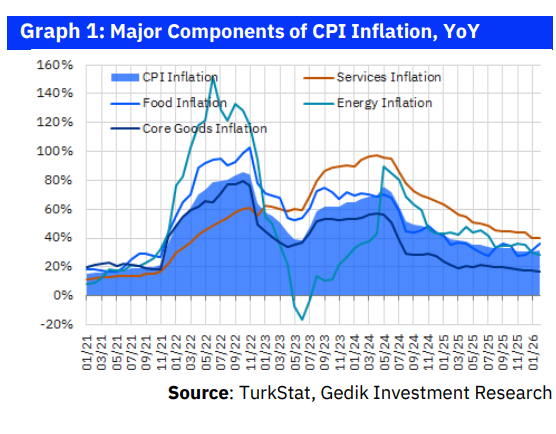
Disinflation Gains Momentum
A more stable exchange rate environment, combined with lower energy costs, is expected to:
- Anchor inflation expectations
- Enhance the effectiveness of monetary tightening
- Accelerate progress toward single-digit inflation
Conclusion: From Shock Resilience to Policy Opportunity
Türkiye appears to have weathered a major geopolitical shock with relative financial resilience.
With oil prices declining, risk premiums easing, and capital inflows returning, the current environment offers a window of opportunity to reinforce macroeconomic stability and advance the disinflation process.