Power Struggles Intensify Within Türkiye’s Ruling Bloc as MHP Turmoil Deepens
 bahceli-erdogan
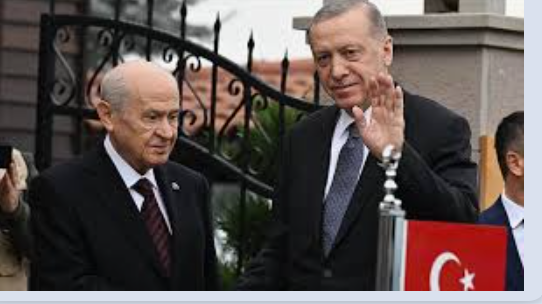
Recent headlines in pro-government media and internal shake-ups within the Nationalist Movement Party point to growing tensions inside Türkiye’s ruling alliance. Dismissals, media positioning, and factional struggles suggest a widening contest over influence, resources, and political direction ahead of potential cabinet changes.
Pro-Government Media Signals Unease
In recent days, several pro-government outlets have published unusually critical or questioning headlines, hinting at fractures within the ruling camp.
Yeni Şafak drew particular attention with its front-page coverage of the dismissal of Major General Mete Kuş, referring to him as a “guardian” and framing the move as controversial. Without explicitly naming actors, the report appeared to suggest that a faction within the state apparatus had moved against a figure seen as close to Recep Tayyip Erdoğan.
The language used—particularly the ambiguous reference to “those who removed him”—has fueled speculation that the decision reflects more than a routine administrative reshuffle.
Questions Over Decision-Making Authority
Formally, such military decisions fall under the jurisdiction of the Ministry of National Defense and the Air Force command. However, the tone of the reporting suggests a more complex process involving competing centers of influence.
Given Mete Kuş’s reported role during the July 15 coup attempt and his perceived proximity to the presidency, observers question whether the move reflects internal disagreements rather than standard institutional procedures.
Hürriyet Targets Business Interests
Another notable shift came from Hürriyet, which prominently featured Doruk Mining and named its owner, Süleyman Yıldızlar.
The report highlighted remarks by Energy Minister Alparslan Bayraktar, who stated that the company would not receive future licenses. The decision to spotlight a business group that expanded during the AKP era raised eyebrows, suggesting a recalibration of media narratives.
At the same time, Interior Minister Mustafa Çiftçi emerged as the dominant figure in the handling of the case, while other ministers appeared less visible.
Rising Profiles and Internal Frictions
Newly appointed Justice Minister Akın Gürlek and Interior Minister Mustafa Çiftçi have quickly built strong public profiles through high-profile operations and media exposure.
Both figures are widely described in political circles as being close to Bilal Erdoğan, adding another layer to the evolving balance of power within the government.
However, their actions have reportedly brought them into friction with networks associated with former Interior Minister Süleyman Soylu, and by extension, figures linked to Mehmet Ağar and segments of the MHP.
Soylu himself recently reacted sharply to questions from journalists, underscoring the sensitivity of the issue.
MHP Turmoil: Purge and Power Struggles
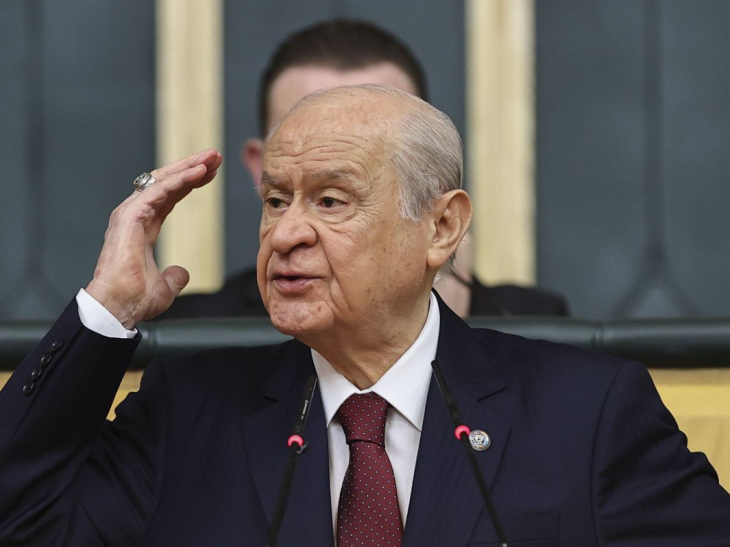
Political analyst Kemal Can highlights a significant internal shake-up within the MHP, centered around the removal of Vice Chairman İzzet Ulvi Yönter and a broader restructuring of the party’s Istanbul organization.
According to Can, the developments reflect:
- A broader purge of figures aligned with the previous leadership structure
- Growing tensions over control of political and institutional influence
- Internal struggles driven less by ideology and more by competing interests
The opaque nature of Türkiye’s current governance system, where decision-making is concentrated within a narrow elite, has amplified speculation and public curiosity.
Crime, Bureaucracy, and Political Power
The analysis also points to deeper structural issues, including the intersection of criminal networks, the judiciary, and political actors.
Since the alliance between the ruling AKP and MHP solidified after 2015, and particularly following the post-coup restructuring of the state apparatus, the MHP has expanded its influence within the security and judicial bureaucracy.
This has led to:
- Increased involvement of political actors in power and resource networks
- Heightened competition over influence within these structures
- Periodic internal conflicts reflecting struggles over control rather than policy differences
Beyond Political Drama: A Structural Issue
Kemal Can argues that these developments should not be viewed merely as political drama or factional intrigue. Instead, they reflect a broader erosion of institutional norms and the rule of law.
In this environment, internal conflicts often revolve around access to power and economic resources—what he describes as an informal or “black economy” of influence.
The MHP continues to operate both as a political party and as a key actor within the state’s security architecture. As long as systemic transparency and accountability remain limited, such internal upheavals are likely to persist.
Outlook: Growing Uncertainty Within the Ruling Alliance
The convergence of media signals, bureaucratic reshuffles, and party-level purges suggests that tensions within Türkiye’s ruling bloc are intensifying.
With ongoing discussions about cabinet changes and shifting power dynamics, the coming months may bring further realignments that could reshape both governance and political alliances.
Sources: BirGün, YeniÇag, PA Turkey newsdesk