Turkish Economic Program: ITO President Calls for Updates
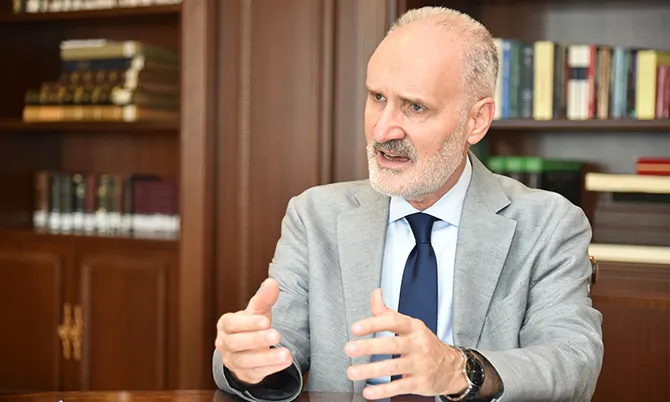 Şekib Avdagiç
Şekib Avdagiç, President of the Istanbul Chamber of Commerce (ITO), has voiced the business community’s perspective on the current trajectory of the Turkish economy. Speaking to journalists, Avdagiç commended the administration for successfully stabilizing foreign exchange reserves and securing external funding over the past three years. However, he emphasized that the emergence of regional warfare in 2026 has introduced new variables that necessitate a “fine-tuning” of the existing economic roadmap to ensure long-term sustainability.
A Demand for Dynamic Policy Updates
While acknowledging that the business world has “paid a significant price” to support the current economic program, Avdagiç suggested that the focus must now shift beyond reserves and financing alone. He argued that the program should remain dynamic, adapting to the pressures of war and global shifts.
Specifically, Avdagiç highlighted the growing gap between the exchange rate and inflation. He noted that while cumulative inflation reached 10% in the first quarter of 2026, the currency adjusted by only 3%. To protect the $410 billion export target for 2026, he insisted that the export and import regimes must be re-evaluated to prevent the export-to-import ratio from falling below the critical 75% threshold.
Broadening Incentives and Modernizing Trade
A key recommendation from the ITO President involves the democratization of industrial incentives. While praising high-level support packages like HIT-30, he proposed that at least 30% of these incentives should be directed toward Medium-Sized Enterprises (OBIs). By expanding the base of support, Avdagiç believes the industrial transformation of Türkiye can be accelerated more effectively than by focusing solely on the largest corporations.
Furthermore, he addressed international trade relations, stating that updating the Customs Union with the European Union is currently more vital for the business community than visa liberalization. He pointed out a significant imbalance: Türkiye must adhere to EU regulations regarding imports from third-party countries like India, yet it does not enjoy the same reciprocal export advantages, a disparity that requires urgent diplomatic intervention.
Energy Resilience and Defense Growth
Despite global instability, Avdagiç noted that Türkiye has avoided the “catastrophic energy scenarios” seen in Europe. This resilience is attributed to heavy investments in renewable energy, with solar and wind occasionally accounting for over 50% of daily production. Additionally, the shift in modern warfare concepts has vindicated Türkiye’s aggressive investment in its defense industry, which is now accelerating production to meet new global demands. Regarding labor costs, Avdagiç maintained that the current policy of adjusting the minimum wage once per year remains the most reasonable approach for maintaining economic balance.
Source: bloomberght