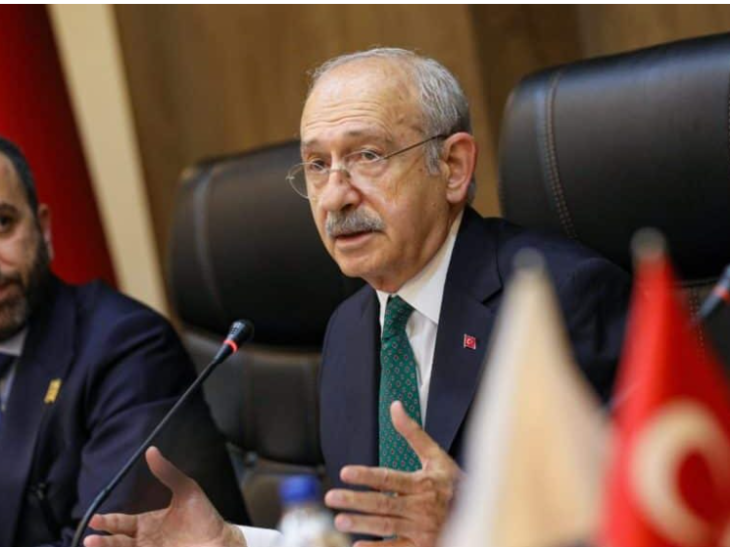
AKP Weighs Election Timing as Economic Pressures Mount
 secim3
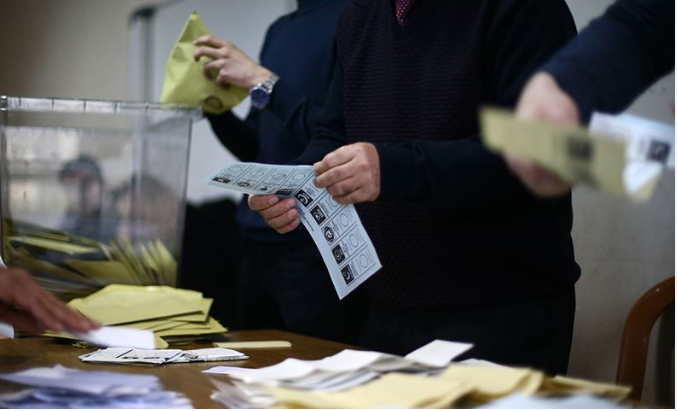
Political discussions in Ankara suggest Türkiye’s ruling bloc may revise its election timetable, potentially delaying a previously floated early vote from November 2027 to spring 2028. The move is reportedly driven by economic concerns and geopolitical risks affecting energy prices. Meanwhile, opposition figures continue to push for early elections, and political strategists are offering stark predictions about the country’s electoral future.
Early Election Calculations Under Review
Political circles in Ankara indicate that the government has been exploring options to adjust the election schedule, partly to enable President Recep Tayyip Erdoğan to seek another term.
Under the current constitutional timetable, Türkiye’s next general elections are set for May 14, 2028. However, an earlier vote would be required for Erdoğan to run again, prompting discussions within the ruling alliance about bringing elections forward.
Recent reports had pointed to November 2027 as a संभावable date. That scenario now appears to be under reconsideration.
CHP Leader Özel Signals Early Election Timeline, Launches Nationwide Campaign
Economic and Geopolitical Factors Drive Delay
According to pro-government media reports, the November 2027 plan has been shelved due to economic challenges.
Key concerns include:
- Rising geopolitical tensions in the Middle East
- Risks linked to Iran-related conflict dynamics
- Strategic uncertainty surrounding the Strait of Hormuz
- Increasing global energy prices
These developments are seen as placing additional strain on Türkiye’s economy, complicating the outlook ahead of a potential election.
As a result, policymakers are said to be seeking more time for economic stabilization before heading to the polls.
New Scenario Points to Spring 2028
Insider accounts suggest that the ruling Justice and Development Party (AKP) is now considering postponing any early election by several months.
Under this revised scenario:
- Early elections are still under consideration
- The timeline could shift from late 2027 to spring 2028
The adjustment would allow economic policymakers additional time to address inflation, energy costs, and broader macroeconomic pressures.
Observers note that there is growing recognition within government circles that entering elections under current economic conditions could carry significant risks.
Mansur Yavaş Presidential Candidacy Claims Officially Refuted
Opposition Maintains Pressure for Early Vote
Opposition parties have continued to call for early elections, arguing that current economic conditions warrant a renewed mandate.
President Erdoğan has so far rejected these calls. However, the constitutional pathway for his candidacy—potentially requiring parliamentary approval for early elections—keeps the issue at the center of political debate.
The extent to which opposition parties might support or resist such a move remains uncertain.
Political Strategist Predicts “Tsunami” Shift
Separately, Necati Özkan, campaign director for Istanbul Mayor and presidential candidate Ekrem İmamoğlu, made striking comments about Türkiye’s political trajectory.
Speaking in a recent interview, Özkan dismissed allegations against him as unfounded and argued that while the timing of elections may be unclear, the direction of voter sentiment is becoming increasingly evident.
He referenced his earlier characterization of the March 2024 local elections as a “tsunami,” suggesting he had anticipated a sweeping shift in political dynamics.
Forecast of a Larger Political Shift
Özkan described the 2024 local elections as a political “earthquake” with a magnitude of around 6 to 6.5. He argued that the next national elections could produce an even stronger impact.
According to his assessment:
- The upcoming vote could represent a deeper political transformation
- Voter sentiment may shift more decisively than in previous elections
- The opposition could gain sustained political momentum
Projection of Long-Term Power Shift
In one of his most notable claims, Özkan suggested that Türkiye could be heading toward a prolonged period of opposition governance.
Drawing on his analysis of past elections, he argued that the next electoral cycle could usher in a multi-decade shift in political power, potentially lasting up to 20 years.
He framed this as part of a broader transformation in Türkiye’s political landscape.
Call for Strategic Reassessment
Özkan also advised the current government to reconsider its recent political strategies.
He suggested that reversing policies implemented since March could mitigate the scale of what he described as an incoming political wave. Without such changes, he warned, the impact of voter backlash could intensify.
He pointed to political shifts in countries such as Northern Cyprus and Hungary as examples of broader trends in electoral change.
Related articles

David Gardner: Erdogan’s tantrum is a sign of weakness
Turkey’s Opposition Parties Hope Cooperating Will Deal Blow to Erdogan

CHP braces for court showdown as leadership dispute intensifies