OPINION: European Security: With Türkiye or Against Logic
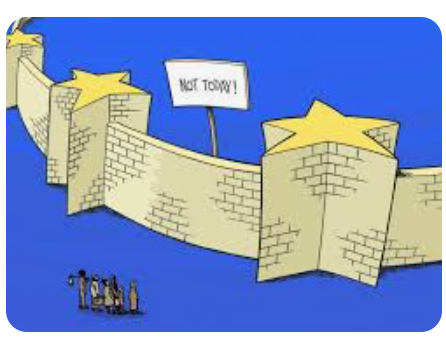 eu fortress
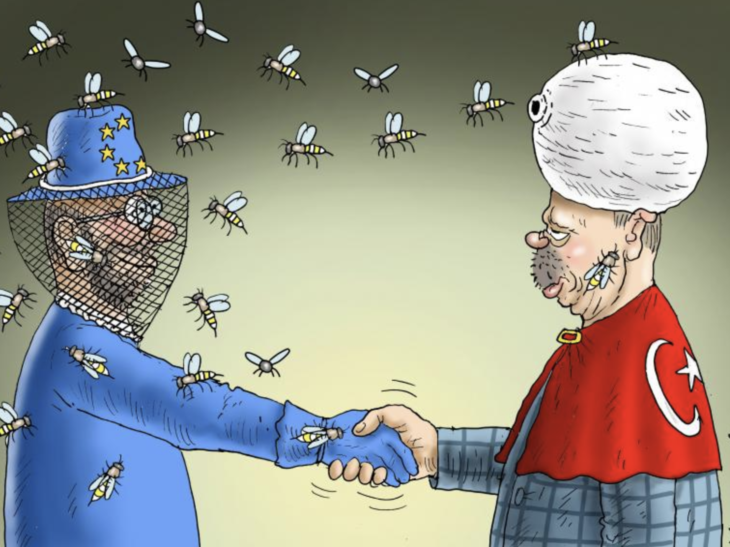
Europe’s emerging defense architecture risks a fundamental contradiction: attempting to build strategic autonomy while sidelining one of NATO’s most capable military powers. As Brussels advances new security frameworks, Türkiye’s exclusion is increasingly seen not just as political friction, but as a structural weakness that could undermine Europe’s long-term defense ambitions.
A Strategic Ambiguity at the Core of EU Thinking
A recent remark by Ursula von der Leyen—later softened by Brussels—highlighted a deeper issue in how Europe views Türkiye: neither adversary nor fully trusted partner.
Türkiye occupies a unique position:
- A NATO ally
- An EU candidate country
- A major trade partner
- A key actor in Black Sea and Middle East security
Yet, its placement alongside geopolitical rivals in political discourse reflects what analysts increasingly describe as a “category error”—one that risks shaping flawed strategic outcomes.
A Defense Architecture Built on Exclusion
The European Union is rapidly building a new defense framework, including initiatives such as:
- ReArm Europe
- SAFE (Security Action for Europe)
- Permanent Structured Cooperation (PESCO)
However, these mechanisms prioritize membership over capability, effectively excluding non-EU actors like Türkiye regardless of military contribution.
This creates a paradox:
- Europe seeks stronger defense capacity
- Yet sidelines one of the continent’s most capable armies
Three Structural Gaps
1. Perception Gap: Identity Over Capability
EU defense initiatives are built on political belonging rather than operational strength.
Türkiye, by contrast:
- Commands NATO’s second-largest army
- Possesses a rapidly expanding defense industry
- Produces drones, naval platforms and missile systems at scale
Excluding such capacity weakens Europe’s collective defense while preserving institutional cohesion on paper.
2. Institutional Gap: Veto Politics
EU mechanisms rely on unanimity, giving individual member states outsized influence.
Countries such as Greece and Cyprus have effectively blocked Turkish participation in key programs, including military mobility initiatives.
This has transformed bilateral disputes into structural barriers, freezing Türkiye out of:
- Defense cooperation frameworks
- Strategic planning processes
3. Policy Gap: Diverging Threat Perceptions
Europe’s defense posture is largely oriented toward Russia.
Türkiye’s priorities differ:
- Instability in Syria
- Tensions involving Iran
- Security dynamics in the Eastern Mediterranean
- Gaza and broader Middle East conflicts
Ankara’s engagement with Moscow is viewed in Europe as ambiguity, while Türkiye frames it as diplomatic necessity.
These differences reflect diverging geographies and strategic realities, not temporary disagreements.
Turkey’s Fidan Says EU Lacks Political Will to Admit Ankara Even If Conditions Are Met
A Fragmented Europe: Three Strategic Camps
EU member states are far from unified in their approach to Türkiye.
1. Pragmatic Integrationists
Countries such as Germany, Italy and Spain prioritize operational cooperation.
Examples include:
- Defense industry partnerships
- Joint aerospace initiatives
- Calls to include Türkiye in EU defense instruments
These states view Turkish capacity as essential.
2. Eastern Flank Realists
Poland, the Baltic states and others focus on deterrence against Russia.
For them:
- Turkish defense capabilities enhance NATO’s eastern flank
- Exclusion of Türkiye weakens deterrence
Some are already seeking Turkish defense equipment for cost-efficiency and battlefield performance.
3. Strategic Blockers
Greece, Cyprus and—more subtly—France resist deeper integration.
Motivations include:
- Regional disputes
- Strategic competition
- A preference for EU-centric defense autonomy
This group maintains influence through unanimity rules, despite representing a narrower strategic logic.
A Structural Contradiction
Europe’s defense project faces a growing tension:
- Operational needs increasingly point toward cooperation with Türkiye
- Institutional structures continue to exclude it
This contradiction is unlikely to remain sustainable.
Türkiye’s Strategic Response
Rather than focusing on formal inclusion, Ankara appears to be pursuing a dual-track strategy:
1. Functional Integration
Türkiye is expanding defense cooperation with individual European states:
- Joint projects with Italy and Spain
- Participation in NATO-linked initiatives
- Defense industry partnerships across Europe
As Turkish firms integrate into European supply chains, the cost of exclusion rises for Europe itself.
2. Selective Europeanization
Türkiye is aligning with European standards in:
- Defense procurement
- Military interoperability
- Industrial production
This approach embeds Türkiye within Europe’s defense ecosystem—regardless of formal EU structures.
An Inevitable Reckoning?
Europe’s strategic autonomy project may ultimately face a critical test:
Can it sustain a defense architecture that excludes a key military actor on the continent?
If operational demands continue to grow—particularly amid geopolitical tensions—the gap between political design and strategic necessity is likely to widen.
Conclusion: A Question of Strategy, Not Membership
The debate over Türkiye’s role in European security is shifting.
It is no longer solely about EU membership, but about:
- Military capability
- Strategic geography
- Operational necessity
As Europe confronts rising geopolitical risks, the question becomes increasingly clear:
Can European security be built effectively without Türkiye—or does excluding it ultimately undermine the project itself?
By Prof Murat Yesiltas, Daily SABAH