MHP Faces Internal Turbulence as Alliance Tensions Resurface in Türkiye
 mhp
mhp
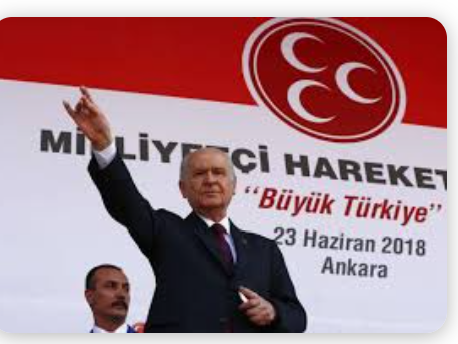
Recent developments within the Nationalist Movement Party (MHP) point to growing internal strains, even as the party continues to play a critical role in Türkiye’s ruling alliance. Leadership decisions, organizational shake-ups, and resurfacing political tensions are fueling debate over both party cohesion and the durability of the Cumhur Alliance with the AKP.
Internal Fractures Challenge MHP Discipline
Political commentator Ahmet Taşgetiren highlights mounting internal tensions within the Nationalist Movement Party (MHP), a party traditionally known for strict hierarchy and loyalty to its leader, Devlet Bahçeli.
The party, long positioned as a disciplined “leader-centric” structure, has recently shown signs of internal discord. A controversy erupted when senior figure İzzet Ulvi Yönter publicly accused an unnamed figure within the party of acting as an “agent,” triggering internal backlash.
Yönter resigned shortly after, officially citing academic reasons. However, subsequent developments suggest a deeper power struggle, reportedly forcing Bahçeli to choose sides within the party’s upper ranks.
Organizational Purge Signals Deeper Power Struggle
Following Yönter’s resignation, a sweeping restructuring took place:
- Multiple provincial organizations were dissolved
- Party leadership changes spread across at least 11 provinces
- Local branches that had voiced support for Yönter were removed
These moves point to a broader internal “clique conflict,” raising questions about decision-making within the party’s central leadership structure.
Given MHP’s influence in state institutions and bureaucracy, analysts warn that internal instability could have wider political implications.
Shadow of the Sinan Ateş Case
The internal debate has also revived attention on the 2022 killing of Sinan Ateş, a former head of the Grey Wolves.
His widow, Ayşe Ateş, has drawn parallels between past and current internal tensions, suggesting that dissent within the movement has historically been met with severe consequences.
The case remains politically sensitive, particularly due to allegations of links between the perpetrators and elements within state structures.
Strains Within the Cumhur Alliance
At the same time, tensions between the ruling Justice and Development Party (AKP) and MHP are becoming more visible.
Behind closed doors, both sides are increasingly questioning the necessity of the alliance:
- AKP view: The party can maintain power independently if needed
- MHP view: The alliance’s survival depends on MHP’s support
This divergence reflects a relationship shaped less by ideological alignment and more by political necessity.
ANALYSIS: Erdogan’s Gambit to Neutralize the CHP, and CHP’s Counter Plan
A Fragile Balance
Observers describe the current state of the alliance as a “forced equilibrium,” where:
- AKP relies on MHP for parliamentary support
- MHP depends on the alliance to sustain political relevance
Despite mutual dependence, growing distrust and internal instability—particularly within MHP—raise questions about the long-term durability of this partnership.
As Türkiye navigates both domestic political challenges and regional tensions, the stability of its ruling coalition may increasingly hinge on whether MHP can restore internal cohesion.
By Ahmet Tasgetiren, Daily KARAR
PA Turkey intends to inform Turkey watchers with diverse views and opinions. Articles in our website may not necessarily represent the view of our editorial board or count as endorsement.
Follow our English language YouTube videos @ REAL TURKEY: https://www.youtube.com/channel/UCKpFJB4GFiNkhmpVZQ_d9Rg
And content at Twitter: @AtillaEng
Facebook: Real Turkey Channel: https://www.facebook.com/realturkeychannel/