Can Defence Cooperation Unlock a New Phase in Türkiye–EU Relations?
 tr ab2
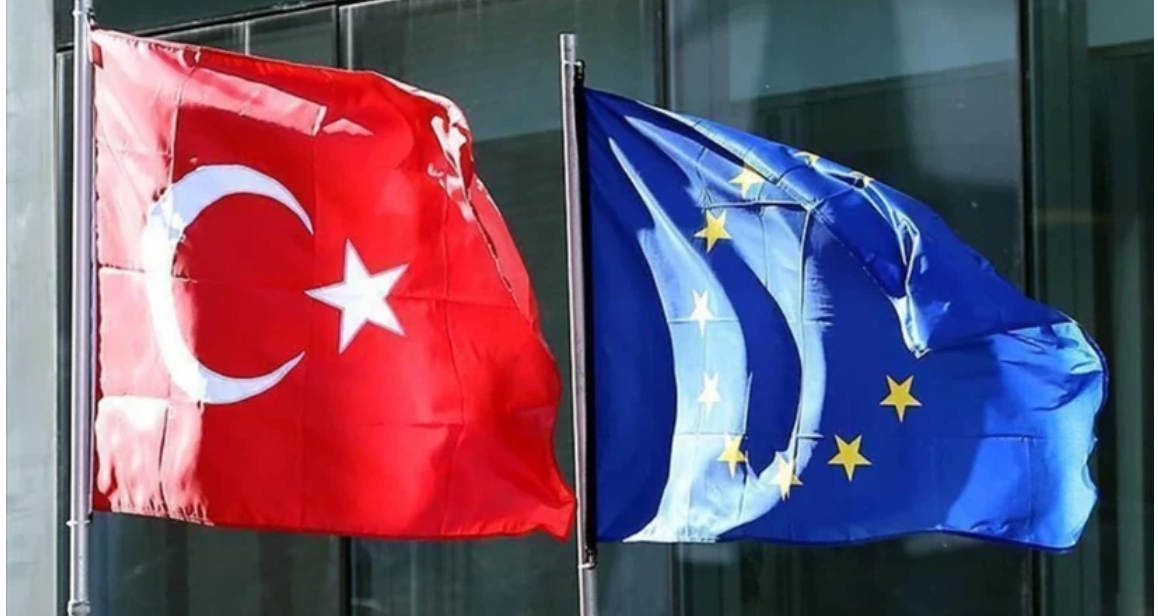
As Europe accelerates efforts to strengthen its defense capabilities amid rising geopolitical risks, Türkiye is emerging as a critical but politically constrained partner. While defense cooperation offers a pathway to deeper strategic alignment, structural tensions and stalled EU accession talks continue to limit progress.
The debate over Europe’s future security architecture is no longer theoretical. Russia’s war in Ukraine, instability in the Middle East, and uncertainty surrounding transatlantic security guarantees are forcing the European Union to rethink its defense posture.
In response, EU member states have ramped up military spending and launched initiatives such as ReArm Europe and Readiness 2030. These efforts have also increased engagement with non-EU NATO allies—including Türkiye, the United Kingdom, and Norway—highlighting Türkiye’s growing geopolitical relevance.
Iranian Missiles and Türkiye’s Strategic Pivot Reshape Eastern Mediterranean Balance
Türkiye’s Strategic Value Rises
Türkiye’s importance stems from a combination of military and geographic factors. As the holder of NATO’s second-largest army and a key bridge between Europe, the Middle East, and the Black Sea region, Ankara is uniquely positioned to contribute to Europe’s evolving defense architecture.
EU leaders have increasingly referred to Türkiye as a “strategic partner,” reflecting a shift in tone driven by security imperatives.
However, this recognition has not translated into meaningful institutional integration.
Structural Contradictions Persist
Despite closer rhetoric, Türkiye remains formally an EU candidate country—not merely a partner. Yet accession negotiations are effectively frozen due to longstanding concerns over democratic backsliding, rule of law, and fundamental freedoms.
This creates a core dilemma for the EU: how to deepen cooperation with Türkiye in critical areas such as defense while political divergence persists and no clear long-term framework defines the relationship.
Ukraine War Threatens Türkiye’s Energy Lifeline as Another Tanker Hit in Black Sea
Limits of Transactional Cooperation
Since the 2015 migration crisis triggered by the Syrian war, Türkiye–EU relations have largely operated on a transactional basis.
While this approach has helped manage immediate crises, it has:
- Limited strategic depth
- Undermined trust and predictability
- Prevented long-term alignment
In an era of intensifying geopolitical competition, this model is increasingly seen as insufficient.
Defence: The Most Sensitive Domain
Defense cooperation stands out as both the most promising and the most complex area of engagement.
Unlike other policy domains, defense requires:
- Long-term planning
- High levels of trust
- Political alignment
Türkiye brings significant assets to the table, including a rapidly expanding defense industry and operational experience. However, political constraints continue to block deeper integration.
Türkiye Still Excluded from SAFE
Ankara has expressed interest in participating in the EU’s Security Action for Europe (SAFE) initiative, a key financial instrument designed to strengthen joint defense capabilities and integrate industrial bases.
Yet Türkiye remains excluded from the program.
In contrast, Canada—another non-EU NATO ally—has already joined, underscoring the political barriers that continue to shape EU–Türkiye cooperation.
Europe’s Security Reality Is Changing
The broader context is shifting rapidly. The war in Ukraine, instability in the Middle East, and doubts about US security commitments are pushing Europe toward greater strategic autonomy.
In this environment, Türkiye’s:
- Military capacity
- Defense industrial base
- Geostrategic position
make it difficult for the EU to ignore Ankara as a potential partner.
Can Defence Cooperation Create a Spillover Effect?
The central question is whether defense cooperation could trigger a broader transformation in Türkiye–EU relations.
Some analysts draw parallels to the European Coal and Steel Community of the 1950s, which laid the foundation for European integration. In this view, defense cooperation could generate a similar “spillover effect,” fostering deeper interdependence and strategic alignment.
However, such an outcome would depend on key conditions:
- A renewed democratization process in Türkiye
- A clearer long-term vision from the EU
- Greater political trust on both sides
Political Will Remains Decisive
Defense cooperation alone is unlikely to resolve the structural tensions in the relationship. But it may offer more potential than other areas to reshape dynamics—if supported by broader political change.
Notably, some analysts argue that the EU should also factor in the Turkish opposition’s continued commitment to democratization and EU accession, particularly given the possibility of political transition in the coming years.
Conclusion: A Strategic Opportunity—If Seized
As Europe redefines its role in an increasingly uncertain global order, relations with Türkiye are at a crossroads.
A more forward-looking partnership—anchored in defense cooperation—could serve as a strategic investment in Europe’s long-term security.
But without addressing underlying political issues, even the most promising initiatives risk falling short.
The future of Türkiye–EU relations will ultimately depend not on structural necessity alone, but on political choices made in Ankara and Brussels.
By Demir Murat Seyrek, European Policy Center. This is a brief excerpt, pls click the link to read the full article