Economist Warns of Severe Fallout from Potential Trustee Appointment to CHP
 erdogan
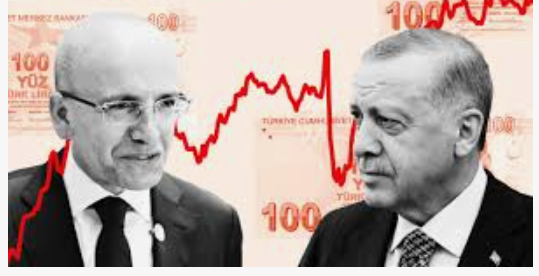
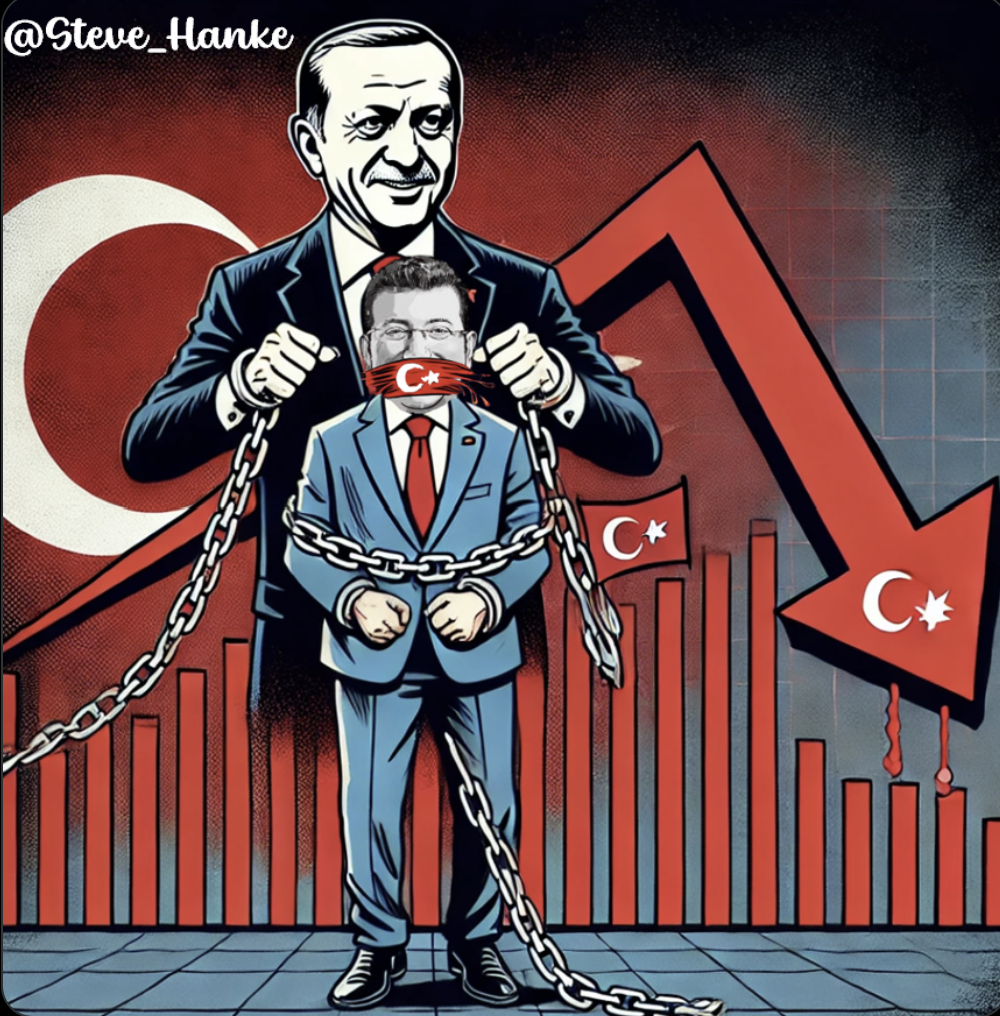
Economist Prof. Esfender Korkmaz warns that the biggest risk facing Türkiye’s economy is not purely financial but political. A potential government-appointed trustee (kayyum) to the main opposition CHP could trigger a sharp currency shock, with the U.S. dollar potentially surging to 100 TL, while deepening existing macroeconomic fragilities.
Fitch Flags Rising Risks, Cuts Outlook to ‘Stable’
Credit rating agency Fitch Ratings revised Türkiye’s outlook from positive to stable on April 10, 2026, without waiting for its regular review cycle, citing “sudden and significant changes” in the country’s risk profile.
Türkiye remains in speculative territory across major agencies:
- Fitch: BB- / Stable
- Moody’s: Ba3 / Stable
- S&P: BB / Stable
These ratings reflect concerns about the country’s ability to manage external shocks and maintain financial stability.
Reserves Decline Raises Structural Concerns
According to Korkmaz, the weakening of foreign exchange reserves is one of the most critical vulnerabilities.
- Gross reserves fell from $205 billion to $161.6 billion
- Net reserves dropped from $78.6 billion to $19.3 billion
- Political developments and capital outflows led to an estimated $50–60 billion depletion
He argues that reserve accumulation largely depends on borrowing, swaps, and regulatory measures, rather than sustainable inflows, making the buffer less reliable in times of stress.
External Financing Fragility Deepens
Balance of payments data highlights mounting pressures:
- No net foreign direct investment inflows; $113 million outflow recorded
- $9.2 billion in portfolio inflows, reflecting “hot money” dependence
- $14.6 billion in new external borrowing
- $7.6 billion unexplained outflow under net errors and omissions
Tourism, a key source of foreign currency, is also under strain:
- Early bookings reportedly down 50%
- Reservations 80% lower year-on-year, according to sector data
Currency Policy Under Strain
Korkmaz argues that the Turkish lira is being artificially supported through interventions by the central bank and state-owned banks.
While this policy has contained volatility in the short term, it has also:
- Reduced export competitiveness
- Increased vulnerability to sudden capital outflows
Based on inflation differentials, he estimates that the USD/TRY rate should already be around 57, suggesting a significant misalignment.
“Biggest Risk Is Political, Not Economic”
Korkmaz identifies the most severe threat as a potential government intervention in the opposition, specifically the appointment of a trustee to the Republican People’s Party (CHP).
He warns that such a move could have dramatic consequences:
- The exchange rate could spike to 100 TL per dollar
- The European Union could impose sanctions
- External imbalances could escalate into a full-blown crisis
“This would not be a standard political development—it would directly destabilize markets,” Korkmaz suggests.
Persistent Inflation and Structural Weakness
Türkiye has been grappling with high inflation for over four years, despite nearly three years of disinflation policies.
Korkmaz argues that without:
- Structural reforms
- Strengthened rule of law
- Improved institutional credibility
inflation is likely to remain chronically above 20%.
Policy Criticism: Growth Model Under Pressure
The economist also criticizes the broader economic strategy:
- Heavy reliance on imports for production
- Limited incentives for domestic manufacturing
- Policy framework driven by short-term electoral considerations
He warns that this model may provide temporary relief but risks long-term economic and political costs.
Outlook: Fragile Balance, Rising Uncertainty
Türkiye’s economic outlook remains highly sensitive to:
- Reserve dynamics
- External financing conditions
- Energy prices
- Political developments
Korkmaz concludes that while macroeconomic risks are significant, political decisions could act as the ultimate trigger for a deeper crisis.
PA Turkey intends to inform Turkey watchers with diverse views and opinions. Articles in our website may not necessarily represent the view of our editorial board or count as endorsement.
Follow our English YouTube channel (REAL TURKEY):
https://www.youtube.com/channel/UCKpFJB4GFiNkhmpVZQ_d9Rg
Twitter: @AtillaEng
Facebook: Real Turkey Channel: https://www.facebook.com/realturkeychannel/***