Iraq Moves to Restart Kirkuk-Ceyhan Pipeline, Launches Major Basra Export Corridor
 pipeline
Iraq is preparing to resume crude exports via the Kirkuk-Ceyhan Pipeline while advancing a major new infrastructure project linking Basra to Haditha. The dual-track strategy aims to restore lost export capacity, bypass disruptions at the Strait of Hormuz, and establish Türkiye as a central transit hub for Iraqi oil flows.
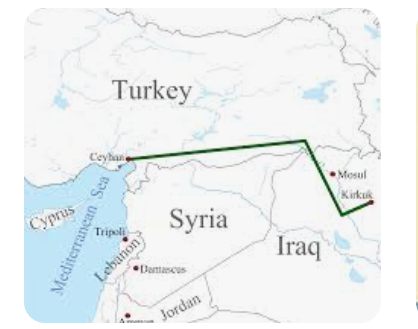
Kirkuk-Ceyhan Pipeline Nears Restart
Iraq’s Oil Ministry confirmed that maintenance and repair work on the Kirkuk-Ceyhan pipeline is in its final stages, with exports expected to resume shortly.
- Initial capacity: up to 600,000 barrels per day (bpd)
- Full design capacity: over 1 million bpd
The pipeline, severely damaged during Daesh attacks in 2014, is seen as a critical alternative route to stabilize Iraq’s export network.
Meanwhile, flows from the Kurdistan Regional Government pipeline to Ceyhan have continued at around 400,000 bpd since restarting in March during the Hormuz crisis.
Basra-Haditha Pipeline: A $5 Billion Strategic Project
In parallel, Iraq has launched construction of the Basra-Haditha pipeline, a large-scale project designed to expand export capacity across multiple routes.
- Length: 700 kilometers
- Capacity: up to 2.5 million bpd
- Total projected cost: $5 billion
The first phase, valued at $1.5 billion, is already underway. However, officials noted that progress will depend on securing sufficient budget allocations from the next Iraqi government.
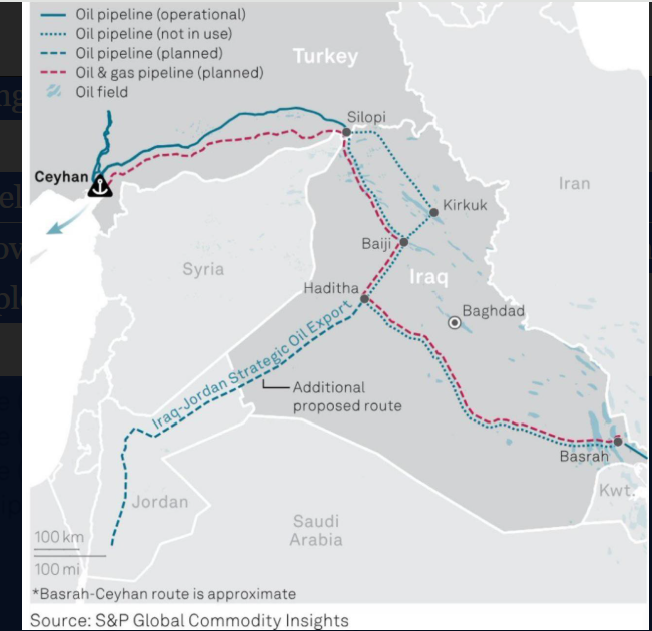
The pipeline will connect southern oil fields in Basra to three export directions:
- Türkiye (Ceyhan terminal)
- Syria (Baniyas)
- Jordan (Aqaba)
Haditha as a “Strategic Distribution Hub”
The Haditha hub is emerging as a central node in Iraq’s energy strategy.
By linking Basra to Haditha and then integrating with northern infrastructure, Iraq is effectively building a continuous export corridor:
Basra → Haditha → Kirkuk → Ceyhan
This modular approach allows Iraqi oil to be redirected across multiple routes, increasing flexibility and resilience.
Hormuz Disruption Drives Strategic Shift
The push for alternative routes comes after severe disruptions in the Strait of Hormuz following the outbreak of conflict on February 28.
- Pre-crisis exports: ~3.4 million bpd
- Current exports: ~800,000 bpd
- Decline: around 80%
Despite receiving exemptions for transit, Iraq has faced significant export constraints, underscoring the need to diversify routes.
Türkiye- Syria Cooperation: Minister Bayraktar Reveals BP Deal
Türkiye Corridor Gains Strategic Importance
Once completed, the Basra-Haditha connection will allow Iraq to significantly expand exports through Türkiye.
- Potential flow to Mediterranean via Türkiye: up to 1.5 million bpd
- Reduced reliance on Gulf shipping routes
- Increased geopolitical and economic role for Türkiye as an energy hub
The development aligns with broader regional efforts to establish new energy corridors spanning the Middle East.
Strategic Implications: Reducing Dependence on the Gulf
Iraq’s pipeline expansion strategy reflects a broader shift toward energy security and diversification.
If disruptions in the Strait of Hormuz persist:
- The Türkiye route could become Iraq’s primary export lifeline
- Syrian and Jordanian routes may serve as additional outlets
- Export risks tied to a single chokepoint would be significantly reduced
Outlook: Infrastructure as Geopolitical Strategy
The simultaneous restart of the Kirkuk-Ceyhan pipeline and construction of the Basra-Haditha line marks a turning point in Iraq’s energy policy.
Beyond infrastructure, the projects represent a strategic recalibration—aimed at insulating Iraq’s economy from geopolitical shocks while reinforcing its role in regional energy flows.
Turkey Today, IHA, PATurkey newsdesk