May Day Tensions in Istanbul: 500 Detained as Taksim Sealed Off
 polis4
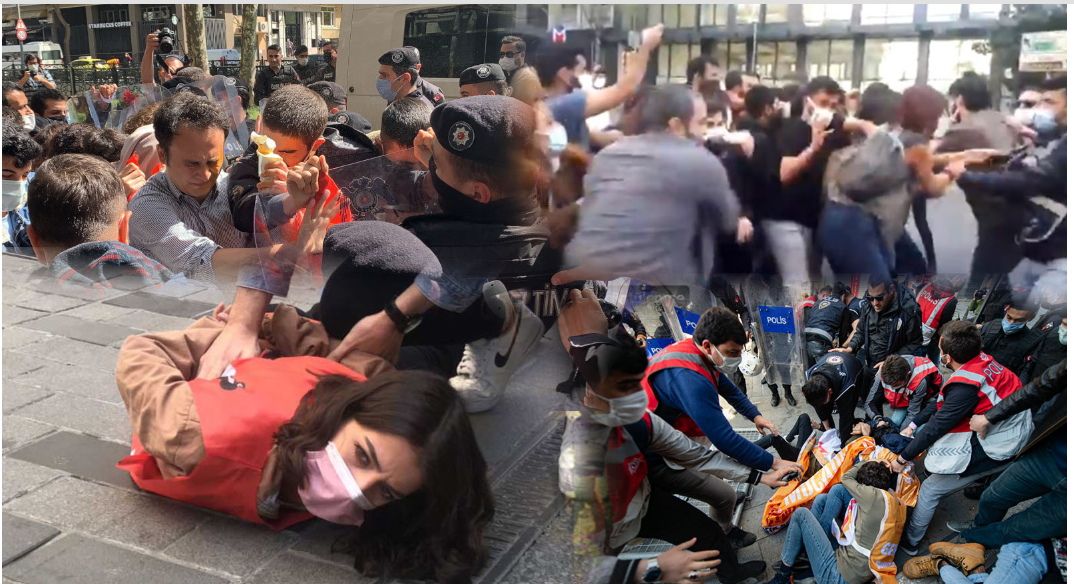
Authorities in Istanbul imposed sweeping security measures on May Day, sealing off Taksim Square and restricting access across large parts of the city. Police intervened against groups attempting to march, deploying tear gas and detaining hundreds. The measures disrupted daily life and reignited debate over assembly rights in Türkiye.
Taksim Locked Down Under Heavy Security
Early in the morning, Taksim Square—long a symbolic site for Labor Day gatherings—was effectively sealed off following a decision by the Istanbul Governor’s Office. Roads leading to the square were blocked with metal barricades, while thousands of police officers were deployed across key locations.
The square, which has hosted official ceremonies and public celebrations in the past, has remained largely closed to labor groups in recent years despite court rulings challenging such restrictions.
Transport Disruptions Bring City to a Standstill
Public transport restrictions compounded the disruption. Metro, tram, and funicular services were either suspended or bypassed key stations, creating major logistical challenges for commuters and tourists.
Closures included:
- M2 metro line stations at Şişhane, Taksim, and Osmanbey
- F1 Taksim–Kabataş funicular line
- T3 Kadıköy–Moda tram line
In addition, several entrances to major stations were shut. With key arteries closed to traffic, many residents were forced to walk long distances, while central districts experienced near paralysis.
Police Intervene as March Attempts Continue
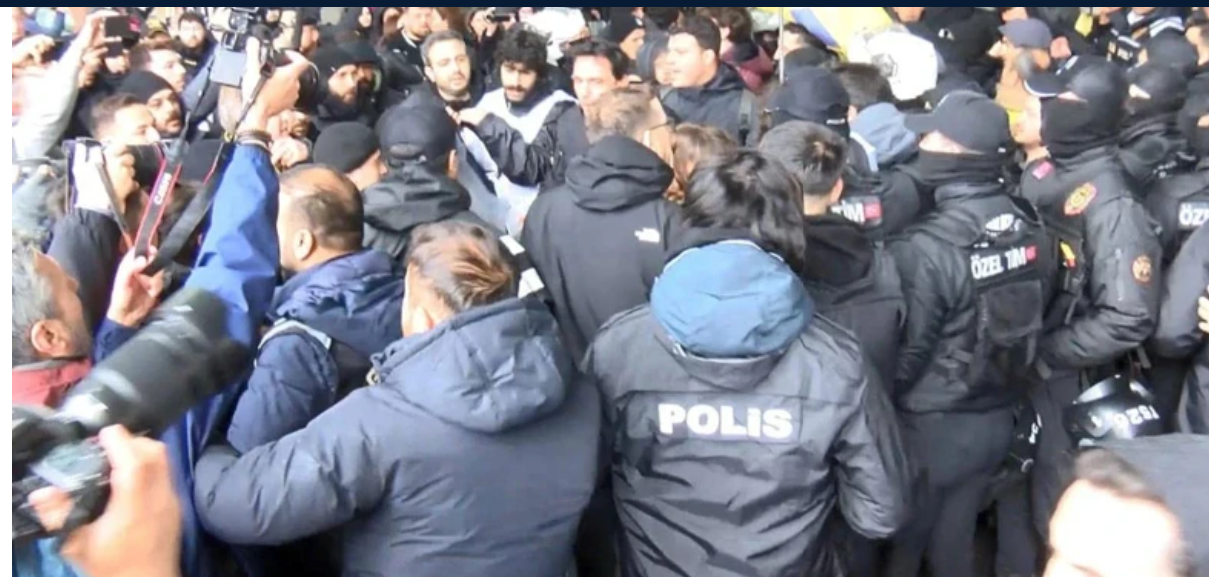
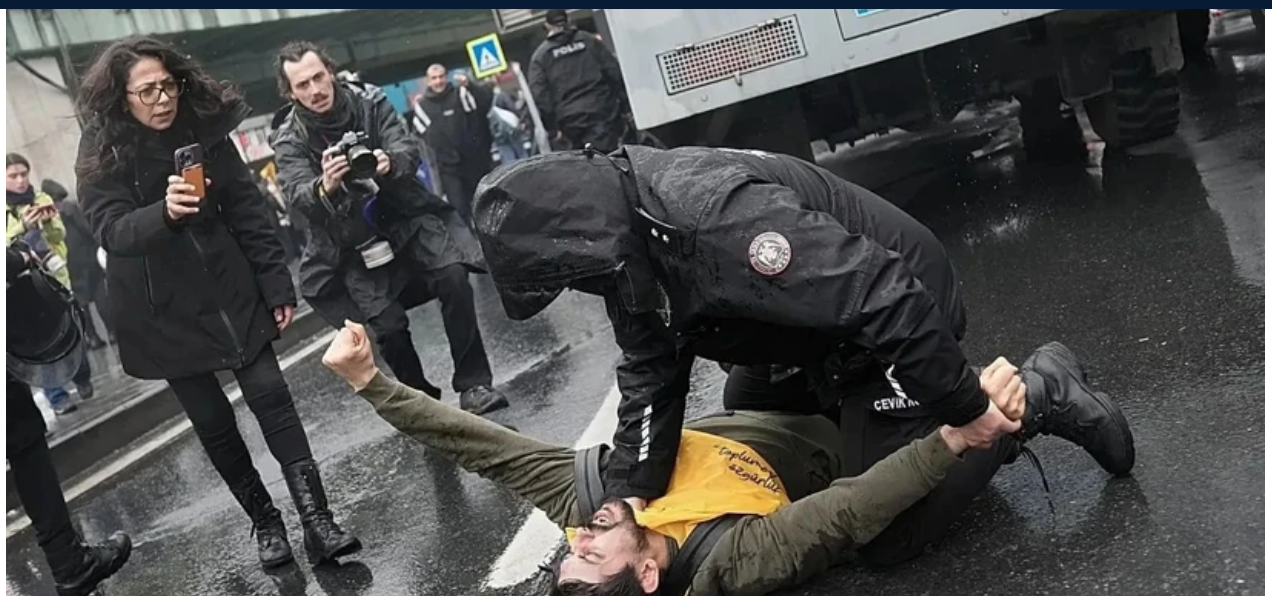
Despite the restrictions, groups attempted to march toward Taksim from areas such as Beşiktaş and Mecidiyeköy. Police intervened, using tear gas and making detentions.
According to initial reports, at least 366 people were taken into custody by early afternoon. Among those detained was labor organizer Başaran Aksu, affiliated with the Umut-Sen network.
Aksu, speaking before his detention, criticized the restrictions, arguing that public spaces should remain open to workers and citizens alike.
Political Figures Caught in Clashes
Erkan Baş, leader of the Workers’ Party of Türkiye (TİP), was also affected by police intervention and reportedly exposed to tear gas during the clashes.
In a statement afterward, Baş criticized the authorities, saying that preventing workers from expressing their grievances on May Day deepened social tensions.
Surveillance and Security Measures Intensified
Authorities deployed extensive monitoring systems throughout the city. Approximately 35,000 surveillance cameras connected to the city’s security network were actively used, alongside drone footage and body cameras.
Security operations were coordinated in real time, allowing rapid deployment of police units to areas where tensions escalated.
Interior Minister Mustafa Çiftçi visited Istanbul’s police headquarters along with Governor Davut Gül and Police Chief Selami Yıldız to oversee the measures.
Kadıköy Becomes Alternative Gathering Point
While Taksim remained inaccessible, large crowds gathered on the Asian side of the city. Tens of thousands assembled at Kadıköy Rıhtım Square following calls from major unions and civil society groups.
Organizations including DİSK, KESK, TMMOB, and TTB led the event, joined by political parties and labor groups. Among attendees were Özgür Özel and Tuncay Bakırhan.
Broader Debate Over Rights and Public Order
The events highlight ongoing tensions in Türkiye over the balance between public order and the right to assembly. Critics argue that restrictions on Taksim contradict rulings by the Constitutional Court, while authorities maintain that such measures are necessary for security.
As Türkiye marks Labor and Solidarity Day, the contrast between heavily restricted areas in central Istanbul and mass gatherings elsewhere reflects the continuing divide over how the day should be observed.
Related articles
Lisel Hintz: The empire’s opposition strikes back: popular culture as creative resistance tool under Turkey’s AKP
Nationwide Protests Erupt After Detention of CHP Mayors: “A Blow to the National Will”
The night Turkey marched against Erdogan’s crackdown