Bulgarian Elections: Turkish parties are the losers
 bulgar secim
Rumen Radev’s Landmark Victory: A Sea Change in Bulgarian Politics
by Prof Ceyhun Elgin
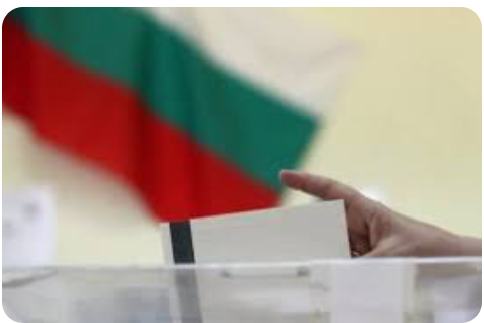
On April 19, 2026, Bulgaria held a pivotal general election that appears to have finally broken a five-year cycle of political deadlock. Rumen Radev, the former President who resigned specifically to lead his new “Progressive Bulgaria” movement, secured a resounding victory. According to preliminary results, Radev’s party garnered approximately 44.6% of the vote, putting it on track to hold 131 seats in the 240-seat parliament—a rare absolute majority in Bulgaria’s fractured political landscape
Author Prof Ceyhun Elgin

The results signal a dramatic shift away from the era of fragile coalitions and technocratic caretaker governments. For a nation that has endured eight elections in five years, the emergence of a single dominant political bloc offers a prospect of stability that has long been absent
The Fall of the Old Guard
The election was a catastrophic event for Bulgaria’s traditional political establishment. The center-right GERB party, led by former Prime Minister Boyko Borisov, saw its influence further dwindle, securing only 13.38% of the vote . Meanwhile, the reformist, Western-leaning “Continuing the Change – Democratic Bulgaria” (PP-DB) alliance, often characterized by its Harvard and Oxford-educated leadership, fell to third place with 12.61%.
Perhaps the most shocking result was the collapse of the Bulgarian Socialist Party (BSP), the successor to the communist-era party, which failed to cross the 4% threshold for the first time in post-communist history. This “simplification” of the political map suggests a public that is weary of traditional partisan squabbling and corruption, opting instead for a centralized, strong-man leadership style.
The Crisis of Turkish Representation
For the significant Turkish minority in Bulgaria—and the millions of dual citizens living in Turkey—the election results are bittersweet. Historically, the Movement for Rights and Freedoms (DPS) has been the primary vehicle for Turkish and Muslim representation. However, the party has recently suffered from a bitter internal schism and a reputation increasingly tarnished by allegations of “oligarchic” politics.
The party split into two factions: one led by the controversial media mogul Delyan Peevski—who remains under US and UK sanctions for corruption—and another led by the party’s historic founder, Ahmed Dogan. While Peevski’s DPS faction managed to secure 21 seats with roughly 7.12% of the vote, Dogan’s breakaway “Alliance for Rights and Freedoms” failed to make a significant impact, effectively halving the political weight of the Turkish minority in the new parliament.
This division has led to a crisis of representation. Many Turkish voters, tired of being viewed as a “vote bank” for corrupt power brokers, either abstained or sought alternatives in mainstream parties, including Radev’s movement.
Geopolitical Implications: The Radev Enigma
Radev’s victory has been met with a degree of caution in Brussels and Washington. During his presidency, Radev was often characterized as more pragmatic toward Moscow and skeptical of Western military aid to Ukraine. However, analysts caution against labeling him a “Bulgarian Orban.” Bulgaria remains deeply integrated into the EU and NATO, relying heavily on European funds and trade.
Radev’s approach is likely to be one of “increased bargaining.” He is expected to maintain Bulgaria’s place in the Western camp while taking a more nationalistic, interest-driven stance that avoids a total decoupling from historical and energy ties with Russia.
Impact on Relations with Ankara
The election is of profound importance to Turkey, which shares deep historical, familial, and economic ties with its neighbor. Radev’s massive mandate presents both risks and opportunities for Ankara:
-
Minority Rights: With the weakening of the DPS, there are concerns about the future of minority language rights and local representation. However, Radev has previously voiced opposition to laws restricting voting booths in non-EU countries like Turkey, suggesting a potential for a more democratic, albeit centralized, approach to minority issues.
-
Economic Stability: A stable government in Sofia is a net positive for Turkish logistics and energy. The chronic delays at the Kapıkule border crossing and the need for upgraded energy interconnections require a functional government in Sofia that can commit to long-term projects.
-
Regional Security: Turkey and Bulgaria must coordinate closely on the Black Sea and migration. Radev’s pragmatism may offer a stable, if occasionally contrarian, partner in navigating the Russia-Ukraine conflict.
Conclusion: A New Era of Balkan Politics
Rumen Radev has been granted a historic mandate to clean up Bulgaria’s “dirty” political system and restore trust in state institutions. However, the concentration of so much power in the hands of a single leader—especially one with a military background—raises questions about the future of democratic checks and balances.
As Bulgaria enters this new chapter, the primary challenge for the new government will be to prove that it can offer more than just stability; it must provide transparent, accountable governance that serves all citizens, regardless of their ethnic background. For the Turkish community, this era marks a difficult but perhaps necessary transition away from identity-based “patronage” toward a demand for meritocracy and clean politics.
Related articles
Turkey tests out new domestic ballistic missile over Black Sea

Turkey’s foreign trade deficit decline in August
CBRT/Gaye Erkan: monetary tightening to last until significant improvement in inflation outlook – 3