Turkey’s Quiet Strategy Along the Syria–Iraq Corridor
 sevil nuriyeva
Amid intensifying geopolitical uncertainty driven by U.S.–Israel–Iran tensions, Turkey is advancing a low-profile but structured regional strategy across Syria and Iraq. Developments in Kirkuk and potential military positioning in Syria point to a broader effort by Ankara to shape regional balance, reduce external influence, and reinforce its role as a stabilizing power.
A Fragmented Global Landscape
Global and regional dynamics remain in flux as tensions centered on Washington, Tehran, and Tel Aviv continue to reshape strategic alignments. While China maintains a relatively quiet public posture, its indirect influence remains significant. Europe, meanwhile, is actively seeking new alliances and strategic footholds, reflecting growing uncertainty within its traditional policy frameworks.
Recent remarks by Ursula von der Leyen highlight European concerns over Turkey’s expanding regional role. Ankara is increasingly perceived not merely as a nation-state, but as a geopolitical actor with historical depth and long-term strategic ambitions. This perception has contributed to a more cautious European stance toward Turkey.
A New Fault Line in EU-Turkey Relations: Defense Pacts with Greek Cyprus
Ankara’s Emerging Regional Framework
Against this backdrop, Turkey appears to be quietly constructing a strategic framework along the Syria–Iraq corridor. Developments in northern Iraq offer key signals.
The appointment of a Turkmen governor in Kirkuk—after years of political fragmentation—marks a notable shift. In a region shaped by competing influences from Iran, the United States, and non-state actors such as the PKK, the move suggests a recalibration of local power dynamics.
Turkey’s engagement indicates a broader objective: steering Iraq toward economic stabilization and political coherence while positioning itself as a balancing force. Rather than allowing external actors to dictate outcomes, Ankara is increasingly shaping developments on the ground.
Syria Dimension: Strategic Depth and Military Signaling
Parallel developments in Syria reinforce this trajectory. Reports of potential Turkish military positioning in strategic locations such as Palmyra suggest a continuation of Ankara’s forward-leaning posture.
Such moves carry both military and geopolitical implications. Beyond security considerations, they signal Turkey’s intent to actively influence regional balances rather than react to them. The emerging linkage between developments in Kirkuk and Syria points to a coordinated regional approach.
Balancing External Influence
Turkey’s strategy also appears aimed at limiting the influence of external actors in the Syria–Iraq corridor. This includes both state and non-state forces operating in the region.
Statements and policy signals from Recep Tayyip Erdoğan and Devlet Bahçeli have long hinted at a more assertive regional posture. Recent developments suggest that these strategic objectives are increasingly being implemented on the ground.
IEA Chief Backs Iraq–Turkey Oil Pipeline to Bypass Hormuz Risks
Coordinated Statecraft: Intelligence and Diplomacy
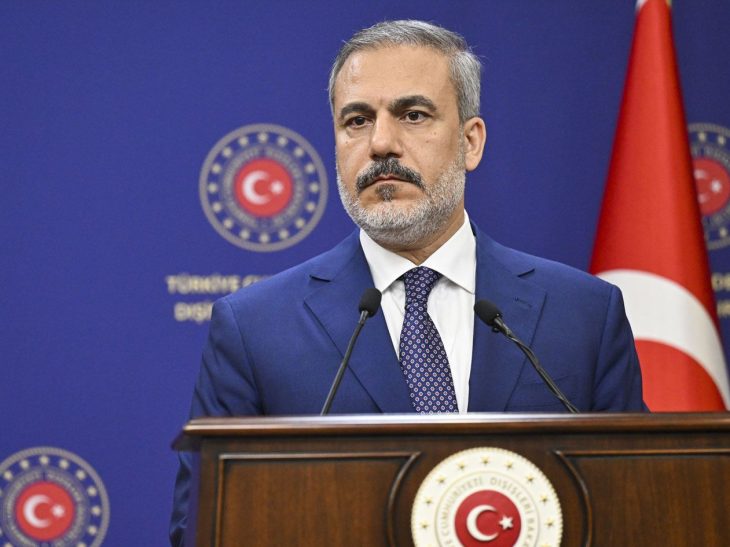
A key feature of Turkey’s approach is the coordination between intelligence and diplomacy. The roles of Hakan Fidan and İbrahim Kalın illustrate this alignment.
Their engagement reflects a strategy that prioritizes gradual influence-building over overt confrontation. This “quiet strategy” seeks to achieve long-term objectives without triggering direct escalation.
Strategic Outlook
Turkey’s actions along the Syria–Iraq corridor suggest a deliberate effort to shape regional outcomes during a period of global uncertainty. Rather than pursuing rapid or highly visible moves, Ankara appears focused on incremental gains that reinforce its position as a central regional actor.
While challenges remain—particularly given the complexity of external influences and ongoing conflicts—the current trajectory points to a sustained effort to redefine regional balance through a combination of diplomacy, security measures, and political engagement.
By Sevil Nuriyeva, Turkiye Gazette
Related articles
Turkish industrial production rises in December, but outlook not favorable

Commentary: It is all coming up roses for Turkish assets
Murat Yetkin: Erdoğan’s Sweden surprize: PKK’s attack postponed the decision