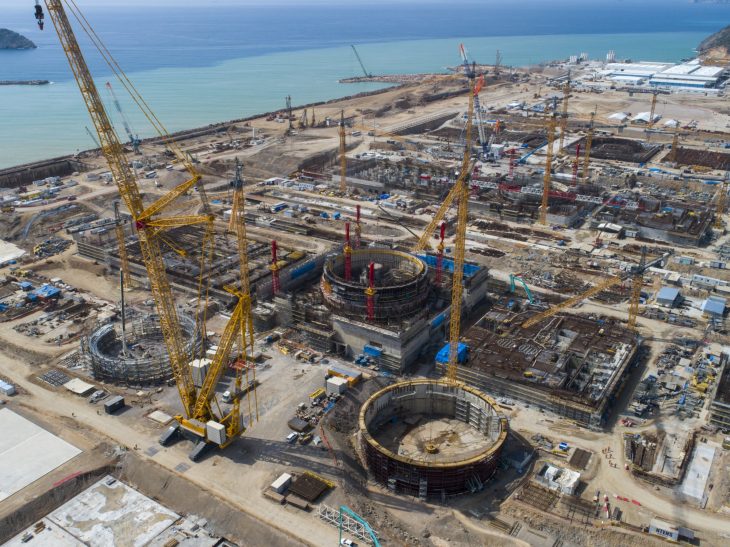
Strategic Dependence and Regional Risk: Türkiye’s Akkuyu Nuclear Project
 akkuyu
Türkiye’s Akkuyu Nuclear Power Plant marks a major step toward energy diversification, but its Russian-built model introduces new strategic dependencies and raises questions about security, NATO dynamics, and regional stability.
Energy Security Takes Center Stage
Recent conflicts in the Middle East and Eastern Europe have underscored the growing importance of energy security. Disruptions to supply chains and the targeting of critical infrastructure have pushed countries to diversify energy sources, expand domestic production, and invest in more resilient systems.
In this context, Türkiye’s Akkuyu Nuclear Power Plant represents more than an energy investment—it is a strategic project with long-term geopolitical implications.
Akkuyu as a Cornerstone of Türkiye’s Energy Strategy
Located in Mersin on the Mediterranean coast, Akkuyu is Türkiye’s first nuclear power plant. The country remains heavily dependent on imported energy, with roughly 72% of consumption sourced from abroad, much of it from Russia.
Once fully operational, Akkuyu is expected to meet around 10% of Türkiye’s electricity demand. Nuclear energy offers a key advantage: it provides stable, continuous output and is less vulnerable to short-term market volatility.
The project also carries symbolic weight, reflecting Türkiye’s ambitions for technological advancement and strategic autonomy. Planned nuclear facilities in Sinop and Kırklareli indicate that Akkuyu is part of a broader long-term energy transition.
NATO Chief Rutte Praises Türkiye’s Defense Industry After Aselsan Visit
Russian Control Raises Structural Concerns
Despite its benefits, Akkuyu’s ownership structure raises significant questions about energy independence. The plant is being built, owned, and operated by Rosatom, Russia’s state nuclear agency.
Russia is also expected to supply nuclear fuel and technical expertise throughout the plant’s lifecycle, creating a long-term dependency. Unlike fossil fuels, nuclear inputs are not easily substitutable, making this reliance particularly sensitive during periods of political tension.
While the project reduces dependence on imported hydrocarbons, it effectively replaces one form of dependency with another—potentially expanding Moscow’s influence over a critical component of Türkiye’s energy infrastructure.
Implications for NATO and Strategic Positioning
Akkuyu also carries implications for NATO. The presence of Russian-controlled infrastructure on Türkiye’s Mediterranean coast—within a NATO member state—raises concerns about long-term strategic exposure.
The issue is less about direct control and more about leverage. In times of geopolitical tension, Russia could theoretically exploit its role in Akkuyu to influence decision-making or increase the cost of policy divergence.
This dynamic could complicate Türkiye’s position within NATO, particularly in scenarios involving Russia. However, the impact should not be overstated—Türkiye’s foreign policy is shaped by a wide range of strategic factors beyond any single project.
IEA Chief Backs Iraq–Turkey Oil Pipeline to Bypass Hormuz Risks
Security Risks in a Volatile Region
Akkuyu operates in a region increasingly shaped by asymmetric threats. Advances in drone technology, long-range strike capabilities, and cyber warfare have lowered the threshold for targeting critical infrastructure.
While a direct large-scale attack on a nuclear facility remains unlikely due to escalation risks, indirect threats are more plausible. These include:
- Cyberattacks
- Sabotage operations
- Collateral damage from nearby conflicts
- Attacks on supporting infrastructure
The plant’s proximity to key logistics hubs such as Mersin Port further amplifies its strategic importance—and vulnerability.
Eastern Mediterranean Dynamics and Military Posture
The need to protect Akkuyu is likely to influence Türkiye’s defense planning, particularly in air defense, naval presence, and surveillance capabilities.
However, even defensive measures may be perceived externally as assertive moves. In the Eastern Mediterranean—where tensions with Greece and Cyprus remain unresolved—such developments could feed into broader strategic competition.
Akkuyu alone may not drive militarization, but it reinforces existing patterns of rivalry in the region.
Nuclear Capability Debate and Regional Perceptions
Although Akkuyu is strictly a civilian project, it contributes to broader discussions about nuclear capability in the region. Civil nuclear programs build expertise and infrastructure that could, over time, shorten the path to military applications.
There is no indication that Türkiye seeks nuclear weapons, but perceptions matter. Regional actors increasingly interpret technological progress through a strategic lens, particularly given Türkiye’s growing defense industry and more independent foreign policy stance.
That said, Rosatom’s operational control over key stages of the fuel cycle significantly limits proliferation risks, acting as a structural constraint.
Conclusion: More Than an Energy Project
Akkuyu reflects a broader global trend in which energy infrastructure is no longer just about supply—it is also about embedding long-term geopolitical relationships.
For Türkiye, the project highlights a key dilemma: efforts to enhance energy security often come with new forms of dependency. Akkuyu reduces exposure to fossil fuel markets but introduces structural reliance on Russian technology and expertise.
At the regional level, such projects are increasingly viewed as strategic anchors rather than neutral assets. Akkuyu may not immediately shift the balance of power, but it will shape perceptions of alignment, autonomy, and vulnerability for years to come.
Related articles
S&P Warns Türkiye Among Most Vulnerable to Oil Price Shock

Russia’s Economic Influence in the Mediterranean– Less Than a Full Deck (Turkey section)
Turkey Redefines Energy Strategy: From Russian Pipelines to American LNG