Şimşek and Yılmaz Vow to Stay the Course Despite Global Turmoil
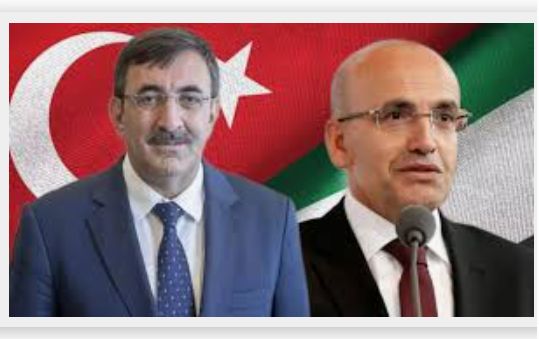 cevdet yilmaz mehmet simsek
Turkish economic officials delivered a strong message of policy continuity despite mounting geopolitical risks, rising energy prices and growing uncertainty in the global economy. Treasury and Finance Minister Mehmet Şimşek said Türkiye would maintain its economic program despite external shocks, while Vice President Cevdet Yılmaz argued that the country has become a regional “safe haven” thanks to macroeconomic stabilization efforts and diversified energy supply chains.
Speaking at separate economic summits in Istanbul, both officials acknowledged that Türkiye faces a more difficult global environment marked by geopolitical fragmentation, slowing trade growth, tighter financial conditions and rising energy costs linked to tensions in the Middle East.
However, both insisted the government would continue implementing its current economic framework focused on disinflation, fiscal discipline and structural transformation.
Şimşek: “We Have Not Changed the Priorities of the Program”
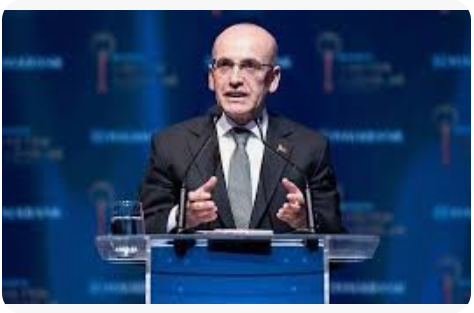
Speaking at the Participation Finance Summit organized by Anadolu Agency and the Participation Banks Association of Türkiye at the Istanbul Financial Center, Finance Minister Mehmet Şimşek said short-term uncertainty remains elevated globally.
“The global economy and the Turkish economy are going through a difficult period,” Şimşek said.
The minister warned that weakening growth among Türkiye’s main trading partners would inevitably affect the domestic economy.
At the same time, he stressed that Ankara has no intention of abandoning its economic program despite what he described as a major global shock triggered by ongoing geopolitical conflicts.
Iran War Begins to Hit Türkiye’s Economy: April Data Signals Slowdown, Risks Rise for May
“Despite the scale of the shock, we have never considered changing the priorities of the program,” Şimşek said.
He acknowledged that inflation, the current account deficit, budget deficit and growth targets could deviate from official projections this year, but argued that the overall framework of the program remains intact.
“We are doing whatever is necessary to keep the program on track and will continue to do so,” he added.
Global Tensions Becoming the “New Normal”
Şimşek said geopolitical tensions and protectionist policies are increasingly becoming permanent features of the global economy.
“Unfortunately, tensions in many parts of the world have become the new normal,” he said.
The minister also pointed to structural risks such as rising global debt and the transformative impact of artificial intelligence.
Describing AI as a major revolution for humanity, Şimşek warned that countries failing to invest in infrastructure and preparation could face widening inequalities.
He also argued that the world is experiencing one of the largest supply shocks since the 1970s, increasing the risk of slower global growth and tighter financial conditions.
Long-term bond yields have risen sharply while financing conditions have become more restrictive, he noted.
Türkiye “Not Dependent” on Hormuz
As oil prices remain volatile due to tensions around the Strait of Hormuz, Şimşek said Türkiye has significantly diversified its energy supply structure.
“Türkiye is not dependent on the Strait of Hormuz on the energy side,” he stated.
The minister said the government has expanded storage capacity, diversified energy suppliers and strengthened domestic production in recent years.
Şimşek also reiterated the government’s goal of turning Istanbul into a regional and eventually global financial center.
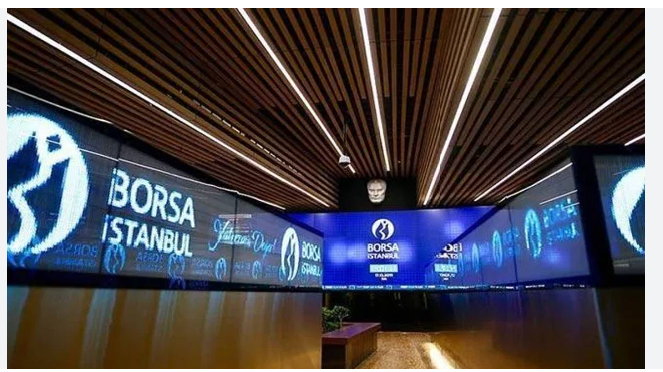
He revealed that the total market capitalization of companies listed on Borsa Istanbul had risen from $425 billion to $516 billion since February 27.
The government also wants to attract multinational corporations to establish regional management hubs at the Istanbul Financial Center, he said.
Yılmaz: Türkiye Has Become a “Safe Haven”
Vice President Cevdet Yılmaz delivered a similarly optimistic message during the Vision 100 Istanbul Summit held at Mandarin Oriental Bosphorus.
“Türkiye has become an island of stability in its region with political stability and policy predictability, emerging as a safe haven,” Yılmaz said.
He described Türkiye as “the connection point of the world,” linking Europe, Asia and Africa.
Yılmaz argued that periods of global disruption create opportunities for countries capable of adapting quickly to structural transformation.
“During difficult periods, countries that adapt properly can move higher in the global economic hierarchy,” he said.
Middle East Conflict Adding New Risks
Yılmaz warned that the war in the Middle East and disruptions in the Strait of Hormuz are increasing energy and transportation costs while tightening global financial conditions.
He noted that roughly 20% of global oil shipments and 25% of LNG trade pass through Hormuz.
Rising security risks are also pushing up insurance premiums and shipping costs, he added.
“As an energy-importing country, Türkiye is affected by rising prices,” Yılmaz acknowledged.
However, he emphasized that Türkiye has not experienced supply shortages thanks to investments made over the past two decades in energy diversification and storage capacity.
“The most expensive energy is unavailable energy,” Yılmaz said.
Global Economy Facing Structural Transformation
According to Yılmaz, the global economy is undergoing simultaneous transformations driven by digitalization, artificial intelligence, climate policies and geopolitical fragmentation.
He described AI as a “horizontal technology” capable of transforming all sectors from public administration to education, healthcare and industrial production.
At the same time, green transition policies and weakening multilateral trade systems are reshaping global supply chains.
“This process may increase costs in the short term, but resilience is becoming the primary concern worldwide,” Yılmaz said.
“Türkiye’s Resistance to External Shocks Has Increased”
Yılmaz argued that the government’s economic policies have strengthened macroeconomic and financial stability.
“Our economy’s resistance to external shocks has significantly increased,” he said.
He cited the pandemic, the Iran-Israel conflict and recent regional crises as examples of stress tests that Türkiye has managed successfully.
According to Yılmaz, Türkiye’s economy expanded by 35% between 2020 and 2025, compared with 19% growth for the global economy during the same period.
He also said Türkiye’s national income reached $1.6 trillion in 2025 while per capita income surpassed $18,000.
For the first time, Türkiye is transitioning from the World Bank’s middle-income country category to the high-income country group, Yılmaz claimed.
New Investment Incentives on the Way
The vice president also outlined new investment and tax incentives planned under President Recep Tayyip Erdoğan’s “Türkiye Century Investment Program.”
The package, currently before parliament, includes major corporate tax reductions for export-oriented manufacturing firms.
Yılmaz said the government also plans to create significant tax advantages for transit trade revenues brought into Türkiye and expand incentives for high value-added service exports.
The administration hopes these measures will strengthen Türkiye’s position as a global production, logistics and financial hub.
Balancing Stability and Growth
The remarks by Şimşek and Yılmaz suggest Ankara remains committed to its orthodox economic stabilization program despite growing global uncertainty and domestic pressures.
Still, both officials acknowledged that slowing global growth, elevated energy prices and geopolitical tensions could create deviations from official macroeconomic targets.
As Türkiye heads deeper into 2026, the key challenge for policymakers will likely be maintaining disinflation efforts while preventing a sharper slowdown in growth, industrial activity and employment.
Turkish Press Source, PATurkey newsdesk