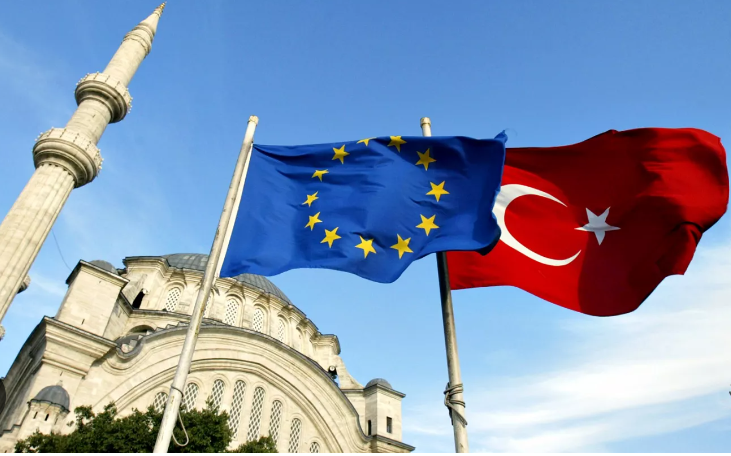
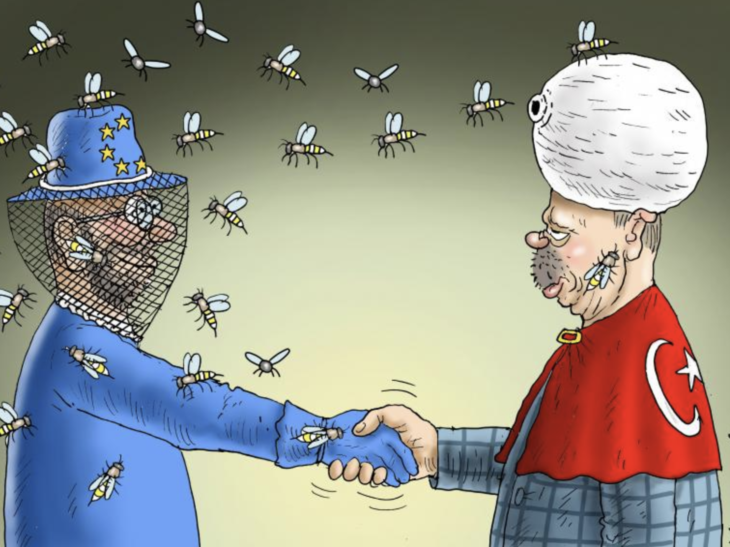
EU Chief Groups Turkey with Russia and China as “Threats to be Countered,” Sparking Diplomatic Firestorm
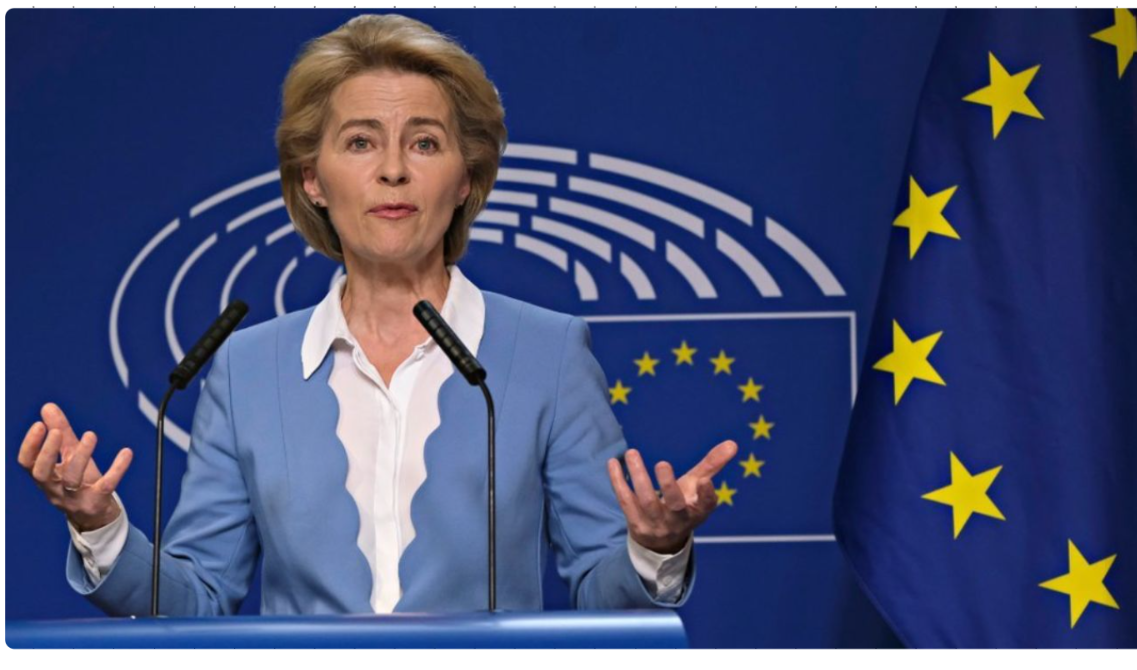 ursula von der leyen
HAMBURG – In a move that has sent shockwaves through the corridors of power from Brussels to Ankara, European Commission President Ursula von der Leyen has explicitly categorized Turkey alongside Russia and China as external influences that must be countered to ensure the “completion” of the European continent.
Speaking on April 19, 2026, at the 80th-anniversary celebration of the German newspaper Die Zeit, von der Leyen delivered a speech that many observers are calling the most aggressive geopolitical pivot of her presidency. While her focus was ostensibly on the necessity of EU enlargement, her decision to group a long-standing NATO ally and official EU candidate country with two of the West’s primary systemic rivals has ignited a fierce debate over the future of European security and diplomacy.
A Geopolitical Ultimatum
Standing before an audience of Germany’s political and intellectual elite, von der Leyen argued that the era of “strategic patience” is over. She declared that the European Union must accelerate the accession of the Western Balkans, Ukraine, and Moldova, not merely as a matter of shared values, but as a “geopolitical necessity” to prevent a vacuum of power.
“We must succeed in completing the European continent so that it does not fall under Russian, Turkish, or Chinese influence,” von der Leyen stated. “The old model—relying on cheap Russian energy, low-cost Chinese labor, and unconditional American security—is dead. We must think bigger, move faster, and act more independently.”
The President further linked this expansion to radical internal reforms, most notably the elimination of the unanimity requirement in foreign policy. She argued that the EU’s ability to act as a global heavyweight is currently “shackled” by the veto power of individual member states, which rivals often exploit to sow discord.
The “Ankara Inclusion” Controversy
While her comments regarding Russia and China were expected, the inclusion of Turkey (Türkiye) sparked immediate and intense “online pushback” and official condemnation. Critics and diplomats alike noted the stark contrast between grouping Turkey with the Kremlin—against whom the EU has leveled unprecedented sanctions—and the reality of Ankara’s role as the second-largest military power in NATO.
In Ankara, the reaction was a mixture of indignation and strategic maneuvering. Sources close to the Turkish government suggested that the rhetoric proves the EU is “incapable” of viewing Turkey as anything other than an outsider, despite its 25-year status as a candidate.
The timing is particularly sensitive. In recent months, the Nationalist Movement Party (MHP), a key ally of President Recep Tayyip Erdoğan, has publicly toyed with the idea of a “Russia-China-Turkey” axis to counter Western economic pressure. Analysts suggest von der Leyen’s grouping may have been a direct, if clumsy, response to these flirtations with Eurasia.
Brussels in Damage Control
By Tuesday morning, the European Commission was in full “damage control” mode. During a midday briefing in Brussels, Commission spokesperson Paula Pinho was grilled by reporters—particularly from the Turkish Anadolu Agency—on whether the EU now officially views Turkey as a threat on par with Russia.
“The President’s remarks were made in the context of the Western Balkans,” Pinho clarified, attempting to soften the blow. “Precisely as a candidate country, Türkiye has an additional responsibility to act in line with EU values in its neighborhood. We do not ‘oversee’ their influence, but we expect it to be constructive.”
However, many experts believe the bell cannot be unrung. The grouping has provided fresh ammunition to those in Ankara who argue that EU accession is a “dead letter” and that Turkey should prioritize its own “Third Way” in a multipolar world.
The Path Forward: Enlargement vs. Reform
Beyond the diplomatic spat, von der Leyen’s speech laid out a roadmap for a “Tiered Europe.” She advocated for flexibility in green energy goals—specifically acknowledging nuclear power as a vital tool for self-reliance—and pushed for a “Growth Plan” that integrates partners into the Single Market even before full membership is granted.
| Key Strategic Pillars | Objective |
| Accelerated Accession | Secure the Western Balkans and Ukraine before 2030. |
| Qualified Majority Voting | Prevent single-country vetoes on foreign policy and sanctions. |
| Energy Sovereignty | Total decoupling from Russian gas; embrace of nuclear and renewables. |
| Strategic Autonomy | Reducing dependence on Chinese supply chains for critical minerals. |
As the dust settles from the Hamburg speech, the European Union finds itself at a crossroads. While von der Leyen’s call to “think bigger” has resonated with those fearing a fragmented Europe, her rhetoric may have inadvertently pushed one of the bloc’s most important, albeit difficult, partners further into the arms of the very rivals she seeks to counter.