



“Made in EU” Status for Türkiye: Negotiations Underway
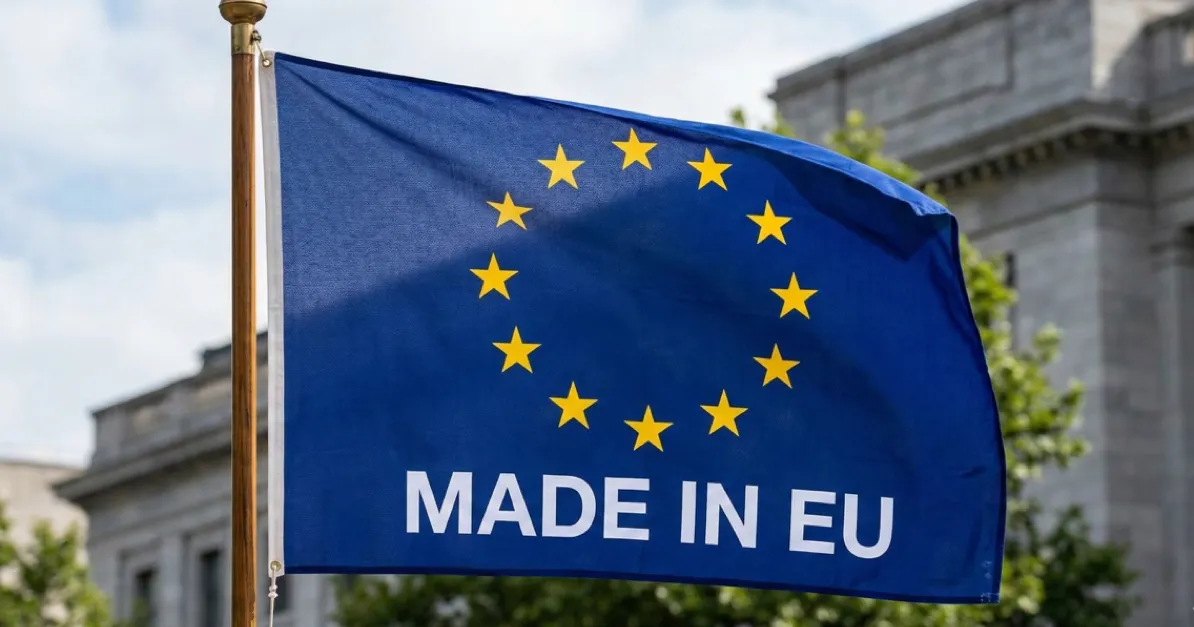 made in EU
As the European Union (EU) moves toward prioritizing domestic production through the “Made in EU” requirement in public procurement, Türkiye is actively negotiating to ensure its industrial output is treated as part of the Union’s internal ecosystem. Trade Minister Ömer Bolat announced on April 24, 2026, that a legal foundation is being established to include Türkiye within the scope of “EU origin” under the framework of the Customs Union.
Strategic Sectors in Focus
The Industry Acceleration Act (Sanayi Hızlandırma Yasası) draft targets critical sectors essential for the green and digital transition. Minister Bolat highlighted that these sectors will benefit from EU public procurement and state aid, provided they meet low-carbon or “EU origin” criteria:
-
Renewable Energy: Solar photovoltaic systems, wind energy, heat pumps, and electrolyzers.
-
Mobility: Electric, hybrid, and fuel-cell vehicles, plus battery energy storage systems.
-
Construction & Heavy Industry: Steel, concrete, and aluminum are used in buildings and infrastructure.
-
Advanced Tech: Nuclear technologies and carbon-neutral industrial processes.
Technical Negotiations and the Customs Union
Minister Bolat emphasized that Türkiye is not a “conventional third country” but a candidate country and a Customs Union partner. To resolve legal ambiguities in the current draft, the following steps are being taken:
-
Reciprocal Market Opening: A consensus has been reached with the European Commission to start technical talks on mutual market access in public procurement.
-
Legal Foundation: Once an agreement is signed, products manufactured in Türkiye will satisfy the criteria for Union-wide tenders.
-
Protecting EU Investors: Bolat noted that excluding Türkiye from the umbrella would adversely affect numerous EU-capitalized investors currently operating within Türkiye.
Türkiye as the “Completer” of the EU Value Chain
The Minister reiterated that the industrial integration between Türkiye and the EU is a two-way street. Türkiye serves as a vital “completer” and “strengthener” of European value chains rather than just an external supplier.
“Our production is an integral part of Europe’s joint production system. Excluding Türkiye would disrupt the shared industrial base we have built over decades,” Bolat stated.
With the Green Deal Industrial Plan reshaping global trade, these negotiations are seen as a “survival priority” for Türkiye‘s automotive and energy sectors. If successful, the agreement will grant Turkish manufacturers the same competitive advantages as their counterparts within the 27 EU member states, securing Türkiye‘s role in the future of European industry.
Source: turkiyegazetesi