UPDATE: Turkey Unveils Major Rare-Earth Discovery, Seeks Global Partners Amid U.S.–China Rivalry
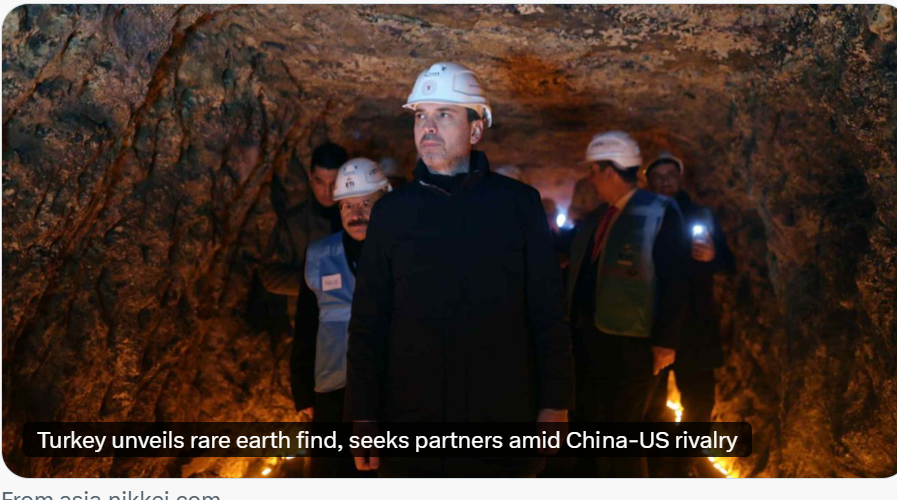 bayraktar nadir mineraller
PATurkey is following the news coverage about Turkey’s rare earth mineral deposits, because it could transform the industry and Turkey’s economic fortunes.
According to Nikkei Asia Ankara positions itself as a new player in the global race for critical minerals vital to high-tech and clean-energy industries.
12.5 Million Tons of Potential Reserves in Eskişehir
Turkey has announced what could become one of the world’s largest rare-earth oxide deposits — a strategic find that could reshape its role in the global supply chain for critical minerals.
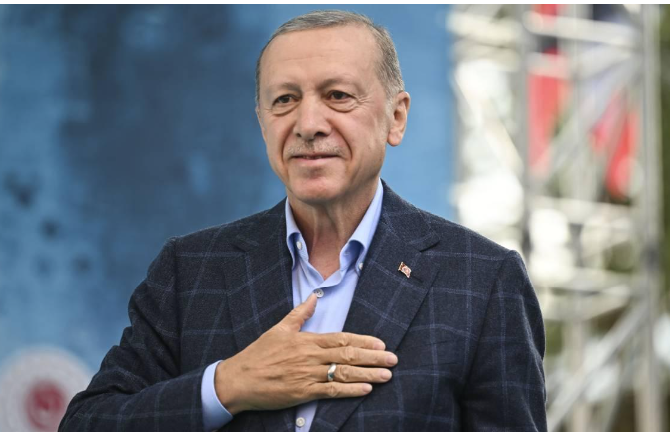
President Recep Tayyip Erdoğan said on October 15 that initial studies suggest 12.5 million tons of rare-earth reserves have been identified in Beylikova, near the northwestern city of Eskişehir. Ankara has applied to Australia’s Joint Ore Reserves Committee (JORC) for international certification — a move meant to validate the scale and quality of the discovery and attract foreign investment.
If confirmed, the deposit would make Turkey the world’s third-largest holder of rare-earth reserves, behind China and Brazil, according to data from the U.S. Geological Survey. Erdoğan said the country’s goal is “to become one of the five largest producers of rare-earth elements globally.”
A Strategic Resource in a Divided World
The timing of Turkey’s announcement is significant. Rare-earth elements such as dysprosium, neodymium and praseodymium are essential in manufacturing magnets for electric vehicles, wind turbines, smartphones, and military technology.
China dominates global production — controlling over 80 % of supply — and recently introduced new export controls in retaliation for U.S. tariffs, sending shockwaves through global markets.
Against this backdrop, Turkey’s discovery could provide Western economies with a non-Chinese source of critical materials. It also fits neatly into Ankara’s growing ambition to become a geostrategic energy and industrial hub connecting Europe, Asia, and the Middle East.
Foreign Technology Partnerships in the Works
Energy Minister Alparslan Bayraktar confirmed that Turkey is holding talks with China, the United States, Europe, Canada, and Australia to identify a partner that can supply the technology needed to refine and process the minerals domestically.
He emphasized that foreign participation will only be accepted under Turkish conditions, including technology transfer and local production commitments — reflecting the government’s “value-added production” policy aimed at keeping more of the economic benefit at home.
State mining company Eti Maden, which manages the Beylikova site, has already applied for JORC certification. CEO Yalçın Aydın said the field has an ore grade of around 1.75 %, an economically viable level for commercial mining. Samples from 310 locations show total resources of about 694 million tons, containing at least 10 different rare-earth minerals alongside fluorite, barite, and thorium.
From Pilot Plant to Full-Scale Production
Turkey launched a pilot facility in 2023 capable of processing 1,200 tons of ore annually. Bayraktar said the pilot plant has achieved over 90 % purity, though additional foreign expertise could improve efficiency.
The next step will be the design and construction of an industrial-scale plant, planned to begin in 2026 and open between 2027 and 2028. Once operational, the facility aims to process 570,000 tons of ore per year, yielding around 10,000 tons of rare-earth oxides.
Eti Maden’s Aydın stressed that the company “will focus on the right cost-quality balance” and “does not need to push for maximum purity,” hinting at a strategy tailored to industrial demand rather than speculative pricing.
A New Link in the European Supply Chain
Analysts say the find could be a game-changer for Europe’s green-tech sector, which depends heavily on Chinese supplies for critical materials used in batteries and renewable energy systems.
“This deposit could become part of a future rare-earth value chain supporting European electric-vehicle production,” said Willis Thomas, principal consultant at CRU Group in London. He estimated that the Beylikova reserves would increase non-Chinese global reserves by 17 % — a major shift in the balance of supply.
Positioning Between East and West
Ankara is trying to strike a delicate balance. While engaging in talks with China for potential cooperation, Turkey has also joined the Western-led Minerals Security Partnership (MSP), a forum designed to secure global access to strategic minerals through transparent investment and technology exchange.
Analysts see this dual-track approach as part of Turkey’s broader geopolitical strategy: leveraging its geographic and industrial position to mediate between competing blocs while advancing its own technological independence.
“The discovery could place Turkey at the intersection of global supply-chain realignment,” said mining researcher Kagan Ozdemir from Istanbul University-Cerrahpaşa. “It’s an opportunity not just to mine, but to lead.”