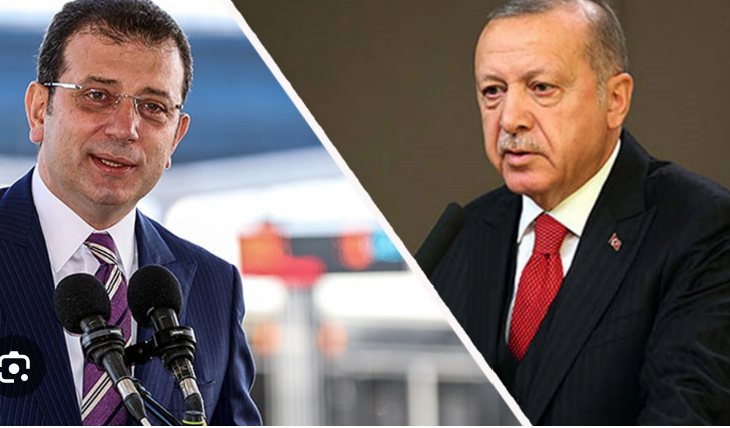
Turkish Analyst Warns of ‘Heaven and Hell’ Markets: İmamoğlu Probe and Corporate Seizure Laws Threaten Stability
 heaven hell
ISTANBUL – The Turkish financial markets are currently caught in a volatile “Heaven and Hell” dynamic, where fleeting good news is immediately offset by catastrophic political risk, according to veteran financial analyst Atilla Yeşilada. The recent market rally, sparked by a political court decision, is being overshadowed by a new espionage investigation targeting Istanbul’s Mayor, Ekrem İmamoğlu, raising the immediate threat of a government-appointed trustee (kayyım) and a complete reversal of market sentiment.

In a recent analysis, Yeşilada delivered an urgent warning to investors: any sustained upside is a “dead cat bounce” and merely a “selling opportunity” (mal boşaltma fırsatı) until the threat of political interference is resolved. The core issue, he argues, is not economics but the systemic erosion of the rule of law.
The Political Pendulum: Rally and Retaliation
The dramatic market swing began last Friday following two conflicting Ankara developments.
The first, and initially uplifting, event was the Ankara Court of First Instance’s decision to dismiss a lawsuit seeking the annulment of the main opposition CHP’s congress. This unexpected ruling was instantly interpreted by investors as a reduction in domestic political uncertainty. Because foreign investors have long cited political instability and uncertainty as their primary barrier to entering Turkey, the ruling triggered a significant rally in the Borsa Istanbul (BIST) and saw Turkey’s Credit Default Swaps (CDS)—a gauge of risk—fall sharply toward 250 basis points.
However, the euphoria was short-lived. Simultaneously, the Istanbul Chief Public Prosecutor’s Office announced an espionage investigation against Mayor İmamoğlu. The analyst described the speed and timing of the retaliation as “unimaginable,” immediately pivoting the market from optimism back to deep fear.
Yeşilada warned that the investigation is a precursor to an even greater shock: if the Mayor is detained or formally charged, the Interior Ministry would be legally empowered to appoint a trustee, effectively seizing control of Istanbul, Turkey’s economic powerhouse.
“A government-appointed trustee in Istanbul would create a shock at least as large as Mayor İmamoğlu’s initial detention, completely reversing the optimism that began to spread in the markets,” Yeşilada stated.
The Policy Paradox: A Rally for Selling
Yeşilada advises investors to be extremely cautious, suggesting that until the Interior Ministry explicitly rules out appointing a trustee in Istanbul, investors must flee risky assets. His preferred safe haven is not gold or foreign currency, but Turkish Lira deposits—a move predicated on the Central Bank’s current monetary strategy.
The Central Bank’s latest decision to cut the policy rate by a cautious 100 basis points—a move considered insufficient by many for a deeply inflationary environment—is seen by the analyst as confirming a commitment to a “strong Turkish Lira” policy. Yeşilada believes the TCMB is skillfully managing the delicate balance between interest rates and the exchange rate to prevent excessive capital flight and maintain financial stability, even if it means foregoing deep rate cuts.
This strategy, coupled with generally solid Q3 earnings forecasts for Turkish banks and improving—or “normalizing”—corporate profits across the non-financial sector, creates a highly favorable technical environment for the BIST. Furthermore, with the policy rate currently at 39.5% and inflation expected to fall, the bank is forecast to cut the rate by another 7-9 percentage points over the next 12 months, naturally steering domestic capital toward the stock market.
Yet, Yeşilada maintains that this short-term rally is an illusion. Given the overriding political threat, the rally is merely an opportunity for foreign and savvy domestic investors to “offload holdings” before the political system delivers the next seismic shock.
The Structural Threat: Corporate Seizure by Decree
The deepest, most systemic risk highlighted by the analyst is a new measure buried within the proposed Omnibus Tax Bill. The new provision would reportedly grant state prosecutors the authority to seize company assets—without requiring a prior court order or the explicit findings of oversight bodies like MASAK (Financial Crimes Investigation Board)—in cases involving organized crime, credit card fraud, or qualified fraud.
Yeşilada views this law as the ultimate nail in the coffin for the rule of law in Turkey, as the crimes cited in the bill are the same ones historically used to justify politically motivated corporate takeovers.
“This essentially opens the door for prosecutors to seize any company they want under political pretexts,” he warned, suggesting the law reflects a growing desperation within the regime to find new sources of wealth.
The analyst linked this escalating corporate risk to the İmamoğlu investigation itself, suggesting that the drive to regain control of Istanbul may be motivated by an underlying need to control lucrative urban rent-seeking projects, such as the planned Kanal Istanbul route. With the national budget strained and state-funded rents becoming scarce, the regime is forced to resort to increasingly aggressive methods to secure financing and reward loyalists.
Global Tailwinds Ignored
Compounding the tragedy of domestic instability is the fact that Turkey is failing to capitalize on an exceptionally favorable global environment.
Yeşilada noted that global financial conditions are currently highly conducive to Emerging Markets (EM). The U.S. Federal Reserve (Fed) is widely expected to begin a phase of rate cuts, which typically pushes capital out of safe havens and into higher-yielding EM bonds and equities. This dynamic is already manifesting in record inflows into other EM jurisdictions.
While Turkey currently offers highly attractive carry trade opportunities—with foreign investors holding nearly $50 billion in lira swaps—the flow into Turkish bonds and stocks has been negligible due to the sustained political risk. If the political situation were stabilized, Turkey would be perfectly positioned for a massive inflow of foreign capital into both its equity and fixed-income markets.
In conclusion, Yeşilada’s analysis is blunt: Turkey possesses strong technical factors and global tailwinds, but all are rendered irrelevant by political instability. Until the risk of a political takeover of Istanbul—and the broader threat of arbitrary corporate seizures—is neutralized, investors should prioritize caution and liquidity over exposure to Turkish risky assets.
Related articles

New Poll Shows İmamoğlu Widening Lead Over Erdoğan After Arrest
Atilla Yeşilada video commentary: Turkish economy enters stagflation |
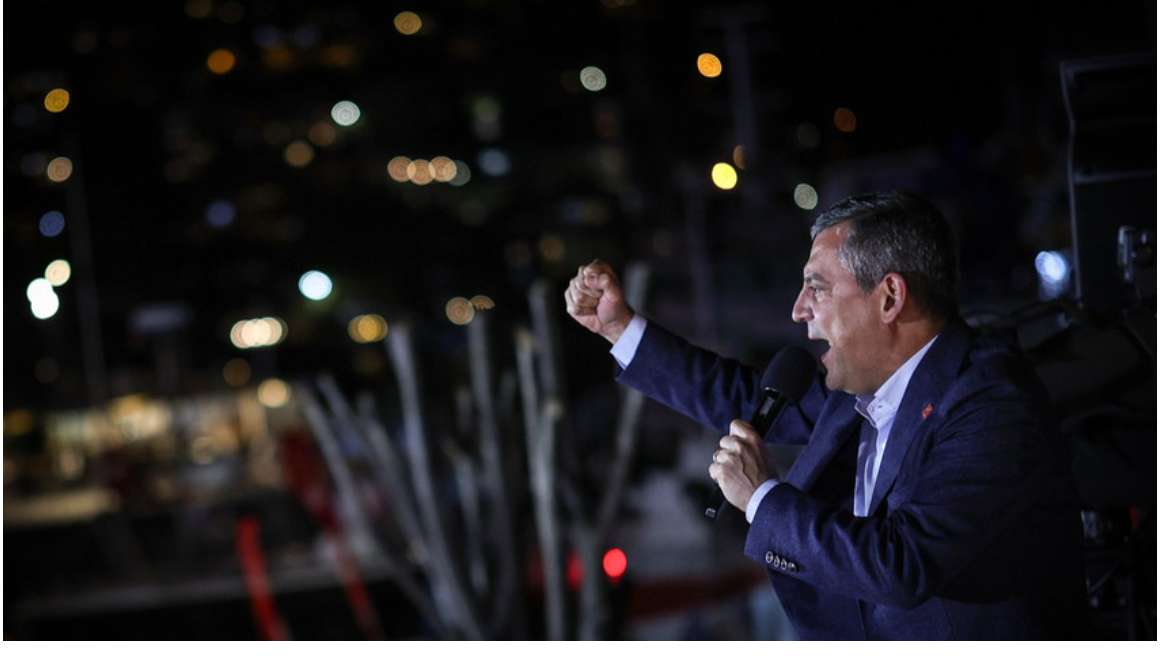
CHP leader Özgür Özel denounces espionage charges, says ‘no chance’ of municipality trustee appointment