Turkey’s Economic Renewal: Şimşek Outlines the Nation’s Path to Stability and Growth
 mehmet-simsek
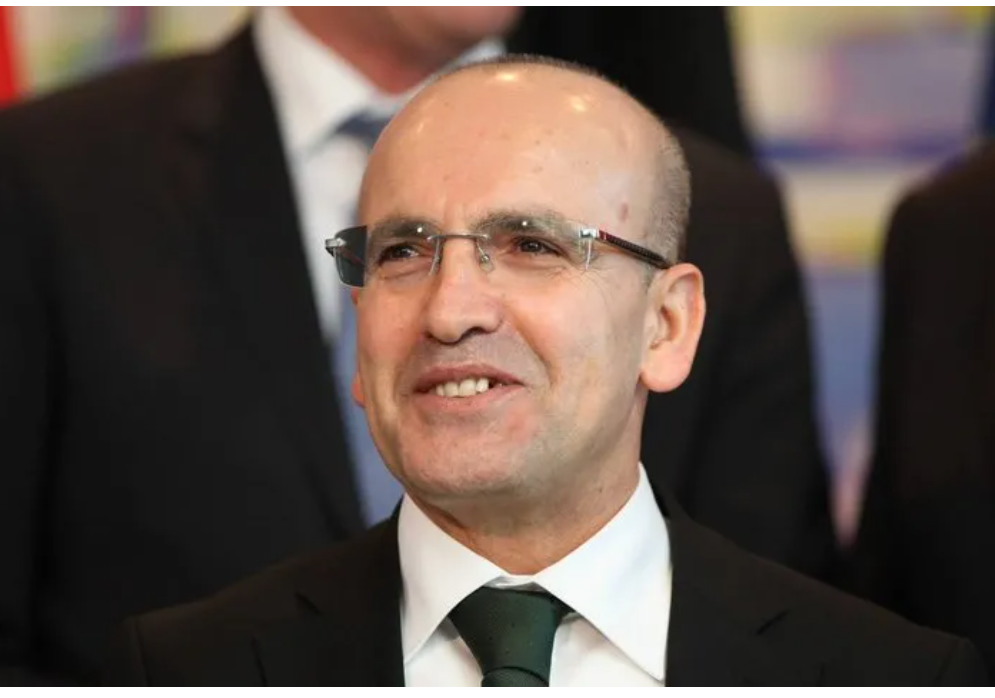
At the 2025 TRT World Forum in Istanbul, Turkey’s Treasury and Finance Minister Mehmet Şimşek laid out the country’s economic roadmap under the disinflation program, emphasizing that Turkey is entering a new, more mature phase of its recovery. “Our goal is to achieve price stability, strengthen fiscal discipline, and reduce the current account deficit. We are seeing significant progress. We are now in the second phase of the program, and the improvement is notable,” Şimşek stated.
The minister highlighted that despite global economic turbulence and trade fragmentation, Turkey has proven to be less vulnerable than many emerging economies. This resilience, according to Şimşek, stems from the structure of Turkey’s trade and export markets, which remain geographically diverse and strategically positioned.
Regional Trade Resilience and Strategic Partnerships
“Because 62% of our exports go to countries with which we have free trade agreements, and over 80% go to nearby regions such as Central Asia, the Middle East, and North Africa, this gives us partial protection,” Şimşek explained. He pointed out that Turkey’s proximity to key regions provides both a cushion and a competitive edge in an era of protectionism.
Another crucial element of this resilience lies in service exports. “Our share of services exports is strong compared to international averages. Service trade has not yet been affected by protectionism. We can turn this into an opportunity,” he noted. Şimşek added that Turkey is reinforcing regional economic integration as a “cure for global fragmentation,” while actively negotiating new free trade agreements with Gulf countries and modernizing existing deals with the UK and the EU.
Leveraging Low Debt for High-Value Investment
The minister underlined the importance of low public debt as one of Turkey’s key macroeconomic strengths. “Globally, total debt as a share of GDP has risen dramatically to 324%, while in Turkey it stands at 89%. This is a major advantage and gives us room to invest more in infrastructure, education, and healthcare,” he said.
Şimşek emphasized that this fiscal space allows Turkey to channel investments toward structural reforms, productivity-enhancing industries, and emerging technologies such as artificial intelligence and the green transformation. “Countries with high debt loads don’t have the same flexibility. We’re using this opportunity to invest in the future,” he added.
Demographic Edge and the “Silver Economy”
Addressing global demographic shifts, Şimşek noted that Turkey remains relatively young and demographically advantaged. “We still have about 20 years of demographic opportunity ahead of us,” he said. He stressed ongoing initiatives to increase female labor force participation and identified the “silver economy”—services and products tailored for aging populations—as a growing opportunity. “Globally, the size of the silver economy is expected to rise from $5.5 trillion to $8.5 trillion. Turkey can become an international hub in health and elderly care services,” he remarked.
Investing in Technology and Sustainability
Şimşek detailed how Turkey is accelerating its investments in artificial intelligence, 5G, defense, and renewable energy, aiming to cement its position as a global green tech player. “We are accelerating the renewable energy transition. Turkey ranks among the top 10 countries in solar, wind, and geothermal equipment production capacity. Our potential in green technologies is high,” he affirmed.
These efforts, he argued, are central to ensuring sustainable economic growth and long-term competitiveness, especially in an increasingly fragmented world economy.
Toward Sustainable Growth and Investment Confidence
Şimşek underscored that foreign direct investment in Turkey has multiplied 20-fold over the past two decades and continues to grow. “Turkey is once again becoming a regional hub for direct investment. With new credit rating upgrades, we aim to return to investment-grade status,” he said.
He also noted Turkey’s strong average real growth rate of 5.4% over the past 20 years, describing it as evidence of consistent economic performance. “This reflects the economic performance under President Recep Tayyip Erdoğan. Compared to other developing countries—excluding China and India—Turkey’s growth performance is clearly ahead,” Şimşek stated.
As Turkey advances into the second stage of its disinflation and reform program, Şimşek’s message was clear: discipline, diversification, and digital transformation will shape the nation’s next economic chapter. The government’s commitment to macroeconomic balance, regional cooperation, and sustainable innovation appears set to define Turkey’s renewed path toward stability and prosperity.