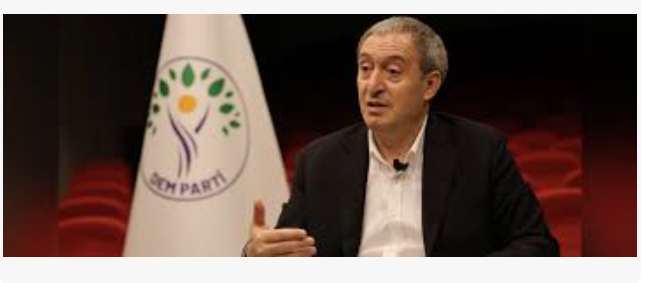
Peace Process with the Kurds Falters Amid Delays and Distrust
 abdullah ocalan
Summary:
A year after Turkish and Kurdish leaders shook hands in parliament to launch a new peace initiative, optimism is fading. Despite Abdullah Öcalan’s call for the PKK to disband and symbolic disarmament ceremonies, Kurds say no real steps have been taken on political prisoners or cultural rights. Accusations of stalling, internal resistance, and conflicting political agendas threaten to derail what was once hailed as a new era of reconciliation.
Diyarbakir’s Uneasy Calm
In Diyarbakir, southeastern Turkey’s unofficial Kurdish capital, hope and skepticism coexist. Streets once scarred by curfews and clashes now buzz with construction and radio chatter. Yet, for many residents, scars from past conflicts run deeper than the city’s rebuilt walls.
“The house and neighborhood I lost in that war won’t come back,” said Irfan, a taxi driver forced to flee Sur during the 2015 clashes. “They talk about peace, but we don’t see it — no rights, no justice, no real change.”
He, like many Kurds, ties his hopes to the fate of Selahattin Demirtaş, the jailed Kurdish politician detained since 2016 for his alleged role in the 2014 Kobani protests. Despite rulings from the European Court of Human Rights calling his detention political, Ankara has resisted implementing his release.
“The government uses Demirtaş as a bargaining chip,” Irfan said. “If they release him, then maybe we’ll believe in peace.”
Hanim, a 51-year-old local visiting the Great Mosque in Sur, echoed the frustration:
“They talk about peace, but where is it? Let Demirtaş go free — then people will start believing again.”
Language rights are another key demand. “If they’re serious,” Hanim said, “our children must be allowed to study in their mother tongue.”
From Historic Handshake to Political Gridlock
The peace initiative began on October 1, 2024, when hardline nationalist Devlet Bahçeli of the Nationalist Movement Party (MHP) shook hands with Tuncer Bakırhan, co-chair of the pro-Kurdish DEM Party, during a parliamentary session. The symbolic gesture stunned Turkey’s political establishment and briefly lifted hopes.
Soon after, Bahçeli called for easing restrictions on Abdullah Öcalan, the imprisoned PKK leader, to allow him to “declare the end of terrorism.” Öcalan later met his nephew, DEM MP Ömer Öcalan, on Imralı Island for the first time in four years.
In February, Öcalan issued a historic letter calling for the PKK’s disbandment, followed by a ceasefire in March. By July, PKK fighters in northern Iraq were publicly burning their weapons — an act widely interpreted as the symbolic end of Turkey’s 46-year insurgency.
In August, parliament formed a Commission on Social Peace and Democratic Resolution, a 51-member body representing all major parties, tasked with drafting reforms to promote democracy, language rights, and the rule of law.
However, legal experts warn the commission lacks legislative authority and risks becoming a “symbolic platform with no real power.”
Growing Frustration: “Hope Is Turning to Despair”
In Diyarbakir, DEM Party Co-Mayor Doğan Hatun said that, so far, “the only tangible step has been the formation of the commission.”
“It’s valuable, but without constitutional reform, it risks becoming another stalling tactic,” Hatun told BIRN. “Hope is turning into despair.”
Recent polls back his concern. A September 2025 ASAL Research survey found 54.6% of Turks support the peace process, while 33% oppose it. Support is highest among conservatives (76%) but lowest among secular voters. Among Kurds, 70% still back the initiative — though patience is wearing thin.
AKP MP Galip Ensarioğlu, a Kurdish member of President Recep Tayyip Erdoğan’s party, acknowledged the difficulty:
“If the peace process moves forward, then Demirtaş’s release should naturally follow. But building peace is harder than waging war — this is the Middle East; things can change overnight.”
Political Fault Lines Deepen in Ankara
At an October 14 parliamentary meeting, Bahçeli accused the DEM Party of making “maximalist demands,” prompting Bakırhan to respond that the party’s goals were “democratic and legitimate.”
Former Agriculture Minister Mehdi Eker, also speaking in Diyarbakir, struck an optimistic tone:
“We will look forward, not backward. Turks, Kurds, and Arabs will build peace together in this land.”
But in practice, the government’s concrete steps remain limited.
Saruhan Oluç, DEM Party MP and spokesperson for the peace commission, said:
“There are powerful actors inside and outside the state who want to derail this process. Only a new constitution can make peace lasting.”
PKK’s Reaction: “Bahçeli Thinks He Can Deceive Us”
Meanwhile, PKK senior figure Duran Kalkan accused Ankara of failing to deliver on its promises. Speaking to Medya Haber TV on the first anniversary of the peace process, Kalkan said:
“There are war profiteers who feed on blood and oppression. Bahçeli started this process but has forgotten his own words.”
He criticized ongoing restrictions on Öcalan’s communication, describing the Imralı prison system as “a hostage regime.”
“Bahçeli once said Öcalan should speak in parliament. Now he wants him to manage the process from isolation — how is that possible? They think calling him a ‘founding leader’ will deceive us, but we see through it.”
Despite the frustration, Kalkan reaffirmed the PKK’s commitment to peaceful transformation:
“We remain bound by our 12th Congress decisions. We insist on a democratic political strategy. If the path is opened, we are ready to fulfill our part.”
Öcalan’s “Right to Hope” Appeal
On October 13, Öcalan’s lawyers from the Asrın Law Office visited him on Imralı and later released a statement emphasizing the “right to hope.”
“The state must take steps to remove this burden,” Öcalan was quoted as saying. “This affects thousands of people — the right to hope is fundamental to human dignity.”
The “right to hope” refers to the principle that even life-sentenced prisoners must have the possibility of release someday — a concept that could redefine Turkey’s penal system if applied.
Sources: Balkan Insights, Rudaw, Turkish press
PA Turkey intends to inform Turkey watchers with diverse views and opinions. Articles on our website may not necessarily represent the view of our editorial board or count as endorsement.
Follow our English language YouTube videos @ REAL TURKEY:
🔗 https://www.youtube.com/channel/UCKpFJB4GFiNkhmpVZQ_d9Rg
And content at Twitter: @AtillaEng — Facebook: Real Turkey Channel
🔗 https://www.facebook.com/realturkeychannel/
Related articles
Ten Parliamentary Immunity Files Submitted to Turkish Parliament, Including CHP Leader Özgür Özel
COMMENTARY: Did the DEM Party Fumble the Peace Process?
Uğur Ergan: Business Community Uneasy Over Potential Crackdown on CHP