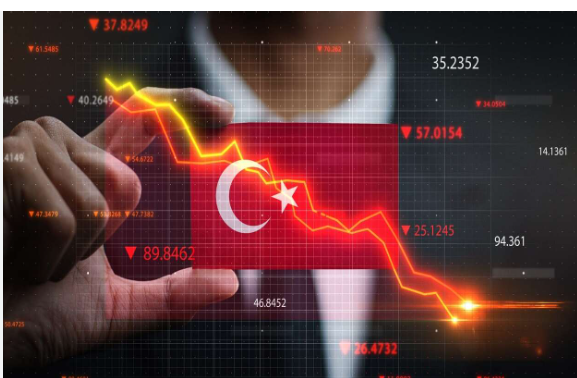
Foreign Investors Boost Lira Bets as Swap Positions Break $50 Billion Threshold
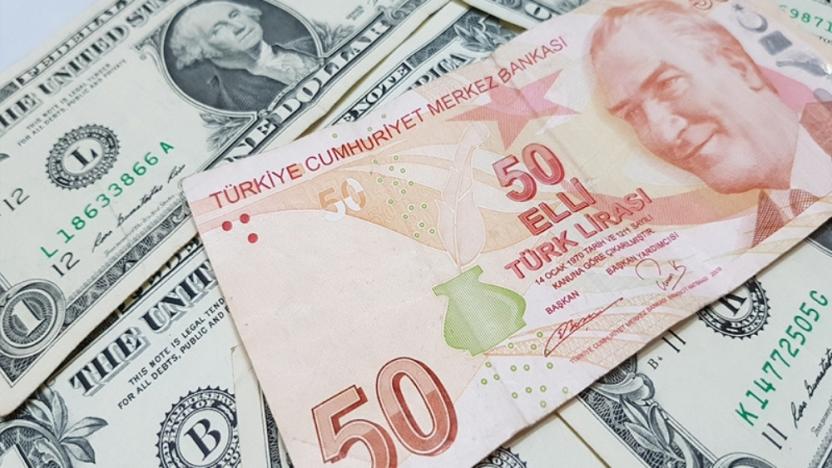 Lira
Lira
Foreign investors are once again ramping up their Turkish lira (TL) carry trade positions, signaling renewed confidence in the currency as Turkey enters the final quarter of 2025. According to official data, the total size of derivative positions favoring the lira surpassed $50 billion last week — the highest level seen this year.
Swap Positions Rise Above $50 Billion
Data from the Banking Regulation and Supervision Agency (BDDK) shows that the off-balance-sheet foreign currency position (BDYPP) of Turkish banks reached $47.2 billion in the week ending October 17. Meanwhile, the Central Bank of Turkey’s (CBRT) reverse swap positions rose to $3.2 billion, pushing the combined total of TL-favorable derivatives to $50.4 billion — exceeding the symbolic $50 billion mark.
The weekly increase of $786 million underscores a steady upward trend since late September, when the figure stood around $41 billion. Analysts interpret the rise as a reflection of growing foreign appetite for lira-denominated assets, amid declining inflation expectations and continued adherence to orthodox monetary policies.
Swap Limits and Regulatory Framework
Under a June 23, 2022 BDDK regulation, swap limits for banks are tied to their equity levels.
-
For TL-buying transactions, the limit is 10% of equity.
-
For TL-selling transactions, limits are set at 5% for 7-day maturities, 10% for 30 days, and 30% for 365 days.
These restrictions aim to prevent excessive volatility and speculative activity, but they also affect TL liquidity conditions, particularly when short-term demand spikes.
Short-Term Volatility and Liquidity Tightness
According to Canberk Yalçın, Portfolio Manager at Record CM, most foreign investors engage in short-term carry trade positions lasting between one week and one month.
“When TL demand or supply rises sharply, offshore swap limits can restrict liquidity, causing short-term rate volatility,” Yalçın explained.
“We saw this in March, when TL liquidity tightened and offshore short-term interest rates spiked.”
Back in March 2025, approximately $20 billion in carry trade positions were unwound, triggering temporary fluctuations in the FX swap market.
Yalçın noted that for longer maturities, limits are less constraining, allowing “real money” funds—such as institutional investors and asset managers—to maintain their exposure. However, he cautioned that carry trade’s appeal is starting to fade, suggesting these limits will likely be less of a headline issue going forward.
“For funds with longer horizons, these limits are more of a risk management concern — the question becomes whether they can unwind their positions smoothly if market conditions change,” he added.
Deutsche Bank: Policy Continuity Key to Investor Confidence
In a October 23 report, Deutsche Bank Turkey Economist Yiğit Onay warned that political uncertainty could prompt some investors to scale back their carry trades as a risk-avoidance measure.
Still, he maintained an optimistic view on the broader trend:
“As long as the Central Bank of Turkey maintains its orthodox policy stance, we do not expect a structural shift in portfolio preferences,” Onay wrote.
Related articles

Yılmaz: Turkish economic program working as planned

Turkey’s $40 Billion Bet: Şimşek Vows to Crush Inflation by 2027 — No Matter the Cost
Global Banks Raise Year-End USD/TRY Forecasts Amid Inflation and Policy Uncertainty