COMMENTARY: The Great Turkish Capital Shuffle: How Assets are Changing Hands Under the Guise of Crime Probes
 sirket operasyonlari
By NEFES Gazette colmnist (Mr) Deniz Zeyrek
For some time now, a significant transfer of capital has been underway in Turkey, orchestrated through a series of targeted investigations and operations. The Savings Deposit Insurance Fund (TMSF), an institution that gained notoriety in the late 90s for large-scale seizures, is once again seizing control of major companies, rapidly selling them off in what amounts to a quiet, state-directed redistribution of assets.
What is particularly noteworthy is that the companies being seized have little to do with the opposition. On the contrary, almost all of them are known for their proximity to—or outright support of—the ruling government.
The Flash TV Case: An Unusual Acquisition and Swift Seizure
Recall the Flash TV saga. The channel was on the verge of being sold to Cafer Mahiroğlu, the owner of Halk TV, with an agreement virtually finalized. Yet, the sale never materialized. A power faction in Ankara intervened, first blocking Mahiroğlu’s acquisition.
Subsequently, a different figure, Erkan Kork, the owner of companies like Pozitifbank and Payfix, was brought in for high-level meetings in Ankara. Following these discussions, Kork seemingly acquired Flash TV by direct instruction.
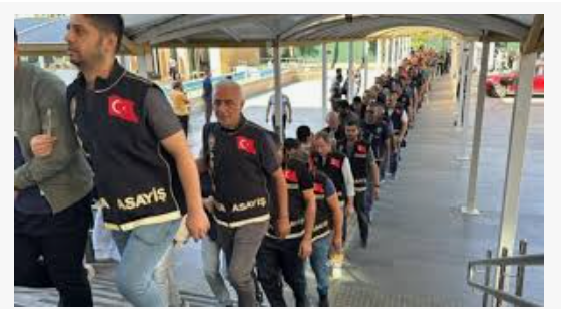
But the story took a sharp turn. Very shortly after the acquisition, an operation was launched, alleging that Erkan Kork was the leader of an illegal betting organization. Kork and his associates were arrested and imprisoned. The TMSF immediately stepped in and seized Flash TV.
Intriguingly, Flash TV was sold last week to Öz Er-Ka, a company owned by Eşref Keleş—a former Justice and Development Party (AKP) parliamentary candidate. The channel, valued by the TMSF at 84 million Turkish Lira, was purchased by Keleş for nearly double that price. I cannot fathom the logic behind paying such a premium for a television channel in this economic climate. (It is perhaps unnecessary to remind readers that Öz Er-Ka was also a prominent winner of housing tenders following the recent earthquakes.)
The Can Holding Enigma: From Government Darling to ‘Smuggler’
Another prime example is Can Holding. This group attracted significant attention by acquiring major educational institutions like Bilgi University and Doğa Colleges. They were exceptionally close to the ruling power, with political supporters and business partners deeply embedded within the AKP, leading to remarkable growth in recent years.
Their reputation grew further with the purchase of a 42.5% stake in TEKFEN Holding and the acquisition of the Ciner Media Group. The government reportedly encouraged the Ciner Media Group acquisition. This context makes the confession of Kemal Can, who was arrested during the subsequent operation, particularly striking: “I did everything under the direction of high-ranking state officials.”
It was, therefore, highly unusual when the very same government-backed Can Holding was suddenly branded as a “petroleum and cigarette smuggler” and targeted by a major operation.
The plot thickened when the TMSF ultimately took possession of both the Ciner Media Group’s organs and the 42.5% stake in TEKFEN.
Three extremely reasonable questions remain unanswered by the authorities:
- How did 88 billion Turkish Lira worth of smuggling evade the notice of the government and the state for so many years?
- Why did the state not issue a warning to Ciner Holding that the buyer’s funds (Can Holding) were allegedly derived from illicit activities, thereby preventing the sale?
- The Competition Authority approved the sale of the 42.5% TEKFEN stake after the operation began. If Can Holding was indeed dealing with criminal proceeds, why did the state not intervene to stop the sale? Instead, it approved the transaction post-operation, only to seize the shares immediately afterward.
The Widening Circle of Exclusion
These high-profile cases are just the tip of the iceberg; many other asset transfers are escaping public attention.
I must remind you that Binsat, a company that emerged during the second Can Holding operation, experienced its light-speed growth under the AKP’s rule. If we ask how the impoverished Bingöl Brothers became so successful in just 15 years, insiders will point to two politically powerful figures who rose through the AKP ranks. Is it possible that these once-favored names are now being excluded from the inner circle?
Speaking of excluded names, two recent major projects have also caught my eye:
First, the Tersane Istanbul Project on the Golden Horn. Could there have been an unannounced change in the partnership structure, discreetly pushing out certain individuals I’ve mentioned?
Second, the Ministry of Foreign Affairs tender. Everyone in Ankara knew the contract was set to be awarded to the company that had previously built the Presidential Palace, the Ministry of Defence’s “Ay Yıldız” Project, the MIT’s “Kale” building, and the new Ankara Courthouse.
State Prosecutors Seek Centuries-Long Prison Terms for CHP Mayors in Organized Crime Probe
Yet, in a bizarre turn, the tender was awarded to the Cevahir Group, owned by İbrahim Cevahir—a fact personally announced by President Erdoğan, who noted Cevahir’s origins from Çaykara. Cevahir’s promise to finish the second phase (which hasn’t even been tendered yet) ahead of schedule strongly suggests he will be awarded the second contract as well. Is it not telling that in a public project worth approximately 100 billion Turkish Lira, the contractor could be changed so easily? I should also note that Cevahir’s star has been shining exceptionally brightly in recent days.
My sources suggest that this rapid transfer of capital and tenders is a direct consequence of the “future leadership” debate raging within the AKP. Initially, two major companies close to the AKP’s “Big Five” construction group were excluded based on unproven claims of proximity to IMM Mayor Ekrem İmamoğlu. Now, the exclusion has started to target prominent AKP politicians and companies rumored to be supporting Foreign Minister Hakan Fidan.
In short, it is highly beneficial to view these ongoing developments through the prism of an internal political and financial purge.