Borsa Istanbul Soars Over 3% as Court Clears CHP in Key Lawsuit
 borsa3
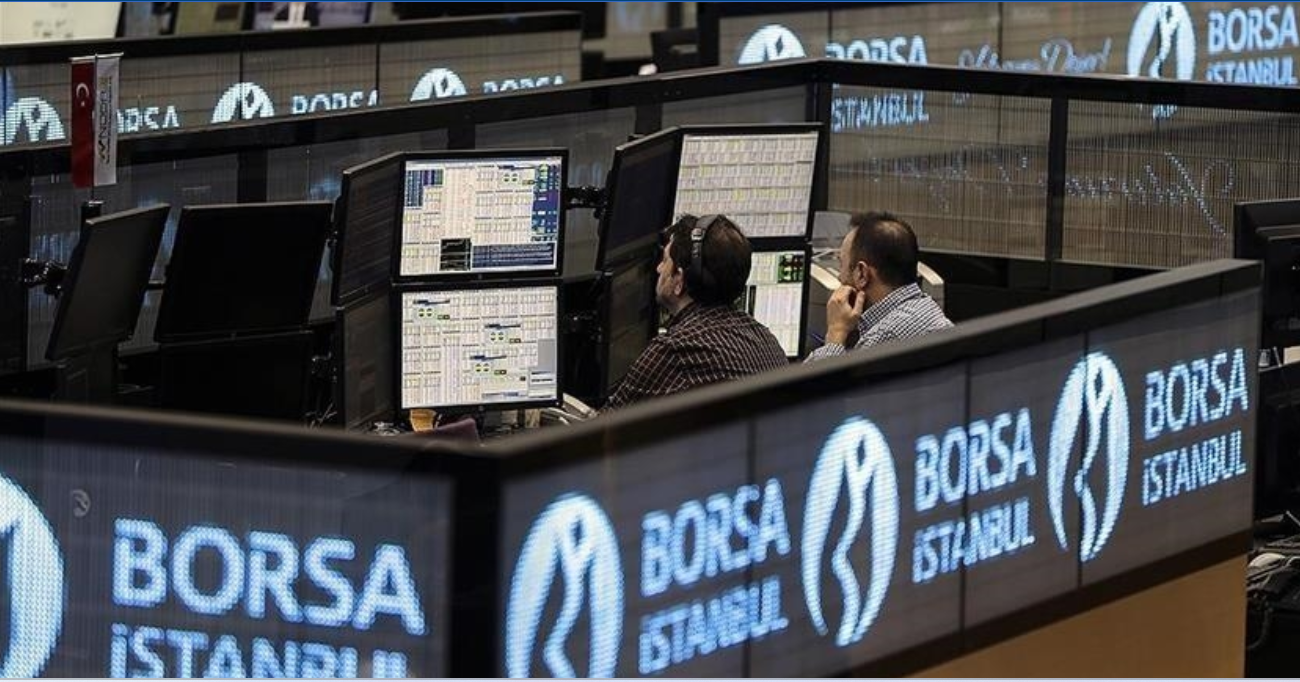
Turkey’s financial markets rallied sharply on Friday after an Ankara court rejected the “absolute nullity” case targeting the main opposition Republican People’s Party (CHP), easing political tension and sparking strong foreign inflows into Turkish assets. The benchmark Borsa Istanbul 100 Index climbed more than 5% in the morning session, but closed the day up only 3.14% as profit taking kicked in, while the country’s credit risk premium dropped to a one-month low.
Political relief sparks equity surge
The Borsa Istanbul 100 Index (BIST 100) surged more than 5% in intraday trade, extending gains that began at the open when the index rose 0.86% to 10,699 points.
The banking sector led the rally, with the banking index up 1.75% and the holding index rising 0.75%, while the paper and printing sector slipped slightly by 0.02%.
The index later gave back part of its early gains but still closed the session 3.14% higher, marking one of its strongest daily performances in months.
Traders attributed the sudden momentum to a key court ruling by Ankara’s 42nd Civil Court, which acquitted the opposition party of alleged procedural violations in its 2023 congress.
Several market sources said foreign funds resumed purchases after the verdict was announced, viewing the decision as a signal of relative political stability ahead of local elections.
Turkey’s CDS falls to one-month low
Alongside the equity rally, Turkey’s five-year credit default swaps (CDS) — a key gauge of sovereign risk — fell by 17 basis points to 250 bps, marking their lowest level in a month.
CDS spreads had previously spiked to 380 bps in April 2025, their highest in two and a half years, amid domestic political tensions and concerns over fiscal sustainability.
The decline in risk premiums this week reflects renewed investor confidence and growing optimism over Turkey’s economic and monetary policy trajectory.
The country’s CDS last touched 237.5 bps in mid-September, its lowest since February 2018.
Foreign inflows and resilient reserves
According to HSBC Portfolio Chief Economist İbrahim Aksoy, Central Bank data for last week showed a slight rise in FX and precious metals deposits, signaling continued hedging but also selective confidence in the lira.
-
Corporate FX deposits rose by $1.1 billion, and household FX deposits increased by $100 million.
-
Precious metal deposits jumped by $1.2 billion, driven by higher gold prices.
Foreign investors increased their holdings of lira-denominated government bonds by $151 million, while reducing equity positions by $178 million.
Meanwhile, the Central Bank’s gross FX and gold reserves rose by $8.7 billion, hitting a record $198.4 billion, supported by stronger gold valuations and steady capital inflows.
Stable lira, modest bond gains
The USD/TRY pair ended the day flat at 41.93, while local bond yields edged slightly lower following the Central Bank’s recent minor rate cut.
The two-year benchmark bond yield fell by 1 basis point to 40.41%, while longer-dated dollar Eurobond yields rose modestly in tandem with U.S. Treasury yields.
Turkey’s 2043 Eurobond yield increased 4 basis points to 7.40%, reflecting external market pressures rather than domestic developments.
The BIST 100 had already gained 0.5% on Thursday, and its rally above 11,100 points on Friday marks a significant technical breakout, according to local traders.
Foreign swap positions exceed $50 billion
Data published by BloombergHT showed that foreign investors’ lira swap exposure — positions reflecting confidence in the Turkish currency — rose above $50 billion for the first time since early 2023.
The Banking Regulation and Supervision Agency (BDDK) reported that off-balance-sheet FX positions stood at $47.2 billion for the week ending October 17, while the Central Bank’s reverse swap positions reached $3.2 billion, bringing the total to $50.4 billion.
This represents a weekly increase of nearly $786 million, up sharply from $41 billion at the end of September — a sign that carry trade inflows are strengthening as Turkey enters the final quarter of 2025.
Carry trade dynamics and liquidity risks
Record CM Portfolio Manager Canberk Yalçın explained that the recent rise in foreign lira positions mostly reflects short-term carry trades ranging from one week to one month.
“When demand for lira spikes suddenly, offshore swap limits can tighten liquidity and create volatility in short-term interest rates,” Yalçın said.
“We saw this in March, when offshore lira rates surged due to liquidity stress.”
He added that while short-term carry trades can fluctuate sharply, long-term investors (“real money” funds) remain relatively unaffected by regulatory limits.
“The attractiveness of carry trades has started to fade, but structural investors still see opportunity — provided they can manage exit risk properly,” Yalçın noted.
Deutsche Bank: ‘Policy continuity matters’
In a report dated October 23, Deutsche Bank Turkey economist Yiğit Onay wrote that some investors might temporarily reduce carry positions due to political uncertainty, but predicted no major portfolio shifts as long as the Central Bank maintains its orthodox policy stance.
“If the CBRT stays the course, we do not expect structural outflows from lira assets,” Onay said, noting that Turkey’s relatively high real rates and declining inflation expectations continue to attract foreign capital.