İş Bankası CEO Aran: Türkiye should pause inflation fight and shift economic strategy
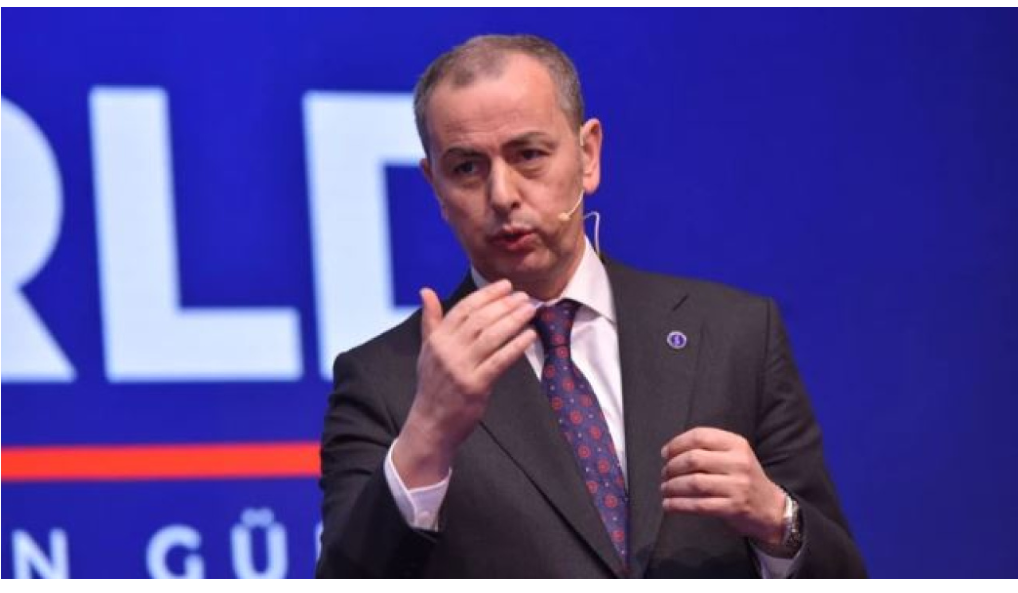 hakan aran is bankasi
Türkiye İş Bankası CEO Hakan Aran has called for a suspension of Türkiye’s current anti-inflation program, arguing that war-driven global conditions have made the policy unsustainable. He urged a shift toward an industry-focused growth strategy, warning that the existing framework is placing heavy strain on businesses and banks.
“Current program no longer workable”
Speaking in a recent interview, Aran said Türkiye is navigating an “extraordinary period” shaped by geopolitical shocks, particularly the ongoing war and its impact on energy markets.
According to Aran, the current macroeconomic environment—characterized by high oil prices, supply disruptions, and volatile input costs—makes it increasingly difficult to sustain a strict anti-inflation policy.
“There is no breathing space or reason for optimism unless we exit this program and transition to a new one,” he said.
Progress achieved—but at a cost
Aran acknowledged that the existing economic program has delivered tangible improvements:
- Inflation has declined from 85% to around 30%
- Central bank reserves have risen from –$60 billion to roughly $160 billion
However, he emphasized that these gains have come at a significant cost to the real economy.
“This is not a program that benefits SMEs, industrialists, or businesses. Its primary goal has been to restore fiscal balances,” Aran said.
He added that the main “losers” of the program have been the real sector and the banking system, which have borne the burden of tight monetary conditions.
Middle East Crisis and Türkiye: 74.9pct Fear Economic Fallout
Inflation still entrenched
Despite aggressive policy tightening, Aran argued that inflation remains structurally persistent due to external factors:
- Elevated energy prices
- Supply chain disruptions
- Rising input costs in agriculture and industry
He suggested that even under the most aggressive central bank policies, inflation would likely remain around 27%, while abandoning the program entirely could push it to around 32%.
“If the outcome is a 27–32% range regardless, the question becomes: why continue a program that severely damages the real sector?” he said.
Call for a new economic model
Aran proposed shifting toward a production- and industry-focused economic strategy, centered on boosting domestic manufacturing capacity and technological transformation.
He pointed to government-led initiatives targeting:
- Strategic industrial sectors
- Local production and supply chains
- Large-scale industrial investment zones
Under this approach, Türkiye would:
- Accept moderately higher inflation in the short term
- Channel financing into productive sectors
- Focus on becoming a regional manufacturing hub for Europe
“We should accept inflation in the 27–32% range temporarily and use it to finance a structural transformation of industry,” Aran said.
Energy shock undermines policy framework
A key argument in Aran’s assessment is the impact of global energy markets. He noted that oil prices in the $90–100 range and ongoing supply constraints are fundamentally incompatible with disinflation policies.
In such an environment:
- Cost pressures spread across all sectors
- Fuel price volatility feeds into inflation expectations
- Food prices rise through fertilizer and input costs
“Inflation is now unavoidable globally. This is not a Türkiye-specific issue,” he added.
TCMB Reserves Surge: Total Assets Reach 170.9 Billion Dollars
Social and structural consequences
Aran also linked high inflation to broader social challenges, arguing that prolonged economic instability has begun to affect social cohesion and behavior.
He pointed to recent incidents of violence in schools as an example of how economic stress can translate into societal and cultural deterioration.
“High inflation disrupts life balance and accelerates social breakdown,” he said.
Communication gap with households
Another critical issue, according to Aran, is the credibility gap between official inflation figures and public perception.
While official data shows inflation around 30%, households reportedly expect inflation closer to 50%.
This disconnect, he argued, weakens the effectiveness of policy:
- Reduces public trust
- Undermines expectations management
- Limits policy transmission
“Not abandoning the fight—just postponing it”
Aran clarified that he is not advocating abandoning the fight against inflation altogether, but rather pausing it under current conditions.
He suggested that disinflation efforts could resume once:
- Energy prices normalize
- External shocks subside
- Economic conditions stabilize
“You fight inflation to win. If you cannot win under current conditions, continuing the same approach may create additional problems,” he said.
Financing shift toward productive sectors
Aran also called for reopening credit channels—but with a clear focus on strategic industries, rather than broad-based lending.
He emphasized:
- Targeted investment in technology and manufacturing
- Support for large-scale industrial zones
- Alignment with Türkiye’s long-term development goals
“If inflation is inevitable, let it serve a purpose—financing production and transformation,” he concluded.
Outlook: Strategic pivot under debate
Aran’s remarks highlight a growing debate within Türkiye’s economic circles over whether the current policy framework remains viable in a volatile global environment.
As geopolitical risks, energy shocks, and inflationary pressures persist, policymakers may face increasing calls to reconsider the balance between:
- Price stability
- Growth and industrial policy
The coming months will likely determine whether Türkiye maintains its current course or shifts toward a more flexible, growth-oriented strategy.
Related articles
Şimşek acknowledges cost-of-living crisis and rejects tax amnesty requests

Foreign Investors Net $891 Million Buy in Borsa Istanbul in July

CBRT: Food and Services Drive Monthly Price Increases in September, “Main Trend Rising”