



Rising Sea Levels Threaten Istanbul’s Future
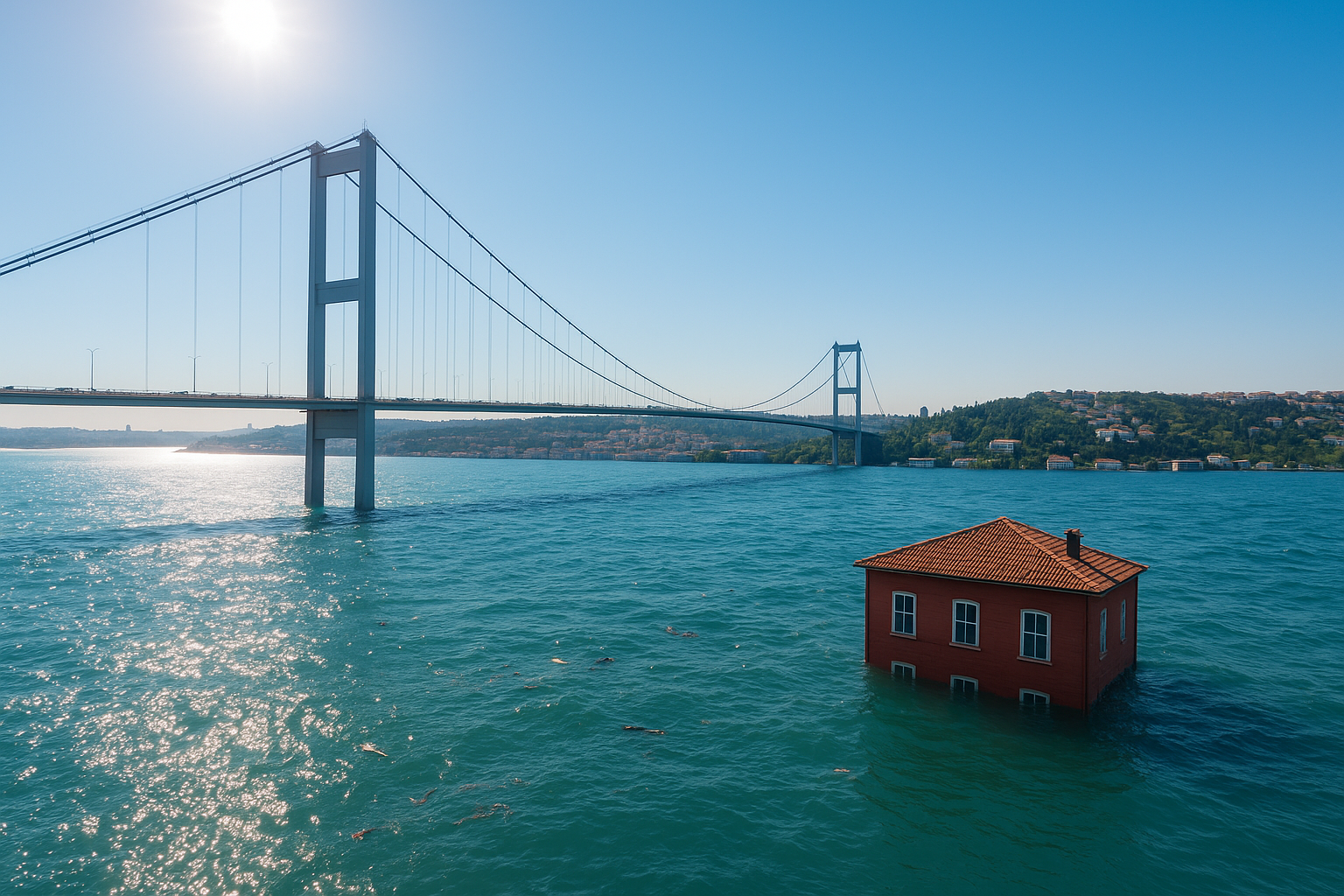 Rising Sea Levels in Istanbul
Istanbul faces a transformative environmental challenge as climate change projections suggest a significant portion of the megacity’s coastline could vanish by the year 2300. Recent data from the Istanbul University Institute of Marine Sciences and Management reveals a sobering trajectory for the metropolis, where a projected 15-meter rise in sea levels threatens to submerge over 10,000 structures and paralyze the city’s vital maritime infrastructure.
Rising Sea Levels: A Timeline of Coastal Displacement
The institute’s analysis, utilizing Geographic Information Systems (GIS) and Intergovernmental Panel on Climate Change (IPCC) projections, outlines a progressive crisis. By 2050, a predicted 1.5-meter rise could put 70% of Istanbul’s ports at risk. The situation intensifies by 2100, with a 5-meter increase potentially impacting all port facilities, 60% of railway lines, and 40% of coastal highways.
Professor Cem Gazioğlu, Director of the Institute, warns that under the most extreme scenario for 2300, the sea level could rise by 15 meters. “In this event, major hubs like Ambarlı Port, Haydarpaşa, and Yenikapı would face devastating floods,” Gazioğlu stated. This shift would inundate between 247,000 and 1.73 million square meters of land, primarily targeting storage and logistics facilities essential for international trade.
The Domino Effect on Infrastructure and Economy
The threat extends beyond simple flooding. Polar ice melt is accelerating sea-level rise, creating a chain reaction of industrial and environmental failures. Rising temperatures shorten equipment lifespan and increase energy costs, while saltwater intrusion threatens the city’s freshwater aquifers.
Professor Gürcan Büyüksalih emphasized that the risk is not merely economic but cultural. Historical areas, particularly around the Golden Horn, are vulnerable. “The erosion of coastal fill areas and the disruption of road and rail connections would trigger a massive logistics crisis, threatening Istanbul’s status as a global trade hub,” Büyüksalih noted.
To mitigate these risks, experts call for urgent adaptation strategies, including relocating critical infrastructure to higher elevations, reinforcing seawalls, and implementing digital early-warning systems. As Dr. İrşad Bayırhan suggests, planning must now account for the highest-risk scenarios to safeguard the city’s future.
Source: yenicag