CBRT Interest Rate Decision: Top Analysts Weigh In on Turkey’s Economic Path
 tcmb
tcmb
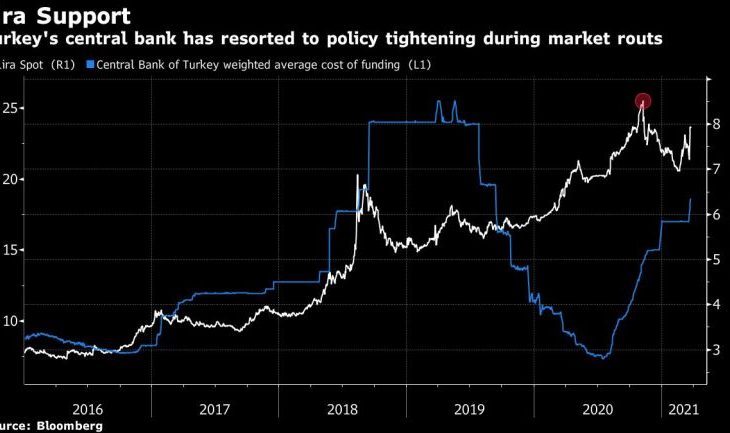
The Central Bank of the Republic of Turkey (CBRT) met on March 12, 2026, electing to keep the policy rate steady at 37.0% while maintaining the overnight lending rate at 40.0%. This decision, set against a backdrop of volatile energy prices and regional conflict, has sparked a debate among the nation’s top economists. Here is how the leading financial institutions and experts are interpreting the move.
Gedik Investment: A Shift to “Wait-and-See”
Analysts at Gedik Investment highlight that by maintaining the interest rate corridor (40.0% – 37.0% – 35.5%), the CBRT has effectively moved into a monitoring phase. While Gedik had anticipated the possibility of the one-week repo rate being raised to 40% to match current funding levels, they note the bank chose to rely on existing measures, such as suspending weekly repo auctions and issuing liquidity bills.
Gedik warns that inflation risks are heavily tied to the duration of the current oil price surge. “Prior to the recent surge, we projected year-end inflation at 25% and the policy rate at 30%,” the firm stated. However, they caution that if oil prices remain in the $90–$100 range for a prolonged period, “significant upward revisions” to both inflation and policy rate forecasts will become inevitable.
Akbank Economic Research: The Limit of Fiscal Buffers
Akbank Economic Research points out that while the initial 300-basis-point tightening and the fuel price smoothing mechanism (eşel-mobil) can offset a $90 oil price scenario, anything higher presents a systemic threat. Akbank emphasizes that commodities not covered by price smoothing—such as freight, fertilizer, and jet fuel—remain highly uncertain.
Furthermore, Akbank identifies a psychological risk: “When oil prices exceed $100, market stress increases… rising the risk of a spiral between foreign outflows and domestic demand for foreign currency.” They suggest the CBRT has adopted a communication strategy that allows for action only as developments materialize.
Vega Portfolio – Dr. Fulya Gürbüz: No Compromise on Tightness
Dr. Fulya Gürbüz of Vega Portfolio supports the CBRT’s “prudent stance,” noting that the bank made it clear that geopolitical risks are the primary driver of current policy. In her analysis, Gürbüz observes that despite inflation showing a flat trend in February, the deterioration in global risk appetite and rising energy costs necessitated the bank’s coordinated fiscal and monetary response.
She warns that if the U.S.-backed Israel-Iran conflict is prolonged, an acceleration in monthly price increases is highly probable, justifying the bank’s decision to keep liquidity tight.
Global Source Partners Turkey: The Danger of “Seeing Through” the Shock
Providing a more critical perspective, Global Source Partners (GSP) argues that the CBRT is attempting to treat the current situation as a temporary supply shock. GSP contends that “seeing through” a shock is a luxury reserved for central banks with low inflation and anchored expectations—neither of which Turkey currently possesses.
GSP notes that while the de facto 300-basis-point hike (moving transactions to the 40% O/N market) is significant, it may not be enough. “The correct policy… would be to send a strong signal by moving the policy rate to 40%.” With a calculated $25 billion drop in net reserves between February 27 and March 10, GSP warns that waiting six weeks until the next meeting on April 22 may be a risky gamble.
PA Turkey intends to inform Turkey watchers with diverse views and opinions. Articles in our website may not necessarily represent the view of our editorial board or count as endorsement.
Follow our English YouTube channel (REAL TURKEY):
https://www.youtube.com/channel/UCKpFJB4GFiNkhmpVZQ_d9Rg
Twitter: @AtillaEng
Facebook: Real Turkey Channel: https://www.facebook.com/realturkeychannel/