Atlantic Council: Iran War Poses Greater Risks for Türkiye Than Previous Regional Conflicts
 tr iran tensions
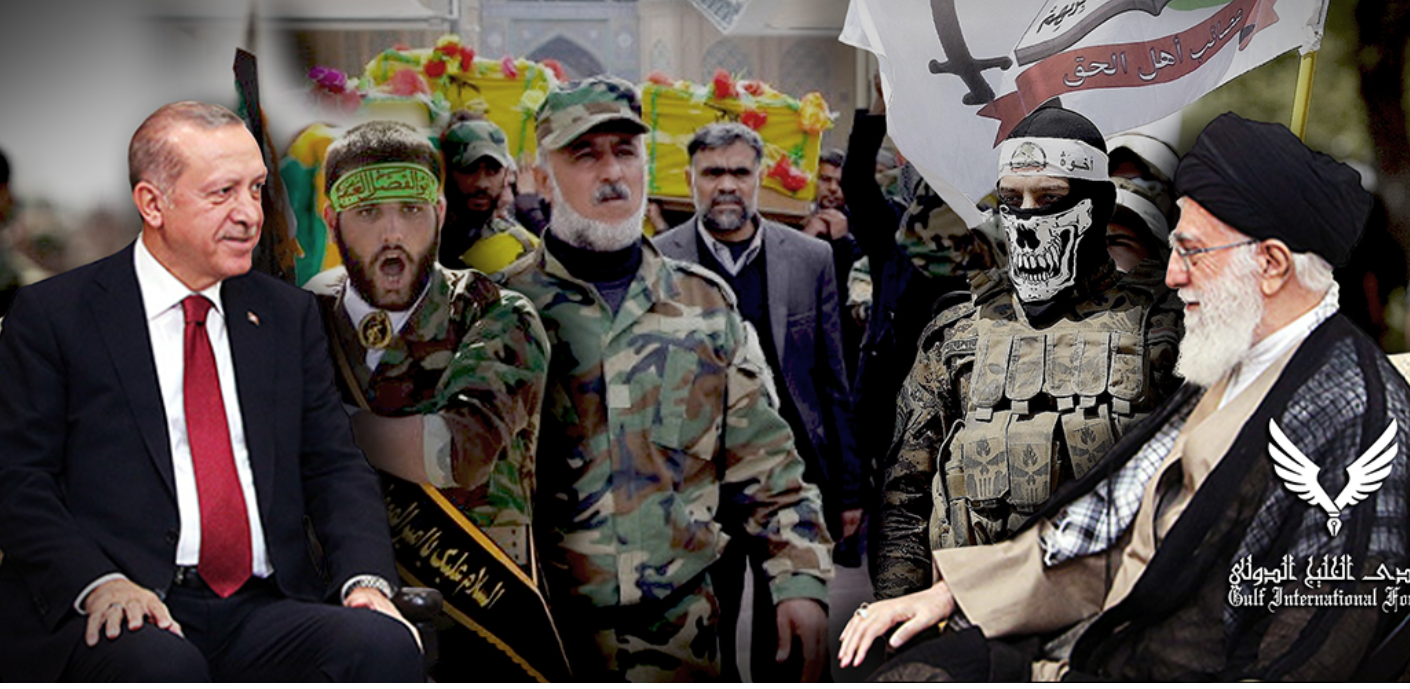
An analysis by the Atlantic Council warns that the ongoing US–Israel war with Iran poses more serious risks for Türkiye than past regional conflicts. While Ankara initially tried to remain distant from the fighting, recent missile incidents over Turkish territory and reports of potential US support for Kurdish forces in Iran have heightened security concerns in Ankara. Türkiye now faces the challenge of balancing its security interests, relations with Washington, and the broader regional consequences of a prolonged conflict.
Ankara Tried to Stay Outside the Conflict
Before the outbreak of hostilities, Türkiye sought to mediate between the parties and prevent escalation. Once the war began, Ankara attempted to publicly distance itself from the conflict, condemning both the US–Israeli strikes on Iran and Tehran’s retaliatory attacks across the region.
Initially, Türkiye appeared to avoid becoming a direct target. Iran’s early retaliation did not include Turkish territory, even though US forces operate from the Incirlik Air Base in southern Türkiye.
Turkish officials also emphasized that Turkish airspace and military assets would not be used for attacks against Iran, signaling Ankara’s intention to remain outside the war.
Missile Incidents Draw Türkiye Closer to the Conflict
Two developments in early March complicated Türkiye’s efforts to stay clear of the fighting.
First, NATO intercepted an Iranian ballistic missile heading toward Turkish airspace on March 4.
It remained unclear whether the missile was actually intended for Türkiye or whether it was directed toward another location in the Eastern Mediterranean, such as Cyprus. However, Ankara has historically taken airspace violations extremely seriously.
The incident revived memories of October 2015, when Türkiye shot down a Russian fighter jet that briefly entered Turkish airspace during Russia’s bombing campaign in Syria.
In response to the Iranian missile, Türkiye initially chose a measured diplomatic approach. Ankara summoned Iran’s ambassador and held a phone call between the two countries’ foreign ministers.
Turkish officials also reiterated that the country would protect its sovereignty and territorial integrity.
NATO officials quickly dismissed speculation that the incident could trigger Article 5, the alliance’s mutual defense clause.
Second Missile Raises Security Concerns
Tensions increased further on March 9, when NATO intercepted a second Iranian missile over Türkiye.
Debris from the missile reportedly fell in the southeastern province of Gaziantep, while the earlier incident affected Hatay province near the Mediterranean coast.
Unlike the first event, the second missile breach was harder to dismiss as an accident. Analysts suggested that one or both missiles may have been aimed at Incirlik Air Base.
US intelligence appears to support that assessment. The US State Department raised its travel warning for southeastern Türkiye to the highest level, advising Americans not to travel to the region.
At the same time, nonessential personnel were ordered to leave the US consulate in Adana.
Following the second incident, Turkish President Recep Tayyip Erdoğan delivered a sharper public message, accusing Iran of taking “wrong and provocative steps.”
Kurdish Factor Triggers Alarm in Ankara
Another development that alarmed Turkish officials was reports that the CIA was considering arming Kurdish forces to destabilize Iran.
Such a move would be particularly sensitive for Ankara due to its past tensions with Washington over US support for Kurdish groups in Syria.
The United States previously backed the People’s Defense Units (YPG) in the fight against ISIS beginning in 2014. Although the YPG proved effective militarily, Türkiye views the group as an extension of the Kurdistan Workers’ Party (PKK), which is designated as a terrorist organization by the United States, the European Union, and Türkiye.
That cooperation triggered a major diplomatic crisis between Washington and Ankara that took years to ease.
The possibility of a similar arrangement emerging in Iran has therefore raised serious concerns in Turkish policy circles.
Bahçeli Warns of Rising Iran Tensions, Calls on Türkiye to Prepare for “All Scenarios”
Fragile PKK Peace Process Adds to the Stakes
The Kurdish dimension carries additional risks because Türkiye is currently attempting to resolve its long-running conflict with the PKK under the “terror-free Türkiye” initiative.
The conflict, which has lasted nearly five decades, has claimed tens of thousands of lives.
Regional developments that embolden transnational Kurdish movements could complicate this fragile process.
A similar dynamic occurred in 2015, when the rise of Kurdish forces in Syria contributed to the collapse of the previous peace process between Ankara and the PKK.
Regional Instability Is Ankara’s Main Fear
Despite these concerns, recent signals from US President Donald Trump and the Kurdistan Regional Government in Iraq suggest that a coordinated Kurdish uprising in Iran may be unlikely.
Still, the fact that such options were reportedly considered highlights the uncertainty surrounding the war’s ultimate objectives.
For Türkiye, which borders Iran, Iraq, and Syria, the greatest fear is regional fragmentation and security vacuums.
Ankara’s experiences during the Syrian civil war and the Iraq conflict have made Turkish policymakers particularly sensitive to the risk of armed groups gaining freedom to operate along its borders.
Balancing Security, Diplomacy, and Economic Risks
In response, Türkiye is pursuing a careful balancing strategy.
Ankara is working to protect its territorial security, economic interests, and regional influence, while also attempting to avoid direct confrontation.
At the same time, Türkiye has invested heavily in improving relations with the Trump administration after years of strained ties with Washington.
So far, Turkish officials have avoided public criticism of the United States, seeking to prevent further tensions in bilateral relations.
Managing Iran Rather Than Confronting It
For Ankara, Iran remains both a competitor and a neighbor that must be managed pragmatically.
Türkiye’s approach resembles its policy toward Russia: cooperate when possible and compete when necessary.
Ironically, Türkiye has benefited from Iran’s weakening regional influence since Israel’s campaign against Iranian proxies following the Hamas attacks of October 7, 2023.
Iran’s diminished position has allowed Türkiye to expand its influence in Syria, Iraq, and the South Caucasus.
A Conflict With Uncertain Outcomes
Still, the current war poses risks that are far greater than previous crises.
The ultimate outcome remains uncertain, and Türkiye will have to deal with whatever political and military reality emerges in Iran after the conflict ends.
For now, Ankara appears determined to avoid escalation both militarily and rhetorically, while quietly preparing for the regional consequences of a prolonged war on its doorstep.
By Grady Wilson, excerpt
PA Turkey intends to inform Turkey watchers with diverse views and opinions. Articles in our website may not necessarily represent the view of our editorial board or count as endorsement.
Follow our English YouTube channel (REAL TURKEY):
https://www.youtube.com/channel/UCKpFJB4GFiNkhmpVZQ_d9Rg
Twitter: @AtillaEng
Facebook: Real Turkey Channel: https://www.facebook.com/realturkeychannel/
Related articles
ANALYSIS: Was Incirlik the Target of the Intercepted Iranian Missile?
Turkey’s Air Defense: Second Patriot Battery Deployed to Adana
Trump Weighs F-35 Deal to Incentivize Turkey’s Support for Israel-Syria Normalization