



Türkiye–EU Relations: Sweet Narratives, Harsh Realities
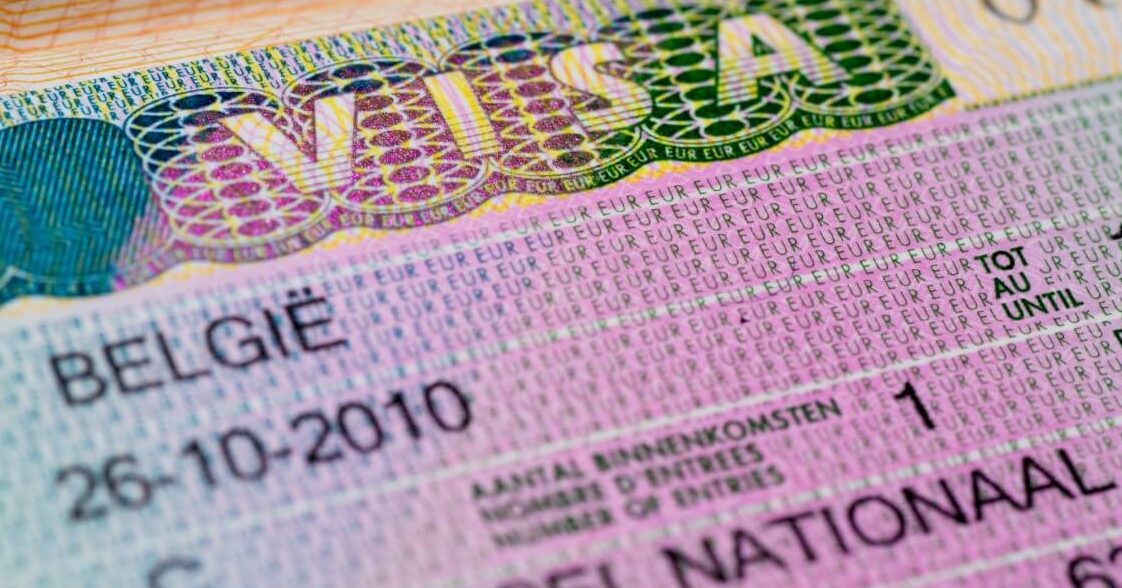 visa
visa
Recent remarks by European Parliament Türkiye rapporteur Nacho Sánchez Amor have once again highlighted the widening perception gap between Ankara and Brussels. While political rhetoric in Türkiye often suggests that the EU needs Türkiye more than the reverse, EU officials increasingly see the relationship in far more pragmatic terms. At the same time, persistent democratic backsliding, unresolved visa liberalization requirements, and legal developments inside Türkiye continue to complicate the country’s long-stalled accession process.
A Growing Perception Gap Between Ankara and Brussels
Comments made recently in Brussels by European Parliament rapporteur for Türkiye, Nacho Sánchez Amor, during a meeting with journalists illustrated how far perceptions have diverged between the EU and Türkiye.
The widening gap is not only political. It is also shaped by the way the issue is presented domestically in Türkiye. Public debate often frames the relationship as one in which Türkiye is treated unfairly by Europe, while responsibility for stalled relations is attributed largely to Brussels.
According to Amor’s remarks, however, the reality inside EU institutions looks quite different.
The gulf between expectations and reality has become so wide that, unless Türkiye changes its core political parameters in practice rather than rhetoric, closing the gap appears unlikely.
In the current climate, the accession process increasingly resembles what some observers describe as a “hopeless case.”
The EU’s Latest Türkiye Report
On February 25, 2026, Sánchez Amor presented an 11-page draft report on Türkiye to the European Parliament’s Foreign Affairs Committee (AFET).
The draft largely builds on the European Commission’s 2025 report, and its tone is far from optimistic.
Among its key points:
-
Continued concerns about democratic backsliding and authoritarian trends in Türkiye
-
A call for Ankara to complete the six remaining criteria required for visa liberalization, particularly reform of the anti-terror law
-
A reminder that progress in EU-Türkiye relations depends on meeting democratic and institutional obligations
After committee discussions, the report will move to the European Parliament plenary, where a final version is expected to be voted on around April–May 2026.
Two Persistent Myths in the Debate
Sánchez Amor also addressed two widely circulated narratives about EU-Türkiye relations.
The first is the claim — frequently repeated in Türkiye and sometimes echoed abroad — that the European Union needs Türkiye more than Türkiye needs the EU, particularly because of Türkiye’s geopolitical importance and military capabilities.
Speaking to journalists in Brussels, Amor urged greater realism:
“A few months ago, during an EU–Türkiye Business Summit in Brussels, a prominent Turkish businessman said the EU needs Türkiye more than Türkiye needs the EU. But please don’t come here with that argument. That message may be intended for domestic audiences in Türkiye, but repeating it in Brussels simply does not resonate.”
For years, similar arguments have been repeated by political and business elites in Ankara: that Türkiye’s military strength, strategic geography, and distinct identity should outweigh concerns about democratic standards.
Yet in EU capitals, such rhetoric tends to fall on deaf ears.
Strategic Partnership Instead of Membership?
At the end of January, a group of 26 leading Turkish business figures published a full-page statement in the Financial Times suggesting that the EU may ultimately need Türkiye more than Türkiye needs the EU.
The statement highlighted Türkiye’s:
-
young population
-
industrial base
-
dynamic economy
-
expanding defense industry.
According to the signatories, Türkiye could help Europe strengthen its green transition, digital transformation, food security, and strategic resilience.
But the message also carried an implicit signal.
While formally advocating EU membership, the underlying tone suggested that a pragmatic economic partnership might be sufficient.
For many observers, this approach echoes the current Turkish government’s preference for a transactional relationship with Europe, centered on trade and security rather than democratic alignment.
Sánchez Amor acknowledged that this is increasingly the prevailing view inside EU institutions:
“The accession process with Türkiye has become a framework that may continue indefinitely but never actually lead to full membership. In the EU today, the idea of a strategic partnership is far more widely accepted than the prospect of Türkiye joining as a member state.”
Given the lack of progress in meeting accession conditions, he added, the EU is now exploring alternative frameworks for cooperation.
Legal Developments Fuel EU Concerns
Recent events in Türkiye have reinforced European concerns about the country’s legal environment.
On March 5, 2026, former TÜSİAD chairman Orhan Turan and High Advisory Council chairman Ömer Arif Aras were convicted by an Istanbul court for allegedly spreading misleading information.
Both received sentences of one year, three months, and 18 days, though the verdict was suspended with a five-year probation period.
The charges stemmed from remarks they made at the February 2025 TÜSİAD General Assembly, where they criticized developments related to the rule of law.
For many observers in Europe, the case further strengthened concerns that legal uncertainty and restrictions on free expression continue to weigh on Türkiye’s democratic outlook.
Such developments are also likely to appear in the final EU report.
The Visa Liberalization Debate
Another recurring source of tension is visa liberalization for Turkish citizens.
According to the EU framework agreed in 2016, Türkiye must fulfill 72 criteria to obtain visa-free travel within the Schengen area.
Only six conditions remain outstanding, including:
-
Reforming anti-terror legislation to meet EU standards
-
Aligning data protection laws with EU rules
-
Fully implementing Council of Europe anti-corruption recommendations
-
Signing an operational cooperation agreement with Europol
-
Expanding judicial cooperation with EU member states
-
Fully implementing the migrant readmission agreement.
Sánchez Amor noted that progress on these issues has been limited.
“Six criteria remain, but it appears that Turkish authorities are not particularly focused on resolving them,” he said.
Instead, Ankara has increasingly relied on alternative solutions such as special passport categories that allow certain groups to travel visa-free.
The Rise of the “Green Passport” System
In practice, this has created a tiered travel system inside Türkiye.
Special green and red passports, issued mainly to public officials and certain professional groups, allow visa-free travel within the Schengen area.
According to official figures, the number of green passports issued has reached nearly seven million, with more than two million active users in early 2026.
Some analysts argue that this system has effectively created a new social hierarchy, where certain segments of society can bypass visa barriers while ordinary citizens cannot.
European governments appear to tolerate the arrangement as it allows limited mobility for lower-risk groups while postponing broader visa liberalization.
A Relationship Stuck Between Narratives and Reality
For now, the gap between political narratives in Türkiye and the policy reality inside the EU remains wide.
Unless substantial reforms address democratic standards, judicial independence, and visa criteria, the EU accession process is likely to remain largely symbolic.
The relationship may continue — but increasingly in the form of pragmatic cooperation rather than genuine membership prospects.
Author: Yavuz Baydar
PA Turkey intends to inform Turkey watchers with diverse views and opinions. Articles in our website may not necessarily represent the view of our editorial board or count as endorsement.
Follow our English YouTube channel (REAL TURKEY):
https://www.youtube.com/channel/UCKpFJB4GFiNkhmpVZQ_d9Rg
Twitter: @AtillaEng
Facebook: Real Turkey Channel: https://www.facebook.com/realturkeychannel/
Related articles
Europe, Türkiye Agree to Work Toward Updating Customs Union
Euro poll results indicate challenging future for Türkiye-EU relations
EU Parliament Welcomes Öcalan-Bahçeli Peace Talks as ‘Historic Opportunity’ for Türkiye