Global markets started the week in turmoil as the escalating Middle East war sent energy prices sharply higher and triggered a broad risk-off move across equities. Brent crude surged toward $120 per barrel, while investors focused less on geopolitical safe havens and more on the inflation shock stemming from soaring energy costs. A stronger dollar and rising bond yields have weighed on gold despite the intensifying conflict.
Global financial markets opened the new week under severe pressure as the Middle East conflict intensified and energy prices surged. Brent crude climbed toward $120 per barrel, reflecting growing fears that the conflict could disrupt oil supplies for an extended period.
Israel expanded its military campaign against Iran, reportedly targeting major fuel depots near Tehran, while Iran announced that Mojtaba Khamenei, the son of the late Supreme Leader Ayatollah Ali Khamenei, had been chosen as the new religious leader. The move further raised geopolitical tensions.
US President Donald Trump described the new leadership as “unacceptable,” while Israeli officials signaled that the new leader could also become a military target.
The conflict has already spilled beyond Iran’s borders. Iranian drone strikes reportedly targeted energy and water infrastructure in Saudi Arabia, Kuwait, the UAE and Bahrain, underscoring the risk that the war could disrupt critical energy flows and destabilize global markets.
Global equities slide as risk aversion rises
The surge in geopolitical risk and energy prices triggered widespread selling in equity markets.
In the United States, the S&P 500 index ended the week down 2%, while the VIX volatility index — widely known as Wall Street’s “fear gauge” — climbed to its highest level in a year.
Asian markets opened the week with sharp losses:
-
South Korea’s stock market fell more than 8%
-
Japan’s benchmark index dropped nearly 7%
-
US equity futures pointed to losses exceeding 2%
Currency markets also reflected the flight toward safety. The EUR/USD pair dropped to around 1.15, testing its lowest levels in four months.
As long as geopolitical uncertainty persists and energy prices remain elevated, the US dollar is likely to maintain its upward momentum.
Why isn’t gold rallying?
One of the biggest puzzles for investors is why gold has not rallied despite the sharp escalation in geopolitical tensions.
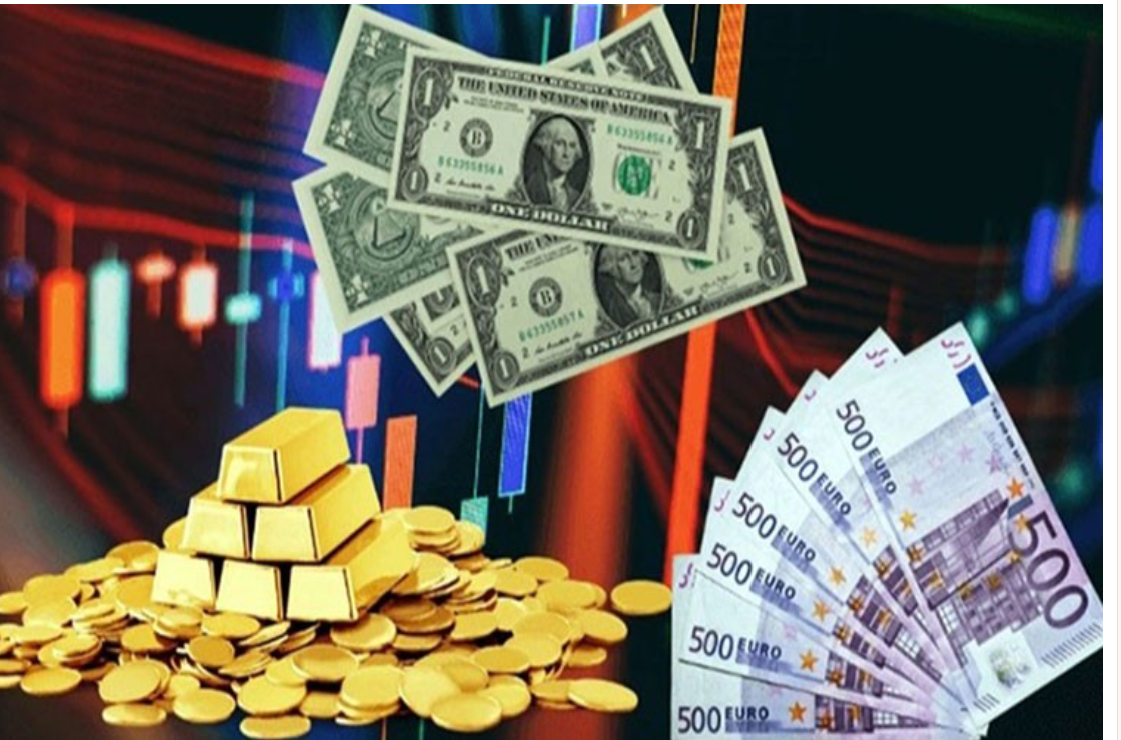
At the start of the Iran war, gold initially surged. Spot gold briefly tested $5,418 per ounce before retreating to around $4,995 shortly thereafter.
The explanation lies largely in inflation fears triggered by soaring energy prices.
Global economic and geopolitical uncertainty indicators have surged to historic highs — even exceeding levels seen during the Covid-19 pandemic and the 2008 Global Financial Crisis. Meanwhile, supply concerns have pushed energy markets sharply higher.
On a weekly basis, Brent crude surged nearly 28%, while European benchmark natural gas prices jumped 64% after an attack on LNG infrastructure in Qatar.
In such an environment, markets’ first reaction has been inflation anxiety rather than a traditional flight to gold.
Strong dollar weighs on gold
Rising energy prices are complicating central banks’ plans to ease monetary policy.
Futures markets now show reduced expectations for Federal Reserve rate cuts this year, as energy-driven inflation could delay policy easing. As a result, bond yields have risen and the US dollar has strengthened, putting pressure on gold.
The Dollar Index (DXY) — which measures the US currency against a basket of major peers — rebounded strongly last week, climbing toward the psychological 100 level, roughly 4.5% above its late-January lows.
Gold, which yields no interest income, tends to struggle in environments where real yields and the dollar are rising.
Historically, during geopolitical crises, markets often first react by strengthening the dollar due to inflation fears. Only later — once the economic costs of war and recession risks become more apparent — do investors rotate back into gold.
For this reason, the key question for markets may not be why gold has not risen, but rather how long the war will last.
Key technical levels for gold
From a technical perspective, the $5,000 level remains an important psychological support for gold.
On the upside, $5,400 is a critical resistance level. A daily close above that threshold would mark a new all-time closing high.
Notably, the world’s largest gold-backed ETF, SPDR Gold Shares (GLD), recorded more than $4 billion in outflows last week, highlighting a shift in investor positioning.
Silver and Bitcoin remain volatile
Silver markets have also been extremely volatile. Analysts suggest that the $91 level must be broken decisively before a sustained rally can develop.
If that threshold fails to hold, $67 and $60 levels could emerge as potential long-term buying zones.
In the cryptocurrency space, Bitcoin remains stuck near the $67,000 level. Despite renewed optimism following Trump’s call to accelerate crypto regulations, the rally has struggled to gain traction.
While Bitcoin briefly climbed toward $74,000, analysts believe conditions for a sustained breakout are not yet in place.
As long as $63,000 holds, investors may still hope for a recovery. A break below that level could trigger deeper declines.
The economic cost of war is rising
While military outcomes remain uncertain, the economic costs of the conflict are becoming increasingly clear.
Energy infrastructure across the Gulf has come under attack, disrupting oil and gas flows and threatening to reshape global energy markets. Each day that the Strait of Hormuz remains disrupted adds significantly to the global economic bill.
Even if Iran does not achieve a decisive military victory, analysts note that simply making the war economically unsustainable could be enough to alter the strategic balance.
Turkey feeling the pressure as well
The fallout from the conflict is also visible in Turkish markets.
In the first two days of the war alone, the Central Bank of the Republic of Türkiye (CBRT) reportedly lost around $14 billion in reserves defending the currency.
Despite this, the USD/TRY exchange rate has remained relatively stable near 44, supported by the central bank’s liquidity management policies.
Through liquidity measures, the CBRT effectively pushed market rates higher by roughly 300 basis points, with the TL reference rate (TLREF) rising to around 39.99%.
Meanwhile:
-
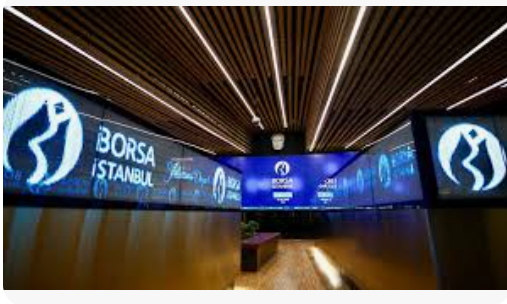
Borsa Istanbul has fallen about 10% over the past three weeks
-
The banking sector index dropped nearly 20%
-
Türkiye’s five-year CDS risk premium rose to 262 basis points, close to a five-month high
As a net energy importer, Türkiye faces heightened risks from rising oil prices, which could widen the current account deficit, push inflation higher and weigh on growth.
Markets watch Middle East developments and central banks
Despite the intense focus on the Middle East, markets will also monitor key economic events this week.
On Wednesday, investors will watch US inflation data, while Thursday brings the CBRT’s Monetary Policy Committee meeting.
Most analysts expect the Turkish central bank to keep policy rates unchanged, though it may adopt a more hawkish tone in response to rising energy prices and global inflation risks.
Going forward, oil prices and geopolitical developments in the Middle East are likely to remain the dominant drivers of global market sentiment.
Source:KİB, Emre Degirmencioglu
IMPORTANT DISCLOSURE: PA Turkey intends to inform Turkey watchers with diverse views and opinions. Articles in our website may not necessarily represent the view of our editorial board or count as endorsement.
Follow our English YouTube channel (REAL TURKEY):
https://www.youtube.com/channel/UCKpFJB4GFiNkhmpVZQ_d9Rg
Twitter: @AtillaEng
Facebook: Real Turkey Channel: https://www.facebook.com/realturkeychannel/



 markets stock shot