Marmara Fault May Break in Segments, Not One Giant Earthquake
 istanbul-earthquake
Long-running debates over how the main fault line beneath the Marmara Sea might rupture have taken a new turn with fresh scientific evidence, according to Cumhuriyet columnist Orhan Bursalı. For years, seismologists’ greatest concern has been the possibility that the Marmara segment of the North Anatolian Fault could rupture in a single, catastrophic event, generating an earthquake of magnitude 7.4 or greater. This worst-case scenario has shaped much of Istanbul’s disaster planning, serving as a foundational assumption in preparedness strategies.
However, Bursalı writes that a newly published scientific study challenges this long-standing view. The research suggests that the Marmara fault is more likely to rupture in multiple segments rather than as one continuous break, a finding that could significantly alter how seismic risk in the region is understood.
New Scientific Models Question the “Single Rupture” Scenario
In his column, Bursalı highlights a study conducted by Dr. Sezim Ezgi Güvercin of the University of Southern California’s Department of Earth Sciences and her advisor, Prof. Dr. Sylvain Barbot. By closely examining the physical characteristics of the Marmara fault and its historical rupture patterns, the researchers developed new, physics-based models to simulate its behavior.
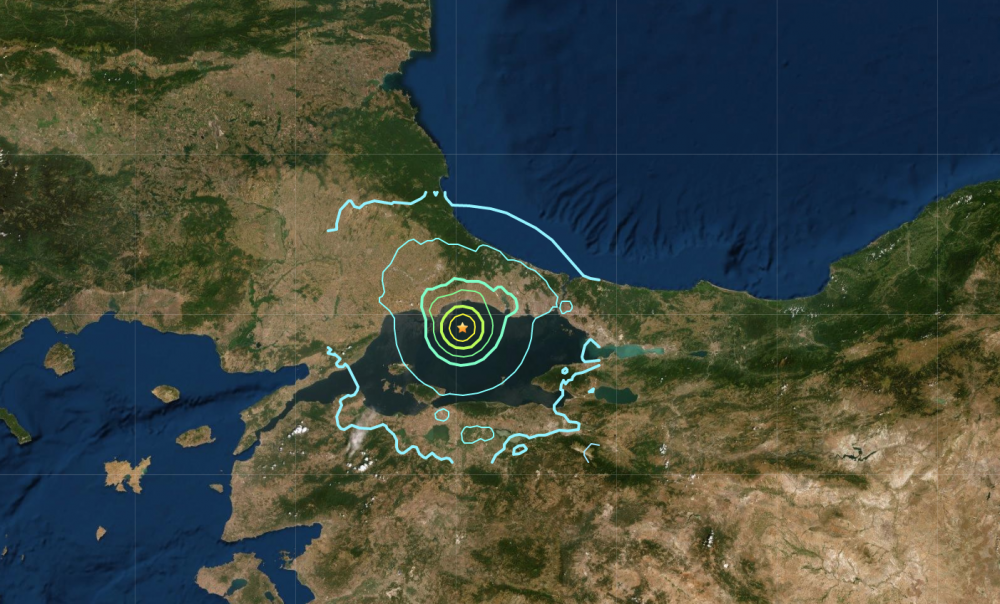
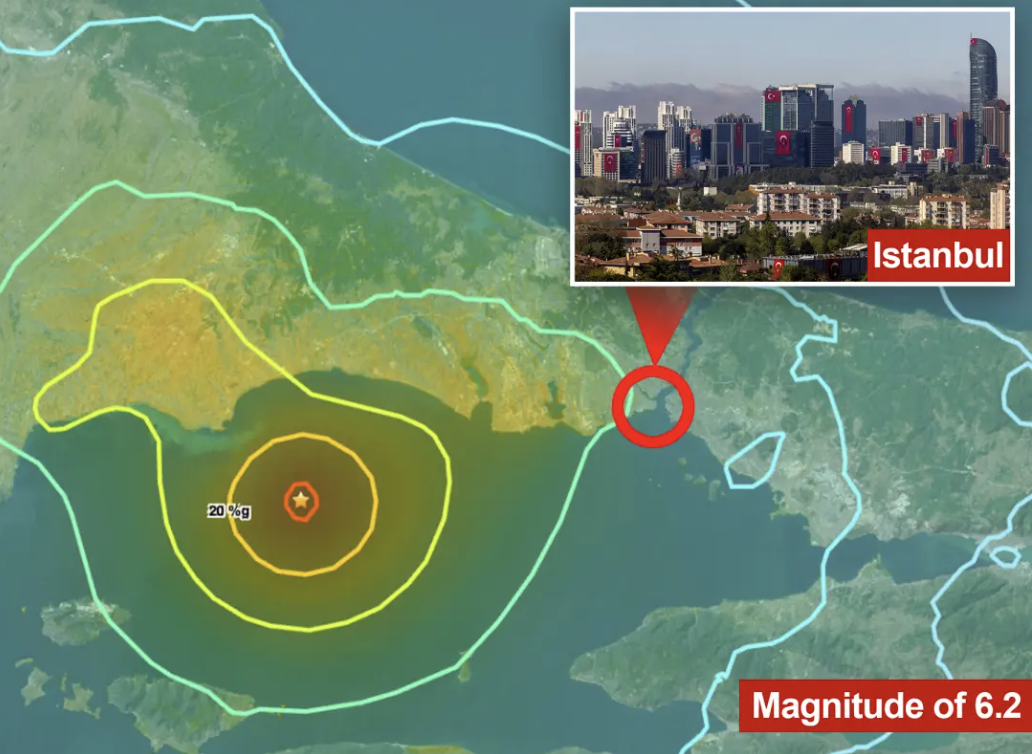
The study draws particular attention to recent earthquakes in the Marmara region, including events of magnitude 6.2, 5.8, and 5.2. According to the researchers, these earthquakes have already begun to cast doubt on the long-held “single-segment rupture theory.” Their work, published in the journal Communications Earth & Environment, relies on simulations covering more than 10,000 years of seismic activity. A key focus is the North Anatolian Fault segment responsible for the destructive 1894 earthquake, which remains central to understanding present-day seismic risk.
Bursalı summarizes the researchers’ conclusion succinctly: “Vardıkları sonuç: Marmara’daki fay, muhtemelen parçalar halinde kırılacak ve maksimum deprem büyüklükleri en çok 7.3’e ulaşacak.” This statement underscores a shift away from expectations of a single massive rupture toward a model of staggered, segmented breaks.
Different Fault Segments, Different Earthquake Behaviors
One of the study’s most important contributions is its detailed differentiation between various segments of the Marmara fault. Bursalı explains that the research reveals distinct seismic behaviors across the fault’s western and eastern sections.
“Çalışmaları şunu gösterdi: Fayın geometrik olarak daha basit olan batı Ganos ve Tekirdağ kesimleri, yaklaşık her 150 yılda bir tekrarlanan 7.2 büyüklüğü dahil düzenli depremler üretiyor. Doğu kesimleri olan Kumburgaz ve Prens Adaları ise yaklaşık 100 yılda bir 6.2 ile 6.8 büyüklüğünde ve yaklaşık her 500 yılda bir 7.0 büyüklüğünde deprem çiftleri ile daha küçük ve daha sık depremler üretiyor.”
This distinction is critical because it suggests that seismic energy in the Marmara region may be released more frequently but in smaller or moderate-sized earthquakes, rather than accumulating until it produces a single devastating event.
Why the Fault May Not Break All at Once
The research also explores the geological reasons behind this segmented rupture behavior. According to a university bulletin cited by Bursalı, variations in temperature and rock composition along the main Marmara fault create natural barriers. These barriers can slow, stop, or redirect rupture propagation, sometimes causing sections of the fault to creep rather than break violently.
Such physical differences along the fault line make a single, uninterrupted rupture less likely. Instead, they favor a pattern in which stress is released in stages, with different segments breaking at different times. This mechanism helps explain why the study estimates that the largest possible earthquakes in the region would likely not exceed magnitude 7.3.
What This Means for Istanbul’s Earthquake Risk
Despite these findings, Bursalı is careful to emphasize that the study does not suggest Istanbul is safe from major earthquakes. On the contrary, the researchers stress that segmented ruptures can still pose severe risks, especially when moderate-to-large earthquakes occur closer to the city or at shorter intervals.
Bursalı shares a direct warning from Dr. Sezim Ezgi Güvercin to underline this point: “Bulgular İstanbul’un deprem riskini azaltmıyor. Şehre daha yakın veya kısa aralıklarla meydana gelen orta ila büyük depremler büyük hasara yol açabilir. Marmara Ana Fay Hattı’nın her iki tarafındaki kilitli segmentler, 100 yılı aşkın süredir büyük bir kırılma yaşamadı. Eğer bu segmentler simülasyonlarda gözlemlenen kalıpları izlerse, bölge önümüzdeki on yıllarda büyük depremler yaşayabilir.”
This warning highlights a crucial nuance: while the probability of a single extreme rupture may be lower, the likelihood of damaging earthquakes remains significant. Locked segments of the fault that have not ruptured for more than a century still store substantial stress, and their eventual release could have serious consequences for densely populated areas.
Rethinking Preparedness Without Lowering Vigilance
Bursalı’s analysis points to a broader implication of the study. Disaster planning and public communication may need to move beyond a single doomsday scenario and instead account for a series of potentially damaging earthquakes over time. Segment-by-segment ruptures could mean repeated shocks to infrastructure, housing, and emergency response systems.
Ultimately, the new research reframes the Marmara earthquake debate without diminishing its urgency. The science suggests a more complex and nuanced fault behavior, but it also reinforces the need for sustained preparedness, resilient urban planning, and public awareness in Istanbul and surrounding regions.
Related articles
Why Marmara’s Underwater Faults Differ from the 1999 Quake
Two Major Earthquake Scenarios Threaten Istanbul, New Study Warns

Marmara Earthquake Warning: Why Turkey Must Act Before It’s Too Late