Shake-Up in Türkiye’s Economic Bureaucracy: New Appointments at TurkStat, Central Bank and CMB
 rte-atama
Erdoğan signs off on key changes across Türkiye’s top economic institutions
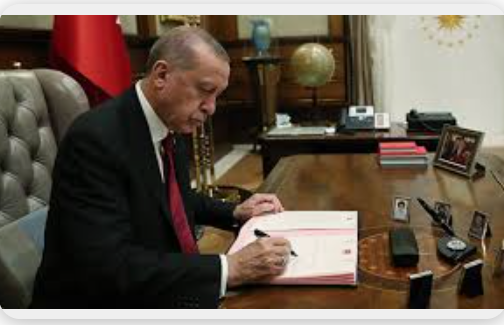
President Recep Tayyip Erdoğan has approved a new wave of appointments across Türkiye’s economic bureaucracy, triggering notable leadership changes at the Turkish Statistical Institute (TÜİK), the Central Bank of the Republic of Türkiye (CBRT), and the Capital Markets Board (SPK).
Under the new decree, Revenue Administration Deputy Head Mehmet Arabacı was appointed president of TÜİK, while economist Yusuf Emre Akgündüz was named deputy governor of the CBRT. Meanwhile, SPK Vice Chairman Mahmut Sütçü was promoted to head the country’s capital markets regulator.
The reshuffle comes at a sensitive time for the Turkish economy, as policymakers continue battling inflation, managing financial market volatility, and attempting to restore investor confidence.
Mehmet Arabacı takes over at TÜİK amid inflation controversy
New TÜİK President Mehmet Arabacı is a long-serving figure within Türkiye’s fiscal bureaucracy.
Born in Bordeaux, France in 1977, Arabacı graduated from Ankara University’s Faculty of Political Sciences with a degree in public finance. He later completed a master’s degree in economics at the University of Illinois in the United States.
Arabacı built much of his career within Türkiye’s tax administration and auditing system. He previously served as a tax inspector, head of transfer pricing and international income divisions, and later as deputy chairman of the Tax Inspection Board.
Since 2019, he had served as deputy head of the Revenue Administration before being appointed to lead TÜİK.
His appointment is particularly significant because TÜİK has faced intense criticism in recent years over its inflation calculations and statistical methodology. Opposition parties, economists, and segments of the public have repeatedly questioned the credibility and transparency of official inflation data.
While some observers had hoped for an outsider with a stronger academic background to be brought in to restore confidence in the institution, Arabacı’s appointment from within the existing bureaucracy signals continuity rather than a radical overhaul.
Yusuf Emre Akgündüz joins Central Bank leadership
The appointment of Yusuf Emre Akgündüz as CBRT deputy governor is being interpreted as a move toward strengthening the technocratic and academic profile of the central bank leadership.
Akgündüz completed most of his education in the Netherlands. He earned his bachelor’s, master’s, and PhD degrees in economics from Utrecht University, graduating with honors.
After working as a postdoctoral researcher at Utrecht University, he joined Sabancı University as a faculty member and also worked at the Netherlands Bureau for Economic Policy Analysis (CPB).
He is no stranger to the Central Bank. Between 2016 and 2019, Akgündüz served as an economist at the CBRT before later holding senior advisory and structural economic research positions.
His areas of expertise include applied microeconometrics, labor economics, migration economics, and firm productivity analysis.
Economists see his appointment as part of a broader trend within the Turkish economic administration toward promoting technically oriented policymakers with strong academic credentials and institutional experience.
Akgündüz is expected to play an active role in the Monetary Policy Committee, though analysts also note that the vacancy left by former Deputy Governor Prof. Dr. Cevdet Akçay may still require another senior macroeconomist appointment to strengthen policy analysis capacity.
Mahmut Sütçü becomes head of Türkiye’s capital markets regulator
Mahmut Sütçü, who has been serving as SPK vice chairman since late 2024, has now been promoted to chairman of the Capital Markets Board.
Sütçü brings nearly 35 years of experience in public finance, taxation, and financial oversight.
A graduate of Ankara University’s Faculty of Political Sciences, he began his career in 1991 as an assistant tax inspector at the Ministry of Finance. He later rose through the ranks to become chief tax inspector and held several senior positions, including head of the Istanbul Foreign Trade Tax Office, Antalya Tax Office, and Ankara Tax Office.
In 2016, he was appointed deputy head of the Revenue Administration before moving to SPK leadership last year.
He also spent time in the United Kingdom studying international fiscal systems and previously lectured on tax law at Akdeniz University.
Continuity and financial discipline likely to dominate SPK policy
Market observers believe Sütçü’s appointment signals the continuation of a “financial discipline and oversight” approach at SPK.
The appointment comes at a time when Türkiye’s capital markets are experiencing a surge in public offerings and increased retail investor participation. Analysts say placing a veteran financial inspector at the helm of the regulator reflects Ankara’s focus on tighter supervision and regulatory stability.
Still, some economists argue that institutions such as SPK could benefit from greater participation by professionals with private-sector and international finance experience rather than relying exclusively on traditional state bureaucracy.
Political or technocratic reshuffle?
At first glance, analysts see limited direct political motivation behind the appointments. Instead, the reshuffle appears aimed at preserving institutional continuity while strengthening the technocratic profile of economic management.
The TÜİK appointment has drawn particular attention because of ongoing public criticism over inflation data. However, the decision to appoint another insider rather than an independent academic figure suggests the government is prioritizing operational continuity over structural reform.
Similarly, the SPK leadership change is being interpreted largely as a routine bureaucratic transition.
At the same time, the increasing prominence of technocrats with academic and analytical backgrounds within Türkiye’s economic institutions reflects Ankara’s broader effort to reinforce policy credibility at a time of heightened macroeconomic challenges.
How these appointments will influence inflation management, financial stability, and investor confidence will likely become clearer in the months ahead.
PATurkey newsdesk