EU Commission: Turkey More Strategic than MERCOSUR, Touts “Powerful Military” as Security Asset
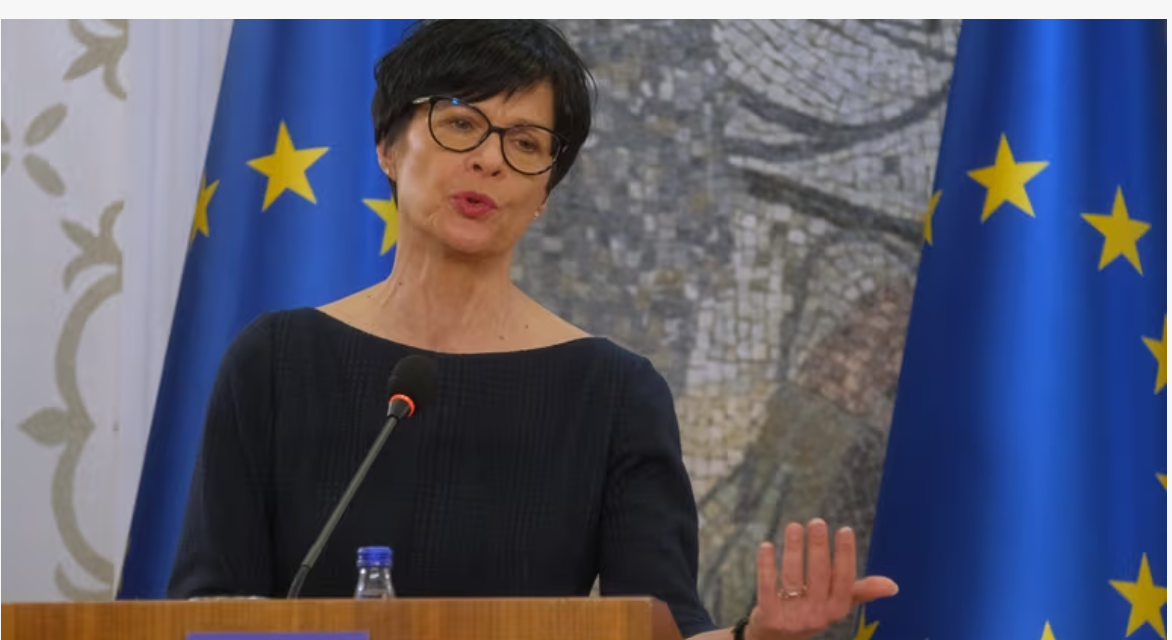 marta kos EU
BRUSSELS — In a session that signaled a profound recalibration of European foreign policy, the EU’s new Commissioner for Enlargement, Marta Kos, delivered a high-stakes briefing to the European Parliament’s Foreign Affairs Committee (AFET). Her message was clear: Turkey is no longer just a candidate nation on the periphery, but an “indispensable” economic and military titan that surpasses other global trade priorities.
Outshining MERCOSUR: An Economic Realignment
One of the most striking moments of the hearing was Kos’s direct comparison between Turkey and the MERCOSUR bloc (comprising Brazil, Argentina, Uruguay, and Paraguay). The EU has spent years—and significant political capital—trying to finalize a trade deal with the South American group, often facing fierce opposition from European farmers.
“From an economic perspective,” Kos stated, “Turkey is more important and more strategic for us than the MERCOSUR agreement. Our industrial integration, the existing Customs Union, and the sheer volume of bilateral trade make Turkey an organic part of the European economic engine.”
This comparison suggests that the Commission is ready to prioritize the modernization of the Turkey-EU Customs Union (2.0) over more distant and politically sensitive trade deals, recognizing that the shortest path to European economic resilience runs through Ankara.
Fatih Birol proposes Basra–Ceyhan pipeline as ‘golden opportunity’ amid Hormuz risks
The “Hard Power” Reality: Turkey’s Military Might
The ongoing instability in the Black Sea and the protracted conflict in Ukraine have forced Brussels to view Turkey through a security lens rather than a purely normative one. Commissioner Kos was remarkably candid about the value of the Turkish Armed Forces (TSK).
“Turkey possesses a very large and powerful military,” Kos told the committee, which included several members traditionally critical of Ankara. “At a time when the Black Sea region is facing such profound security challenges, Turkey’s military capabilities and geographical position are assets that the European Union cannot afford to overlook.”
Analysts suggest this is the most explicit acknowledgment from a top EU official in years that Turkey’s “hard power” is a fundamental pillar of the European security architecture.
Connectivity: The Bridge to Central Asia
Kos also emphasized her dual role in managing “connectivity” for the Commission. She framed Turkey as the central nervous system for Europe’s reach into the Caucasus and Central Asia.
-
Energy Security: Turkey serves as the primary corridor for non-Russian gas, a role that has become a survival necessity for EU industry in 2026.
-
The Middle Corridor: As global supply chains shift, the transport and digital links through Turkey are becoming the preferred alternative to northern routes, connecting Europe directly to emerging markets in the East.
A New Formula for Engagement
The Commissioner’s remarks hinted at a “New Deal” for Turkey. While the full accession process remains complex, the Commission appears to be moving toward a model of “Strategic Integration.” This would involve deep cooperation in defense, energy, and digital policy, treating Turkey as a member of the “Inner Circle” of European security and economy, regardless of the formal status of its candidacy.
Turkey Promotes “Middle Corridor” as Alternative to Hormuz Trade Routes
The Realpolitik Shift
The atmosphere in Brussels has changed. The idealism of previous decades is being replaced by a stark realization: in a world of fragmented power and regional wars, the EU needs a strong, stable, and integrated Turkey.
Marta Kos’s briefing was more than just a speech; it was a roadmap for a partnership based on mutual necessity. As the EU navigates the security risks of 2026, the “Turkey factor” has evolved from a diplomatic challenge into a strategic imperative.
Related articles
Euro poll results indicate challenging future for Türkiye-EU relations
Ankara infuriated by EU maps of the Aegean

Türkiye in a Multipolar World: Navigating the Shifting Global Order