COMMENTARY: Trump’s Halkbank gift to Erdogan
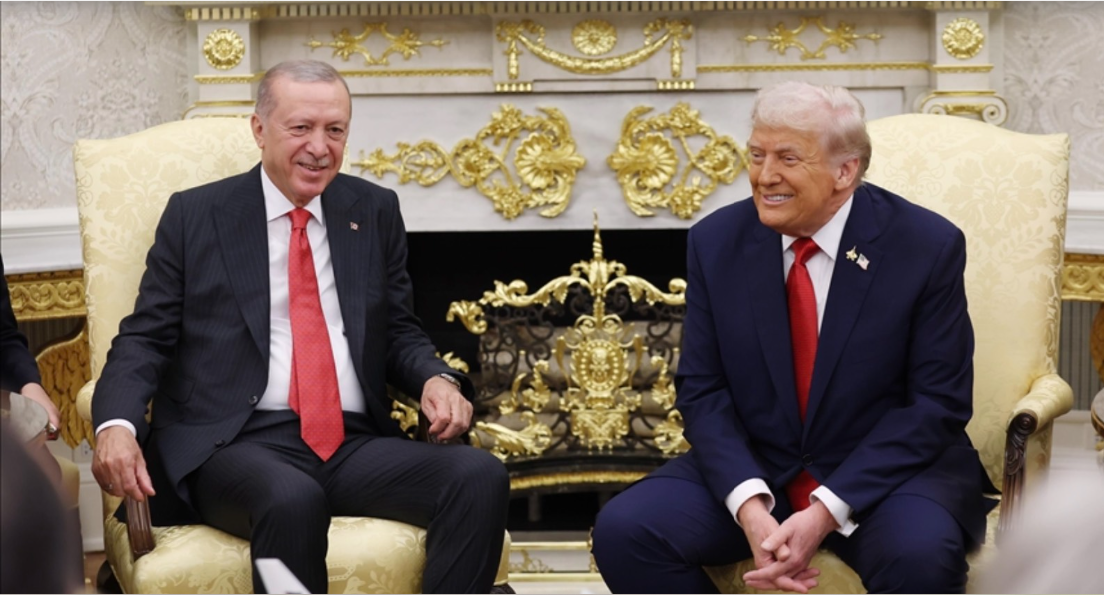 Erdogan-Trump-in-Oval-Office
US and Turkey Move to Close Halkbank Iran Sanctions Case
Summary: The United States has reached a deferred prosecution agreement with Turkey’s state-owned Halkbank to resolve a long-running criminal case tied to alleged violations of Iran sanctions. If approved by a federal judge, the deal would end a dispute that has strained relations between Washington and Ankara for years.
The U.S. government has agreed to resolve its long-running criminal prosecution of Turkish state lender Halkbank, saying the agreement supports Washington’s efforts to curb financial support for Iran.
Under a deferred prosecution agreement filed Monday in a Manhattan federal court, Halkbank would commit to strengthening compliance with U.S. sanctions and anti-money-laundering rules. If a judge approves the arrangement and the bank complies with its terms, the charges are expected to be dismissed.
The settlement could remove one of the most persistent sources of tension between the United States and Turkey, two NATO allies whose relations have improved significantly following Donald Trump’s return to the U.S. presidency last year.
Case centered on alleged sanctions evasion
The agreement would bring to a close a years-long legal saga involving accusations that Halkbank helped Iran evade U.S. economic sanctions. Turkish President Recep Tayyip Erdoğan had previously described the case as unlawful and politically motivated.
According to the agreement, Halkbank will be barred from conducting transactions that benefit Iran and will appoint an independent monitor to review its compliance with sanctions and anti-money-laundering regulations.
No financial penalty will be imposed under the deal. Instead, the case would be dismissed after the monitor confirms that Halkbank has met the compliance requirements.
U.S. Attorney Jay Clayton said in a letter to U.S. District Judge Richard Berman, who oversees the case, that the agreement advances Washington’s national security priorities.
“This agreement by Halkbank furthers the United States’ compelling interests in combating terrorist financing and financial support for the Government of Iran,” Clayton wrote.
Judge Berman must approve the arrangement for it to take effect.
Turkish officials had proposed payment
According to sources cited by Reuters, Turkish officials had previously proposed settling the case for around $100 million during a meeting between Erdoğan and Trump at the White House last September.
Halkbank said in a statement that the agreement does not include any admission of criminal wrongdoing and would allow the case to be closed completely.
Hakan Akbaş, managing director at the consultancy Strategic Advisory Services, said the settlement could help reset bilateral relations.
“The agreement closes a long and costly legal chapter while strengthening compliance standards,” Akbaş said. “Trump and Erdoğan appear to be steadily clearing major disputes from the U.S.–Turkey agenda.”
Following news of the agreement, Halkbank shares listed in Istanbul surged 10%, the maximum daily gain allowed on the exchange.
Prosecutors alleged $20 billion sanctions scheme
U.S. prosecutors charged Halkbank in 2019, during Trump’s first presidential term, with fraud, money laundering and conspiracy. They alleged the bank helped Iran circumvent sanctions using money service businesses and front companies in Turkey, Iran and the United Arab Emirates.
Prosecutors claimed Halkbank secretly transferred about $20 billion in restricted funds, converted Iranian oil revenue into gold and cash, and documented fake food shipments to justify oil-related payments.
Halkbank pleaded not guilty to the charges.
The case was closely tied to related prosecutions involving Turkish-Iranian gold trader Reza Zarrab and former Halkbank executive Mehmet Hakan Atilla.
Zarrab pleaded guilty in 2017 to bank fraud and money laundering charges and testified against Atilla. Atilla was convicted in 2018 and served most of a 32-month prison sentence before returning to Turkey in 2019, where he has denied wrongdoing.
Legal battle stretched for years
Halkbank’s case followed a complex path through the U.S. court system.
In 2023, the U.S. Supreme Court temporarily halted aspects of the prosecution while considering whether foreign state entities should enjoy immunity from criminal liability. Later, a federal appeals court ruled that historical common-law immunity did not shield Halkbank from prosecution.
That decision allowed the case to proceed.
Legal experts note that deferred prosecution agreements are common in U.S. financial cases and typically allow defendants to avoid criminal convictions if they comply with specified conditions.
“Courts generally have little discretion to reject such agreements,” said Kaleb Byars, a law professor at Mercer University. “Unless the agreement violates established precedent, the court typically accepts it.”
Geopolitical factors also played a role
U.S. prosecutors also cited Turkey’s role in negotiations related to hostages taken during Hamas’s October 7, 2023 attack on Israel, as well as Ankara’s involvement in subsequent ceasefire diplomacy, as factors supporting the settlement.
The Halkbank case had also become a political flashpoint during Trump’s first presidency, when prosecutors in New York pursued charges despite resistance from some officials in Washington.
Former U.S. attorney Geoffrey Berman, who led the Southern District of New York at the time, later wrote that the Justice Department initially attempted to block the indictment.
According to Berman, tensions within the U.S. administration may have been influenced by Trump’s relationship with Erdoğan. However, then-Attorney General William Barr ultimately allowed the prosecution to proceed in 2019.
Atilla Yeşilada commentary
The Trump–Erdoğan relationship appears to have produced its first tangible result with the effective removal of the Halkbank case from the agenda.
Had Halkbank been found guilty, Turkey could have faced penalties ranging between $9 billion and $20 billion. More importantly, the ruling could have triggered additional legal actions against Turkish officials accused of facilitating the alleged scheme.
In a worst-case scenario, prosecutors might also have targeted two private Turkish banks that were mentioned in connection with the case. Such developments could have even raised the possibility of restrictions on Turkish financial institutions’ access to the SWIFT payment system.
Beyond Halkbank, U.S. support for the Syrian Kurdish political-military entity known as AANES has been another major source of friction between the two allies.
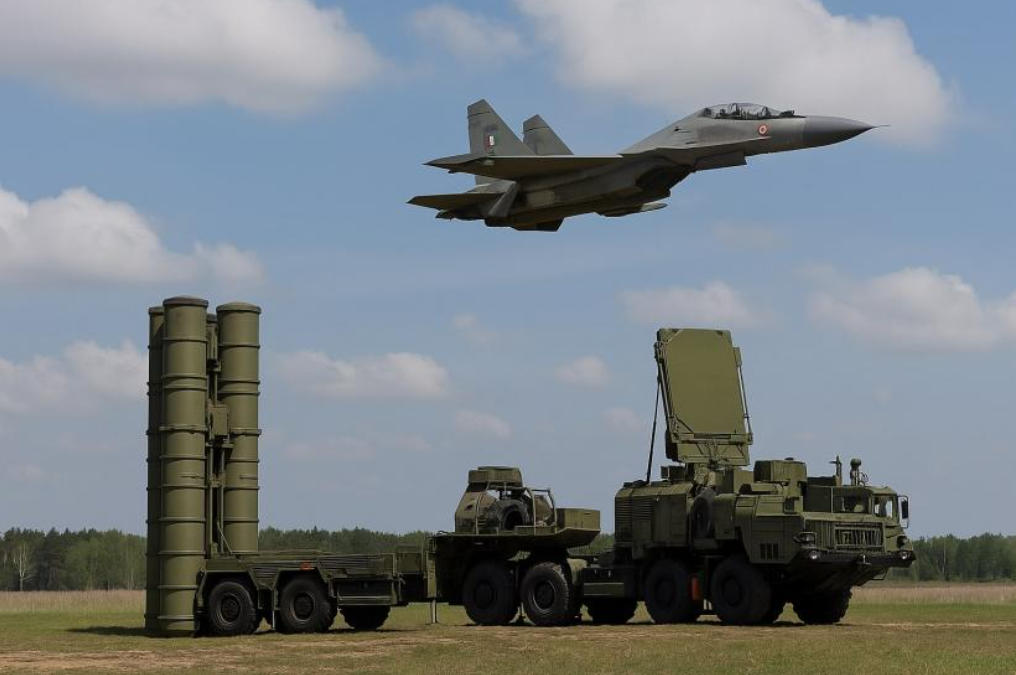
If both issues are now effectively resolved in Ankara’s favor, Erdoğan may develop significantly greater trust in Trump. This renewed confidence could encourage Turkey to dismantle or transfer its Russian-made S-400 air defense systems, possibly to a third country such as Azerbaijan or Qatar, which could remove the basis for existing CAATSA sanctions.
It remains uncertain whether Trump can persuade powerful Greek and Jewish lobbying groups in the U.S. Congress to support lifting those sanctions. However, if CAATSA restrictions were removed, Turkey would regain access to U.S. military hardware and spare parts.
Such a development could significantly accelerate Turkey’s defense industry efforts to mass-produce its domestic fifth-generation fighter jet, KAAN, and potentially open the door to deeper economic cooperation between the two countries.
Recent Iranian missile attacks reportedly targeting the Incirlik Air Base, used by NATO and the U.S. Air Force, could also generate some sympathy for Turkey within the U.S. Congress.
PA Turkey intends to inform Turkey watchers with diverse views and opinions. Articles in our website may not necessarily represent the view of our editorial board or count as endorsement.
Follow our English YouTube channel (REAL TURKEY):
https://www.youtube.com/channel/UCKpFJB4GFiNkhmpVZQ_d9Rg
Twitter: @AtillaEng
Facebook: Real Turkey Channel: https://www.facebook.com/realturkeychannel/