US Blacklists More Turkish Firms, Signals Tougher Sanctions Stance on Ankara
 abd yaptirim
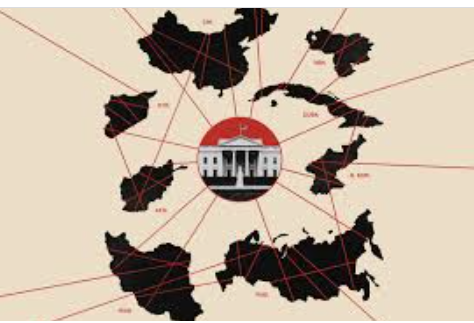
WASHINGTON, D.C. / STOCKHOLM—The United States has sharply escalated its pressure on Turkey, imposing new punitive sanctions on a cluster of Turkish companies. The move, centered on allegations that these firms assisted sanctioned Iranian entities in procuring sensitive dual-use goods and technologies, delivers a clear and potent warning to President Recep Tayyip Erdoğan’s government: Washington will no longer tolerate the use of Turkey as a primary hub for sanctions evasion.
The action, spearheaded by the US Department of Commerce’s Bureau of Industry and Security (BIS), added nine Turkish companies to its notorious Entity List. Announced on October 9, 2025, the designation represents one of the most comprehensive single enforcement actions ever taken against Turkish firms by the US government.
Anatomy of an Evasion Network
Beyond the technical language of the legal filing, the blacklisting reveals an intricate web of covert supply routes used to funnel banned Western technology into Iran. US authorities assert that these newly sanctioned Turkish entities functioned as middlemen, brokers, or front companies, diverting controlled items—many of which are related to aviation spares, dual-use machinery, and advanced industrial technologies—directly into Iranian hands.
The decision to add these companies to the Entity List immediately imposes a blanket ban on all US exports, re-exports, or in-country transfers to the designated firms. Any transaction involving US goods or technology now requires a special license, which the Commerce Department has signaled will be denied by default. The BIS notice explicitly cites each company’s “involvement in diversion of US-origin items to Iran.” For these businesses, the designations are immediate and severe, cutting them off from major portions of the global high-tech and aviation supply chain.
Aviation and Defense: The Core Concern
The most sensitive components of the newly sanctioned network involve the supply of aviation parts, a clear reflection of the US’s long-running concern that Turkey serves as a convenient logistical bridge for Iran’s military and aerospace complex.
Among the named firms are Atadoruk Havacilik Savunma Sanayi Ticaret Limited Sirketi (Atadoruk Aviation) and TGB Aviation.
- Atadoruk Aviation, based in Ankara, advertises itself as a global supplier of aircraft and helicopter parts, notably highlighting its experience with “US and NATO equipment” on its website. This aggressive marketing, designed to build credibility within the defense ecosystem, now stands in stark contrast to the allegation that the company was simultaneously facilitating the transfer of restricted American-made components to hostile Iranian end-users.
- TGB Aviation (Tugberk Havacılık İthalat İhracat Ltd. Şti.), based in Istanbul, is accused of having a more specific role: transshipping US-origin aircraft components to intermediaries linked to the Iran Aircraft Manufacturing Industries (HESA). HESA, a state-owned company long blacklisted by the US Treasury, is vital to Iran’s attempts to sustain its aging Western-built aviation fleet and potentially for its military adaptation efforts. BIS claims TGB’s network was essential in helping HESA acquire spare parts needed for maintenance.
Broad Sweep Across Turkish Industry
The remaining seven blacklisted Turkish companies span a wide range of seemingly innocuous commercial sectors, yet they all share the common accusation of acting as essential conduits in Iran-related procurement schemes. They include:
- DBC Makina Sanayi ve Ticaret A.Ş.: A specialized manufacturer and trader of drilling, mining, and industrial machinery. Companies in this sector are perfectly placed to handle high-value components that can be diverted under generic trade codes.
- Business Metal Sanayi ve Dış Ticaret Ltd. Şti.: A metals trader with a minimal online footprint, a classic red flag for diversion networks that often rely on transient trading houses. Corporate filings show the company was founded and is 100% owned by Iranian nationals listing residential addresses in Tehran.
- Erçetin İş Makinaları Yedek Parçaları İnşaat ve Dış Ticaret Ltd. Şti.: A supplier of OEM and aftermarket spare parts for heavy construction machinery. Like DBC Makina, the trade in high-value mechanical components allows for the procurement of controlled items under misdeclared categories.
- Sisdoz Arıtma ve Pompa Teknolojileri A.Ş.: An established supplier of water-treatment and chemical-transfer systems, including dosing pumps. US officials noted the firm diverted equipment classified under export-control categories (such as ECCN 2B350), which can be utilized in chemical or dual-use processing.
- PMR Teknik Makine Ticaret Ltd. Şti.: An industrial and petrochemical trading company also known by the alias “Roziba Inan Co.”, a dual identity cited by BIS that likely aided in obscuring shipment routes.
- UMS Ankara Kalibrasyon Mühendislik Müşavirlik Mümessillik Sanayi ve Ticaret Ltd. Şti.: A technical service provider in the niche field of calibration and metrology. Falsified or proxy-issued calibration certificates can be used to disguise the true origin or destination of sanctioned machinery.
- Yant İnşaat Gıda Turizm Sanayi Dış Ticaret Ltd. Şti.: A multi-sector trading company that, despite a nominal focus on construction and food, engaged in trading activities that saw coatings and surfactants shipped to sanctioned customers in Iran.
A Warning to Ankara
The consolidated list shows a deliberate pattern of enforcement. The targeted entities—brokers and manufacturers dealing in the “dull hardware of modern industry”—are wired into the logistics of hard-to-trace goods. They utilize Turkey’s extensive trade infrastructure, from Ankara’s defense orbit to Istanbul’s bustling industrial estates, to fulfill procurement demands that official channels forbid.
By targeting a diverse range of companies that facilitate these high-value transfers, Washington is sending its clearest signal yet that it views Turkey’s position as a sanctions-evasion transit country as a critical threat to its foreign policy objectives. This action is expected to deepen the friction in the already strained diplomatic relationship between the two NATO allies.
Source: Nordic Monitor