Turkey Prepares Major Crackdown on Investment Fund Manipulation Following Liquidity Turmoil
 hedge funds2
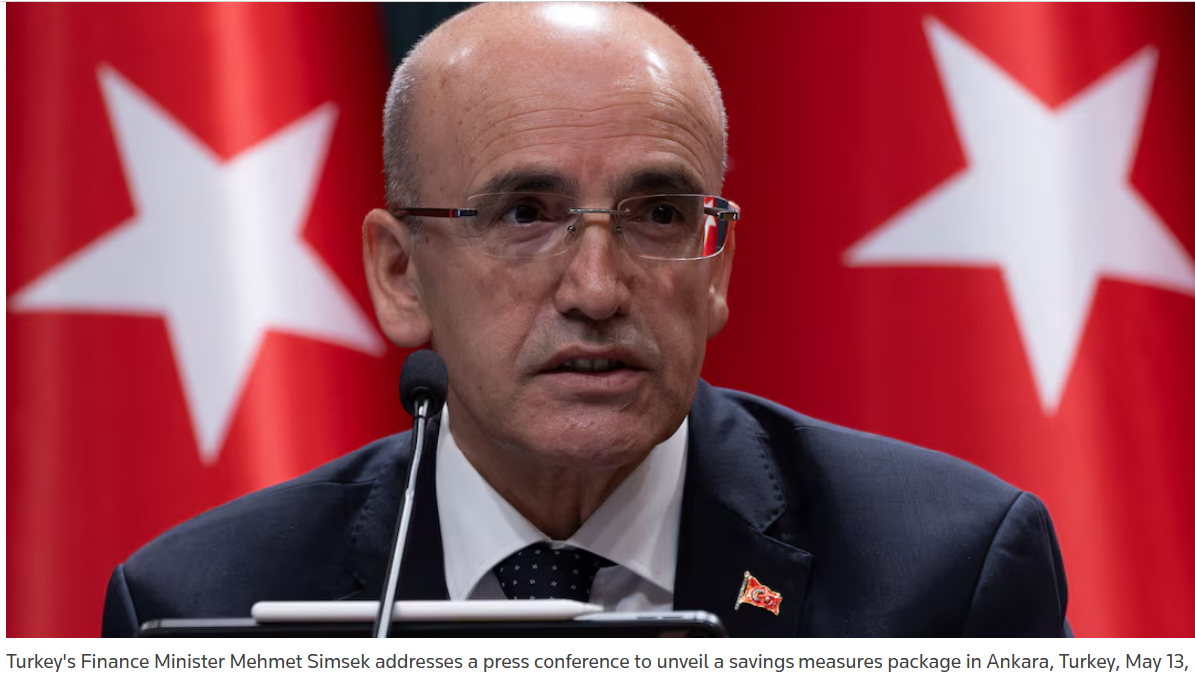
Turkish Finance Minister Mehmet Şimşek has announced a sweeping regulatory overhaul with tougher penalties to combat market manipulation by “certain funds,” a warning that comes just weeks after a severe liquidity crunch rattled the 8.12 trillion lira investment fund market.
Turkey is set to impose tougher penalties and introduce new regulations to combat market manipulation carried out by “certain” investment funds, Finance Minister Mehmet Şimşek announced on Tuesday in a sharp warning to the financial sector.
Speaking at the Turkish Capital Markets Congress in Istanbul, Şimşek signaled that the government is fully aware of the issues plaguing the burgeoning fund market.
“We know these manipulations are being carried out, especially through certain funds, and know there is a lack of regulation in that area. We will address this deficiency,” Şimşek stated, without specifying which funds were under scrutiny.
He emphasized that the fight against manipulation will involve “additional efforts to increase penalties and strengthen the regulatory framework.”
CMB Weighs License Revocation
Following the minister’s remarks, Capital Markets Board (CMB) head Omer Gonul confirmed to reporters that the regulator is actively considering raising manipulation-related fines. Crucially, Gonul noted that one potential new punishment under consideration is the outright cancellation of portfolio management licenses for offending parties.
Authorities have already intensified screening efforts in the past year, leading to the detention of dozens of individuals suspected of causing erratic fluctuations in trading volumes and share prices.
The focus on market integrity comes as years of soaring inflation have driven millions of Turks to seek refuge for their purchasing power in hard currencies, cryptocurrencies, and, increasingly, the domestic stock and fund markets. The collective market value of Turkish investment funds has ballooned to 8.12 trillion lira, a 5,547% increase over the last five years, attracting more than 5.7 million investors.
Nightmare Week and Liquidity Squeeze
The regulatory warnings follow a “nightmare week” for investors, which exposed deep vulnerabilities in the fund system. Intense liquidity pressure recently forced TEFAS (the central fund trading platform) to extend settlement hours and Takasbank (the clearing institution) to increase market collateral requirements.
The turmoil has led to increased investor anxiety, exacerbated by growing reports on social media of delayed payments to investors who had redeemed their fund shares.
According to a seasoned fund manager speaking to EKONOMİ, the crisis highlights a failure of proactive supervision. The expert argued that regulators tend to only intervene after market-disrupting transactions have occurred, suggesting that consistent, diligent audits during normal times would prevent such issues.
The Manipulation Loophole Explained
The high returns achieved by certain free funds (serbest fonlar)—which are typically closed to general public scrutiny—are often generated through sophisticated, arguably manipulative, tactics:
- Market Cornering: A free fund uses its capital to acquire a majority of the outstanding shares’ liquidity in a specific stock, effectively drying up the market and allowing the fund to move the stock price at will.
- Profit Transfer: To realize profits without directly flooding the market, the free fund transfers the now-inflated stock to its affiliated, publicly traded TEFAS funds. This mechanism allows the free fund to secure high gains and ensures continuous inflows into the public fund, which appears artificially successful.
The expert also pointed to the T+2 settlement rule loophole, where a fund, informed of a large incoming cash inflow two days prior, can purchase large volumes of a chosen stock before the cash physically arrives. Since the fund’s yield is calculated on the day of the purchase (T-day), the fund records a significant profit (e.g., a 10% daily gain) on capital it technically hasn’t yet received.
Immediate Causes of Delayed Payments
The recent payment delays experienced by investors selling their funds were primarily linked to the operational impact of police and administrative action taken against executives at Allbatross Yatırım.
According to two experienced fund managers, the operations triggered large withdrawals from the institution and its affiliates, creating an immediate liquidity problem in their fixed-income and bond funds. Since these bond funds were illiquid and could not easily sell their assets to meet redemptions, they were forced to borrow, eventually leading to a liquidity spiral that temporarily halted settlement through the TEFAS pool, impacting seemingly unrelated funds.
Regulatory Path Forward
Experts are urging the CMB to deepen communication with market operators who understand the technical details of these trades. While Şimşek’s call for new regulations is timely, one expert cautioned against blanket restrictions on serbest fonlar, suggesting that simply increasing the “qualified investor” limit and enhancing scrutiny of these funds’ transactions would be a more effective path to preventing abuse without stifling legitimate high-risk strategies.
Related articles

Turkish automobiles: Mostly a domestic story in 2023
Turkey’s Economic Renewal: Şimşek Outlines the Nation’s Path to Stability and Growth
Pro-Government Daily Yeni Şafak Turns Against High Interest Rates