Pro-Government Daily Yeni Şafak Turns Against High Interest Rates
 erdogan
On the eve of Türkiye’s new Central Bank interest rate decision, one of the government’s most loyal media outlets, Yeni Şafak, broke ranks with the administration’s current economic direction — running a front-page headline that read: “We Can’t Hold On Any Longer.” The headline, published just before the highly anticipated policy announcement, directly echoed the growing frustration of Türkiye’s business sector over persistently high interest rates and tightening credit conditions.
Yeni Şafak’s Rebellion Against Its Own Camp
For months, the newspaper — known for its staunch support of President Recep Tayyip Erdoğan — has repeatedly criticized Finance Minister Mehmet Şimşek, the architect of Türkiye’s post-election economic stabilization program. Appointed in 2023 to restore market confidence after years of unorthodox monetary policies, Şimşek has faced mounting internal pressure from pro-government circles demanding looser financial conditions.
Yeni Şafak’s latest cover story marks another chapter in this ongoing tension. The paper openly declared that businesses have reached their breaking point, arguing that high borrowing costs are suffocating investment and stalling growth. “The business world wants interest rate cuts and easier access to credit — we no longer have the strength to endure,” the headline declared.
Business Leaders Call for Aggressive Rate Cuts
Yeni Şafak’s report compiled reactions from major business associations representing the conservative industrial and export sectors — many of whom have long aligned with the government’s economic vision but are now urging a shift toward rate relief.
-
Burhan Özdemir, President of MÜSİAD (Independent Industrialists’ and Businessmen’s Association), called for a measured rate cut of 100 to 150 basis points, arguing that such a move would “revive investment sentiment and support production.”
-
Mustafa Gültepe, head of the Turkish Exporters Assembly (TİM), urged the Central Bank of Türkiye to act “more boldly” in reducing interest rates, emphasizing that exporters are struggling to secure affordable financing.
-
Yaşar Doğan, President of TÜMSİAD, emphasized that maintaining macroeconomic balance while supporting domestic production is critical, and that interest-free financial instruments should be more widely adopted.
-
Orhan Aydın, leader of ASKON, went even further, calling for at least a 200-basis-point cut, citing severe strain on small and medium-sized enterprises (SMEs).
The convergence of these voices in a government-aligned publication suggests that political patience with tight monetary policy may be wearing thin, despite official rhetoric defending the disinflation path led by Şimşek and the Central Bank.
Şimşek’s Uphill Battle Against Inflation and Expectations
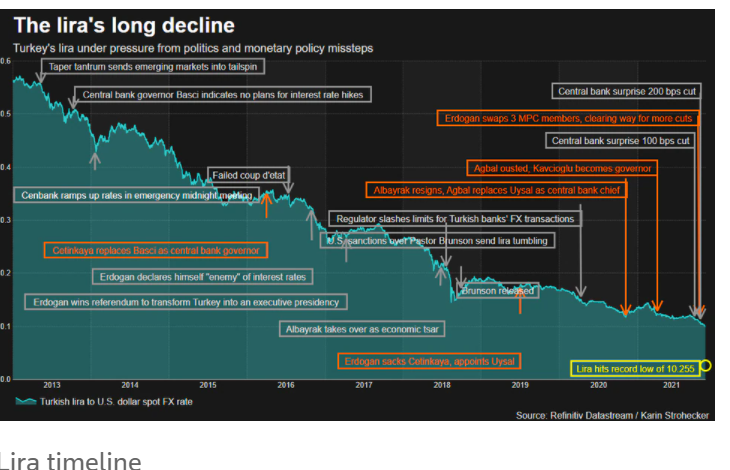
Since taking office, Mehmet Şimşek has tried to stabilize the Turkish lira, rebuild foreign investor confidence, and combat inflation — which remains among the highest in the OECD. His policies of fiscal discipline, public sector austerity, and gradual interest rate normalization were praised internationally but met with resistance at home, especially from business lobbies struggling under credit constraints.
Despite launching a public spending savings package to curb government waste and redirect funds toward productive sectors, Şimşek has failed to meet growth expectations, and inflation remains stubbornly high. The Ministry’s reliance on tax hikes and elevated interest rates to plug fiscal gaps has fueled discontent among both businesses and consumers.
Yeni Şafak has repeatedly targeted Şimşek in its editorials, portraying him as too orthodox and detached from the real economy, in contrast to Erdoğan’s earlier “low interest–high growth” doctrine. This latest headline, however, represents one of the sharpest public rebukes yet, coming from within the government’s own media ecosystem.
The Political Undercurrent
The dispute highlights a deepening rift between Türkiye’s technocratic economic team and the ideological core of Erdoğan’s political base, which continues to favor low-interest policies under the belief that they stimulate production and employment. With public discontent over inflation rising and businesses demanding relief, the Central Bank’s upcoming decision could become a political test for the government’s unity on economic strategy.
Yeni Şafak’s timing is also telling: publishing such a headline just one day before the rate decision amplifies pressure on the Central Bank to at least signal a policy shift or introduce credit-easing measures to placate the business community.
The Broader Implication
While Şimşek’s policy framework has earned credibility among international investors, it now faces its toughest domestic challenge yet — from the very institutions that once celebrated Erdoğan’s unconventional stance against high interest rates.
If Yeni Şafak’s headline captures a broader sentiment within Türkiye’s pro-government elite, the message is clear: patience with painful monetary discipline is running out. The next interest rate announcement may determine whether Şimşek’s reform agenda can withstand mounting political and economic pressure — or if Türkiye’s economic course will once again pivot toward populist, growth-at-any-cost policies.