Güldem Atabay: The Codes of Turkey’s New Political Era
 guldem atabay
Summary:
A new phase is unfolding in Turkish politics: a strategic reset with Germany, a quietly revived peace initiative packaged as “Terror-Free Turkey,” and intensifying internal power struggles within the ruling bloc. With the 2026 constitutional agenda on the horizon, every actor — Erdoğan, the opposition, and even international partners — is recalibrating.
From “Privileged Partnership” to “Strategic Partnership”: Berlin Calculates, Ankara Leverages
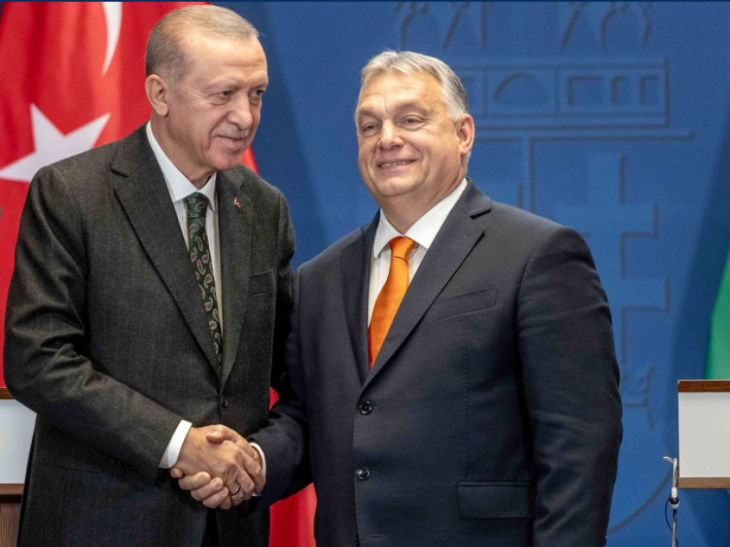
The meeting between German Chancellor Friedrich Merz and President Recep Tayyip Erdoğan in Ankara was polite, cautious, and tactical. It served two functions: an introductory handshake and a test of intentions. On the surface, both leaders projected constructive language; beneath it, each side evaluated how much strategic gain could be extracted.
Merz avoided offering explicit encouragement regarding Turkey’s stalled EU membership process. Instead, he opted for warm — but measured — diplomacy. Erdoğan, in contrast, quickly embraced the term “strategic partnership,” recognizing how it could strengthen Turkey’s bargaining position with Europe while avoiding the losing debate of full EU membership.
The agenda was a mix of old and new:
-
Security and defense industry cooperation
-
Migration management
-
Economic cooperation
-
The EU–Turkey relationship
Germany now views Turkey less as a liability and more as a strategic partner — particularly in defense cooperation and supply-chain diversification. Merz described Turkey as having “immense economic potential,” a remark that acknowledges the post-pandemic reshuffling of production networks and Europe’s renewed interest in Turkey’s manufacturing capacity.
Not EU membership — but functional cooperation
The concept of “strategic partnership” resembles the old Merkel-era formula of “privileged partnership,” but with a new geopolitical twist:
→ Turkey is no longer seen as a deficient EU candidate, but as an essential partner in security and migration.
Merz’s message was clear:
“We are open to cooperation, but democratic reforms are your responsibility.”
Erdoğan responded by reframing the relationship not as a democratic reform path toward EU accession, but as a businesslike negotiation table where Turkey sits as a “regional power.”
No binding agreements emerged from the visit, yet several mechanisms were reactivated:
-
A Strategic Dialogue between foreign ministries
-
A High-Level Economic Forum
-
Technical talks on migration and security
The EU membership file, however, remains closed. Merz’s reminder — “The road to the EU goes through the Copenhagen criteria” — underscored that neither side is prepared to take political risks on democracy or rule-of-law benchmarks.
In short, the visit did not bring a “spring thaw,” but launched a cautious normalization driven by shared interests.
“Terror-Free Turkey”: The Constitutional Road to Political Redesign
Presidential advisor Mehmet Uçum’s recent statements reveal a fundamental shift: Turkey’s security-focused approach to the Kurdish issue is morphing into a political transition project — without publicly calling it a “peace process.”
Uçum openly signaled that the parliamentary “National Solidarity, Brotherhood and Democracy Commission” is expected to hear from Abdullah Öcalan on İmralı. Combined with Erdoğan’s recent comment describing talks with İmralı as “positive and hopeful,” Ankara is preparing opinion for a new stage.
Unlike the 2013–2015 peace process, the framing this time is not “peace,” but “terror-free Turkey.”
This terminology signals three things:
-
The state wants full control of the process.
-
The political concessions will be embedded within constitutional reforms, not open negotiation.
-
Erdoğan intends to link the process to his own political continuity.
Uçum’s key sentence encapsulates this shift:
“Terror-Free Turkey is not an end — it is a beginning.”
Two strategic objectives stand out:
-
Erdoğan’s political future and the new constitution are intertwined.
“Democracy reform packages” are tied to constitutional change — a platform that could justify Erdoğan running again. -
Democratic reforms will appear institutional, not negotiated.
Rather than bargaining with political actors, change will be filtered through committee reports and constitutional language.
DEM Party’s demand — “If the PKK laid down arms, democratic steps must follow” — is acknowledged only indirectly. The state is signaling institutional reform, not a political bargain.
Ultimately, Uçum’s message is not “the peace process is over” but
→ “it will resume in another form, under our control.”
Succession Games, MHP Turbulence, and New Axis Possibilities
Beyond foreign policy and constitutional strategy, Ankara’s political arena is in flux.
Journalist Serdar Akınan recently claimed that:
-
A succession plan is being structured around Bilal Erdoğan,
-
Using the government-funded TÜGVA youth network to place loyalists into key bureaucratic posts,
-
Potential rival candidates — especially Ekrem İmamoğlu — are being “neutralized.”
Rumors multiply because the internal balance of the governing alliance is shifting.
MHP friction intensifies
Devlet Bahçeli’s absence from Erdoğan’s October 29 event triggered speculation that he is unhappy with moves toward a more familial, personalized ruling model. Bahçeli prefers a bureaucratic-authoritarian system similar to Russia’s, not a family-centered model like Azerbaijan’s.
Cyprus adds another dispute:
Bahçeli floated annexation of Northern Cyprus; Erdoğan offered no support.
Meanwhile, U.S. media reports suggest the Trump administration may offer Ankara a Cyprus deal involving:
-
Withdrawal of Turkish troops,
-
Enhanced defense cooperation,
-
Energy and trade incentives.
This would be a geopolitical bombshell — and could sideline Bahçeli.
New parliamentary alignments?
Whispers in the political backrooms include:
-
A potential CHP–İYİ Party–MHP parliamentary front against the AKP,
-
Ali Babacan positioning DEVA as a future substitute for MHP within the coalition.
Most of these scenarios sound like conspiracy theories — yet their mere existence shows how unstable the system has become.
Turkey is heading toward a high-stakes 2026 constitutional showdown.
Every actor is recalculating for life after Erdoğan — or with Erdoğan, via a new constitutional mandate.