Ali Babacan’s U-Turn: DEVA Leader Seeks Return to AK Party After Opposition Failure
 babacan simsek
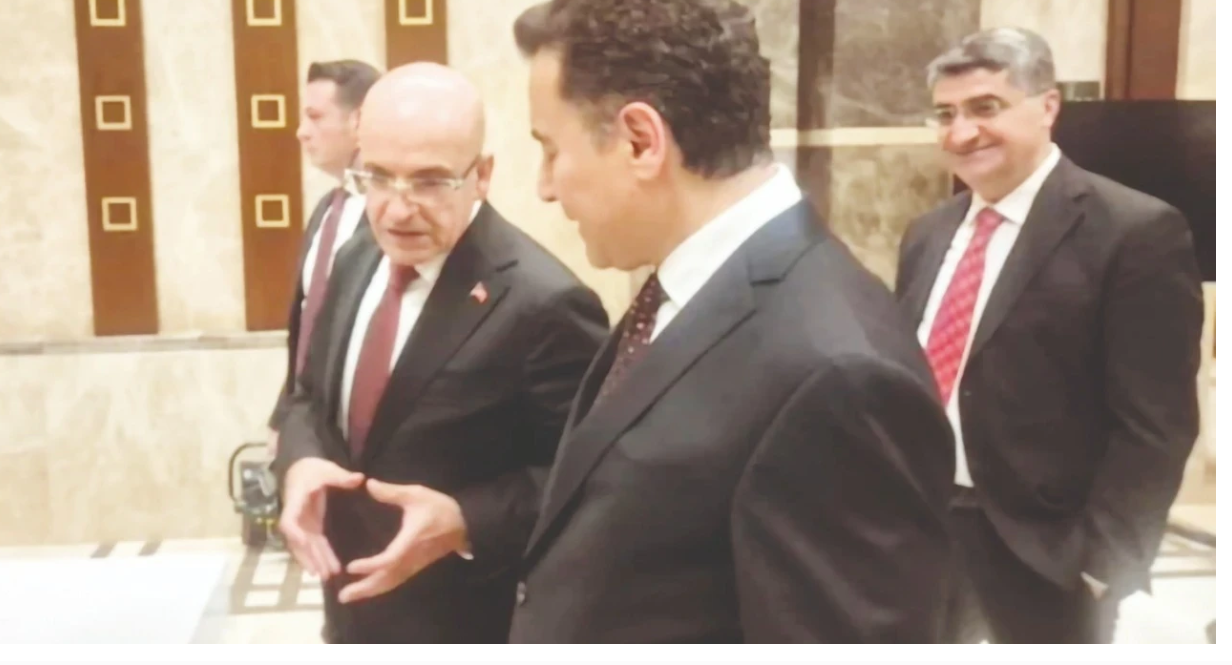
Former Deputy PM Ali Babacan, who left the AK Party citing “different principles,” is now reportedly exploring a political rapprochement with the ruling party. His pivot follows the DEVA Party’s failure to gain traction in opposition and recent candid photos with Finance Minister Mehmet Şimşek.
Ankara Buzz: Is Babacan Preparing a Comeback to the AK Party?
Questions about DEVA Party leader Ali Babacan—specifically, “Is he joining the AK Party?” or “Will he replace Mehmet Şimşek as the Economy Chief?”—have dominated the political discussion in Ankara recently.
Babacan, one of the founding technocrats of the AK Party until his departure in 2019, established the Democracy and Atılım (DEVA) Party in March 2020. However, after failing to make a significant impact in the political arena, sources suggest he has begun to shift his focus back toward the ruling party.
While Babacan dismissed the rumors by saying, “Gossip is cheap,” the underlying narrative is fueled by his cautious approach to opposition, which has consistently avoided closing the door on the AK Party.
A 13-Year Cabinet Veteran
As one of the 73 founders of the AK Party, Ali Babacan became the State Minister responsible for the economy in 2002 at the age of 35. He went on to serve as Foreign Minister and Deputy Prime Minister, holding a ministerial seat continuously for 13 years.
One controversial episode early in his career occurred in 2003: before addressing the Turkish Grand National Assembly, Babacan traveled to the US and reportedly requested $8 billion from then-US President George W. Bush in exchange for permission to deploy US troops in Turkey, a story that widely covered by the press at the time.
Opposition Politics: A Means to an End
Babacan leveraged the 2023 elections by joining the Six-Party Table (the main opposition alliance led by the CHP). He openly expressed his presidential ambitions, saying, “If the Six-Party Table agrees on my name, of course, I will be easily elected and will manage [the country] in the best way.”
During the meetings, Babacan maintained a careful political language towards the AK Party, neither taking a hard line nor taking political risks. Despite internal friction within the CHP alliance—with some local organizations resigning, complaining that “Babacan is at the table, but absent in the field”—the strategy paid off. DEVA secured the largest share of the opposition alliance’s gains, with 15 parliamentarians entering the assembly via the CHP lists.
DEVA’s Cracks Deepen After Election Win
Following the general elections, the internal strength of DEVA was quickly tested:
- Parliamentary Loss: Seven of DEVA’s 15 MPs left the party for various reasons.
- Local Transfers: A significant portion of resignations in provincial and district administrations resulted in members joining the AK Party, prompting questions about DEVA’s future viability.
The speculation surrounding Babacan intensified after recent photos emerged showing him in a friendly discussion with Treasury and Finance Minister Mehmet Şimşek at the Presidential Palace’s Republic Day reception.
In response to questions about a potential AK Party invitation, the DEVA Party issued a non-committal statement, emphasizing that Babacan’s party does not hold a “categorical stance against any party,” noting their prior cooperation with many parties, including the CHP.
However, on the question of whether Babacan would return, DEVA added that they have seen no sign or will for change in President Erdoğan or the party’s leadership regarding the core principles from which Babacan broke away. These open-ended statements have only intensified the speculation surrounding his loyalty and future moves.
Looking Ahead: Election Calculations and Local Defeat
With the next general elections due no later than 2028, the ruling AK Party is actively engaged in dialogue with opposition parties, including the pro-Kurdish DEM Party, on topics like a new Constitution and the “A Peaceful Turkey” initiative. In this environment, the warm messages being sent to the AK Party by both DEVA and the Future Party (Gelecek Partisi) are particularly noteworthy.
DEVA’s limited political success was underscored by the March 31, 2024, local elections, where the party secured only 0.43% of the provincial council vote. With 187,966 votes, DEVA managed to secure just one district municipality and three town municipalities.