Türkiye Prepares New Maritime Claims Law as Eastern Mediterranean Tensions Rise
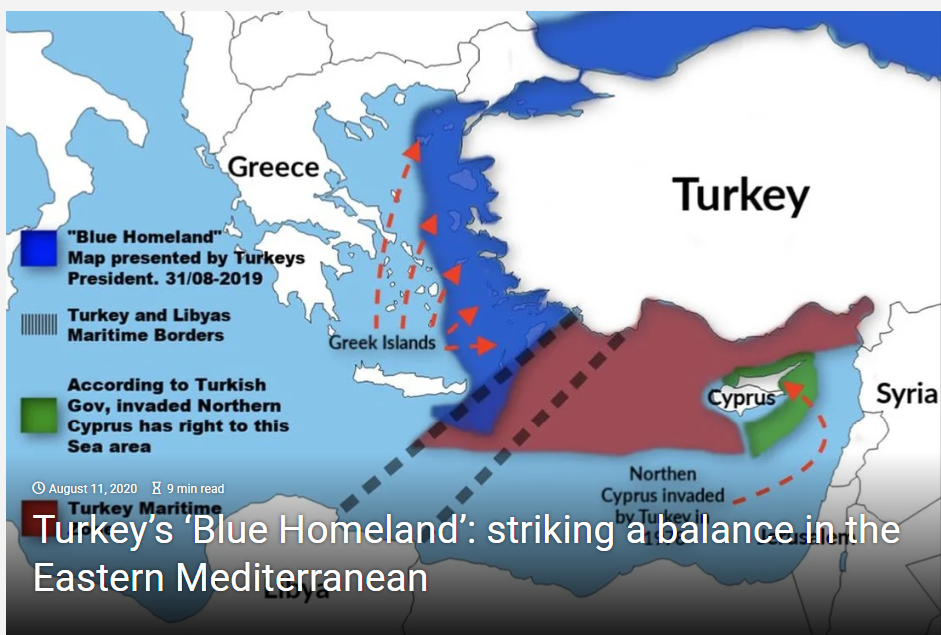 blue homeland
Bloomberg says Ankara plans legislation to formalize disputed maritime zones
Türkiye is preparing legislation that would formally assert its maritime jurisdiction claims in disputed parts of the Aegean Sea and Eastern Mediterranean, according to a report by Bloomberg cited widely in Turkish media on Friday.
The proposed bill, expected to be submitted to parliament in the coming period, would mark the first formal legislative effort to consolidate Ankara’s claims over strategically important maritime areas believed to contain significant offshore natural gas reserves.
The move risks reigniting long-standing tensions between Türkiye, Greece, Cyprus, and other regional actors over Exclusive Economic Zones (EEZs), energy exploration rights, and maritime sovereignty.
Eastern Mediterranean energy competition returns to center stage
At the heart of the dispute are overlapping EEZ claims involving Türkiye, Greece, the Republic of Cyprus, and Egypt. Libya also remains indirectly involved because of the controversial 2019 maritime memorandum signed between Ankara and Libya’s former Government of National Accord led by Fayez al-Sarraj.
That agreement established a maritime corridor between Turkish and Libyan coastlines, a move fiercely opposed by Greece, Cyprus, and Egypt. Athens argues that the deal ignores the maritime rights of Greek islands such as Crete and Rhodes.
Despite international criticism, Ankara continues to regard the Türkiye-Libya maritime accord as a legitimate legal basis for future offshore energy exploration in the Eastern Mediterranean.
The issue has gained additional importance because of intensifying competition over natural gas resources in the region. In recent years, Greece, Cyprus, Israel, and Egypt have expanded energy cooperation through projects backed by international energy companies including ExxonMobil, Chevron, and Eni.
Türkiye, however, argues that some exploration licenses granted by Athens and Nicosia overlap with Turkish maritime claims or with areas Ankara says belong to the Turkish Republic of Northern Cyprus, recognized only by Türkiye.
Israeli Media Claims Hamas Operatives Are Training in Türkiye for Future Attacks
Legislation aims to formalize EEZ boundaries
According to Bloomberg’s report, the legislation would seek to codify Türkiye’s claimed EEZ and continental shelf boundaries under domestic law.
Turkish officials reportedly see the bill as part of a broader strategy to reinforce “energy sovereignty” and protect access to future hydrocarbon resources in contested waters.
The legislation is expected to focus particularly on disputed maritime zones near the Greek island of Kastellorizo as well as waters south of Crete and Cyprus.
Türkiye maintains that islands should not automatically generate full continental shelf rights — a position that differs sharply from interpretations based on the United Nations Convention on the Law of the Sea (UNCLOS), which Türkiye has not signed.
Bahçeli signals tougher nationalist stance
The report comes shortly after Devlet Bahçeli, leader of the Nationalist Movement Party (MHP) and a key ally of President Recep Tayyip Erdoğan, warned parliament that any moves ignoring Türkiye’s maritime rights would receive a “firm response.”
Bahçeli’s comments were interpreted by analysts as a sign of growing nationalist pressure inside Ankara to take a harder line on Eastern Mediterranean disputes.
US Envoy Barrack Praises Türkiye–Armenia Steps Toward Reopening Railway
Greece and Cyprus react sharply
The reported legislation has already triggered criticism from Athens and Nicosia.
Greek officials reportedly described the proposed law as an “illegal attempt to change geography,” while Cyprus reiterated its support for international maritime law and existing EEZ agreements.
The European Union has previously threatened sanctions against Türkiye over unauthorized drilling activity in contested waters.
Diplomatic tensions between NATO allies Türkiye and Greece escalated sharply in 2020 after competing naval deployments and exploration missions in the Eastern Mediterranean brought the two countries close to confrontation.
Washington urges restraint
According to reports, the United States has encouraged both Türkiye and Greece to maintain dialogue and avoid actions that could trigger another naval standoff.
Washington remains concerned that unilateral legislative moves or expanded drilling activity could destabilize the region further at a time of already heightened geopolitical tensions in the Middle East.
Türkiye expands offshore energy ambitions
The latest move also reflects Ankara’s broader push to expand its offshore energy capabilities.
Earlier this year, Türkiye deployed its newest drilling vessel, the Çağrı Bey, to Somali waters in what became the country’s first major offshore drilling operation outside Turkish territory.
Analysts say the proposed maritime legislation signals that Ankara may now be preparing to bring a more assertive exploration strategy back to the Eastern Mediterranean.
While no official draft of the legislation has yet been released publicly, the proposal is already being viewed as a potentially major development for regional energy politics, maritime law disputes, and NATO dynamics in the Eastern Mediterranean.
Bloomberg, PATurkey newsdesk
PA Turkey intends to inform Turkey watchers with diverse views and opinions. Articles in our website may not necessarily represent the view of our editorial board or count as endorsement.
Follow our English language YouTube videos @ REAL TURKEY: https://www.youtube.com/channel/UCKpFJB4GFiNkhmpVZQ_d9Rg
And content at Twitter: @AtillaEng
Facebook: Real Turkey Channel: https://www.facebook.com/realturkeychannel/
Related articles

Istanbul mayor should be dismissed if ‘terror ties’ of municipal personnel proven, says Bahçeli
Erdogan Frames Cultural Change as Threat to Family, Targets LGBTQ+ Movements
Controversy Over Dismissal of Lieutenants for Atatürk Chant Sparks Debate in Turkey