Iran War Fallout Spreads: Emerging Markets Face Mounting Economic Strain
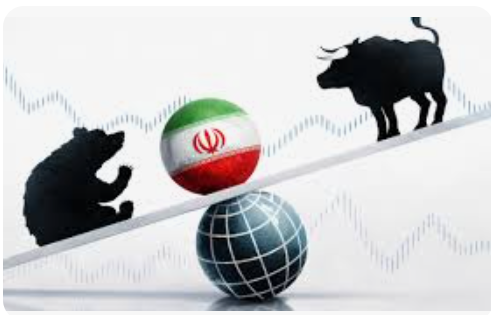 gelisen piyasalar iran
Two months into the Iran war, economic pressure is spreading well beyond the Middle East. Emerging and developing economies are grappling with rising inflation, tighter financial conditions, fiscal stress, and disrupted trade flows as the energy shock ripples through the global system.
Middle East Takes the Direct Hit
The most immediate impact has been felt across the Middle East, particularly following disruptions in the Strait of Hormuz.
In Qatar:
- Exports dropped by more than 90%
- The country recorded its first-ever trade deficit ($1.2 billion)
- Economic contraction is expected to reach around 9%
The International Monetary Fund has already revised down growth forecasts for emerging and developing economies to 3.9% from 4.2%, warning that the full economic impact has yet to materialize.
IMF Managing Director Kristalina Georgieva cautioned that the worst effects may still lie ahead.
How Disinformation and Geopolitical Friction are Pushing Turkey and Israel to the Brink
Asia Highly Exposed to Energy Disruption
Emerging Asian economies are particularly vulnerable due to their reliance on energy imports:
- More than 50% of crude oil imports
- Over one-third of natural gas imports
traditionally pass through the Strait of Hormuz.
At the same time, energy exporters have benefited from rising prices:
- Currencies in countries like Brazil and Kazakhstan have strengthened significantly
- Emerging market equities have rebounded, supported in part by tech-heavy markets such as South Korea and Taiwan
Central Banks Turn More Hawkish
The surge in energy costs has pushed inflation higher, limiting central banks’ ability to ease monetary policy.
Recent developments include:
- Rate hikes in the Philippines
- A more hawkish stance in Türkiye, Poland, Hungary, the Czech Republic, India, and South Africa
Markets are increasingly pricing in tighter monetary policy across emerging economies over the coming months.
According to analysts, rising inflation and risk aversion are likely to push bond yields higher and tighten financial conditions further.
Fiscal Pressure Builds as Subsidy Costs Rise
Governments across emerging markets are facing growing fiscal strain as they attempt to shield households from rising energy prices.
IMF estimates show:
- Global fossil fuel subsidies reached $725 billion in 2024
- Equivalent to about 6% of global GDP
A large share of these subsidies is concentrated in the Middle East, North Africa, and parts of Europe and Central Asia.
Analysts warn that:
- Price caps
- Tax cuts
- Expanded subsidies
could significantly widen budget deficits if energy prices remain elevated.
Fragile Economies Face Renewed Risks
Several lower-income and previously crisis-hit economies are particularly vulnerable.
Egypt
- Rising food and fuel costs
- Risk of declining tourism revenues
- Currency depreciation increasing debt servicing costs
Sri Lanka
- Reintroduced fuel subsidies
- Seeking flexibility in IMF financing arrangements
Pakistan
- Foreign exchange reserves remain critically low
- Coverage of imports below three months
Sub-Saharan Africa Under Dual Pressure
Countries in Sub-Saharan Africa are facing a combination of high energy import dependence and already strained public finances.
This creates a particularly challenging environment:
- Rising oil prices increase fiscal pressure
- Limited financial buffers reduce policy flexibility
The IMF estimates that the crisis could require $20 billion to $50 billion in additional emergency support for vulnerable economies.
Outlook: A Broadening Global Shock
The Iran war is no longer a localized geopolitical event but a global economic shock.
For emerging markets, the consequences are becoming increasingly clear:
- Inflation is rising
- Monetary policy is tightening
- Fiscal balances are deteriorating
- External financing conditions are worsening
If energy prices remain elevated and disruptions persist, analysts warn that the economic strain across emerging markets could intensify further in the months ahead.
Source: Reuters, PATurkey newsdesk