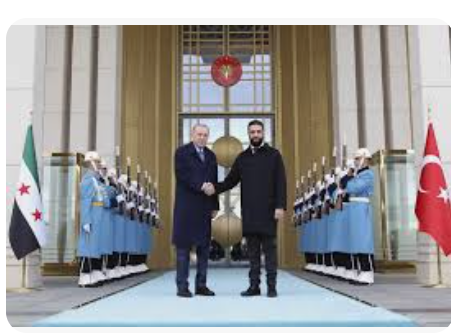
Turkey’s Fidan Says EU Lacks Political Will to Admit Ankara Even If Conditions Are Met
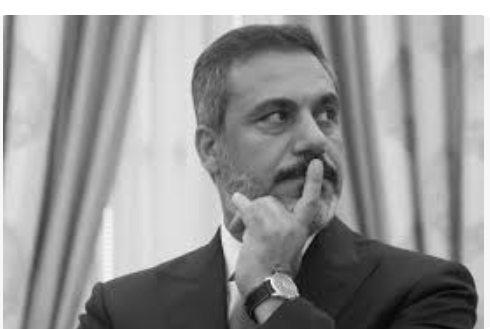 hakan fidan
Turkish Foreign Minister Hakan Fidan said the European Union lacks the political will to accept Türkiye as a member even if Ankara fulfills accession criteria. Speaking in Austria alongside Foreign Minister Beate Meinl-Reisinger, Fidan called for pragmatic steps in EU-Türkiye relations, including modernization of the Customs Union and visa liberalization, while emphasizing Türkiye’s growing strategic role in European security, energy connectivity, migration management and regional diplomacy.
Fidan: EU Accession Blocked by Political Will, Not Technical Criteria
Turkish Foreign Minister Hakan Fidan said the European Union does not currently have the political will to accept Türkiye as a member, even if accession requirements are fulfilled.
Speaking at a joint press conference with Austrian Foreign Minister Beate Meinl-Reisinger during his visit to Austria, Fidan said Türkiye has never demanded membership without meeting the necessary conditions.
“If you are going to join an organization, there are conditions. Those conditions are placed before you, and when you comply with them, you join,” Fidan said.
But he argued that the problem lies elsewhere.
“There is no political will in the European Union saying, ‘When the conditions are met, we accept Türkiye’s EU membership,’” he said.
Fidan said this political will was effectively “killed” in 2007 by former French President Nicolas Sarkozy, reversing the approach previously supported by German Chancellor Gerhard Schröder and French President Jacques Chirac.
According to Fidan, before technical chapters can be opened or closed in a meaningful accession process, the EU must first declare a genuine political commitment to Türkiye’s membership perspective.
Türkiye Still Committed to EU Path, but Structural Problems Persist
Fidan reiterated that Türkiye’s official policy toward EU membership has not changed.
He said President Recep Tayyip Erdoğan and the Turkish government remain committed to the country’s long-standing EU accession objective.
However, he also said that both Europe’s internal conditions and broader regional developments have exposed structural problems in the membership process.
Despite this, Fidan argued that practical steps should still be taken to advance the relationship.
He pointed to two priority areas:
- Updating the Customs Union
- Achieving visa liberalization for Turkish citizens
Fidan also said Türkiye should be included in European initiatives aimed at strengthening the EU’s competitiveness, including “Made in EU”-type programs.
He argued that Türkiye’s inclusion would improve the effectiveness and resilience of European supply chains.
Customs Union Could Double Bilateral Trade
Fidan said Türkiye and the EU already have a trade volume approaching $250 billion, with a relatively balanced structure and no major deficit problem on either side.
He argued that updating the Customs Union could significantly expand this figure.
According to Fidan, calculations suggest that bilateral trade could rise from around $250 billion to $500 billion if the Customs Union were modernized.
He said both sides understand the economic benefits, but the EU has been unable to take the necessary political step.
“EU bureaucrats also tell us this is in both sides’ interest,” Fidan said. “But somewhere there is a blockage of will.”
EU Decision-Making Faces Internal Constraints
Fidan criticized the EU’s decision-making system, saying one member state can block decisions that serve the broader interests of hundreds of millions of people.
He said 26 out of 27 countries may support a move, but the opposition of a much smaller country can still prevent action.
“The future of 500 million people in Türkiye and the European Union can be held hostage by one country,” he said.
Fidan argued that this problem affects not only Türkiye’s membership process, but also pragmatic cooperation in areas such as:
- European security
- Critical infrastructure
- Commercial competitiveness
- Digital integration
- Defense cooperation
He said Europe needs to resolve these internal constraints, while Türkiye will continue pursuing a realistic policy of maintaining strong relations with Europe.
Strategic Crises Force Türkiye and Europe to Work Together
Fidan said regional and global developments are compelling Türkiye and the EU to cooperate regardless of the formal state of accession talks.
He listed several areas where cooperation is becoming unavoidable:
- The Russia-Ukraine war
- The Middle East crisis
- The Strait of Hormuz disruption
- Stability in the Balkans
- Trade resilience
- Defense industry cooperation
- NATO coordination
- European security architecture
He said Türkiye and Europe together represent a population of around 500 million people, creating major strategic and economic weight.
“Geostrategic developments are forcing us to work together, regardless of the nature of Türkiye-EU relations,” Fidan said.
Austria Visit Focuses on Trade, Migration and Security
Fidan said his talks in Austria covered a wide range of bilateral and regional issues.
He noted that he and Meinl-Reisinger have met several times over the past six months and have maintained regular phone contact.
The agenda included:
- Trade
- Investment
- Irregular migration
- Counterterrorism
- Consular issues
- Regional security
Fidan said bilateral trade between Türkiye and Austria is around $5 billion, and both governments are looking for ways to increase it.
He said the two sides are examining how to structure cooperation more effectively and support business communities in both countries.
Turkish Community in Austria Highlighted
Fidan also described the Turkish community in Austria as one of the most dynamic elements of relations between the two countries.
He said Ankara values the contributions of Turkish citizens and people of Turkish origin to Austria’s political, economic, social and cultural life.
He also thanked the Austrian government for its approach to the Turkish community.
Migration and Syria Discussed
Fidan said irregular migration was another major topic in the talks.
He argued that Türkiye has gained significant experience in managing migration, both by hosting refugees and by cooperating with partners to manage migration flows.
The situation of Syrian migrants was discussed in connection with developments inside Syria.
Fidan said Syria’s policies over the past year have contributed to stability and are important for both migration management and regional peace.
He said Ankara and Vienna exchanged views on how Syria’s stabilization could influence the future of migration flows.
Fidan Urges International Pressure on Israel Over Gaza
Fidan also addressed the situation in Gaza, saying Türkiye and Austria discussed the implementation of the Gaza peace plan.
He said it is important that the plan proceed in line with its written terms and that all parties make the necessary efforts.
Fidan argued that Israel’s reluctance and violations must be restrained for the process to move to a second phase.
He called on the international community, mediators and all actors involved in the peace process to take necessary measures.
Fidan said Israel’s policies in Gaza and the West Bank do not serve the region or Europe.
He warned that continued instability creates more risks for energy security, migration and regional order.
Referring to Lebanon, Fidan said one million people had been displaced as a result of Israeli occupation, warning that further escalation could produce new migration waves.
“Israel needs to be placed under more qualified international pressure,” he said.
Russia-Ukraine War and Mediation Efforts
Fidan said the talks also covered the Russia-Ukraine war and possible paths toward peace.
He said Türkiye has consistently worked to help stop the war and has hosted negotiations between Russia and Ukraine at various levels since 2022.
He added that Ankara strongly supports mediation efforts led by the United States and will continue to do its part.
Türkiye has positioned itself as one of the few NATO members able to maintain channels with both Kyiv and Moscow, while also supporting Ukraine’s territorial integrity.
Iran-US Talks and the Strait of Hormuz
Fidan also discussed ongoing negotiations between Iran and the United States, saying Türkiye is working to help bring them to a successful conclusion.
He said the crisis must end quickly and that the disruption in the Strait of Hormuz must be resolved.
The blockage has affected energy prices, energy supply and the delivery of food and goods to regional countries, he said.
Fidan argued that the crisis has once again shown the importance of alternative connectivity routes.
He also referred to talks that began in Islamabad, saying Türkiye is in contact with the parties and is providing support to help resolve the Iran dispute.
Asked whether a political solution is possible, Fidan said the coming days are critical.
He said extending the ceasefire is important and that some issues may require additional time beyond the initial two-week period.
Fidan said both sides appear willing to continue talks, partly due to pressure from the international community.
He added that Iran and the United States must act with the intention of reaching a permanent ceasefire and peace, as well as reopening the Strait of Hormuz.
Three Seas Initiative and Connectivity
Fidan said Türkiye and Austria also discussed connectivity, including the Trans-Caspian East-West Middle Corridor and the Three Seas Initiative.
Türkiye recently joined the Three Seas Initiative, which focuses on infrastructure, energy and connectivity across Europe.
Fidan said Ankara and Vienna exchanged views on how Europe and Asia can be connected more effectively and how energy security corridors can be developed.
He said Austria and Türkiye have major potential for cooperation, especially in energy.
Austria has strong international energy companies, while Türkiye is becoming both a transit route and an energy hub.
Fidan pointed to Türkiye’s large LNG terminals, saying they could play a greater role in European energy security.
Türkiye’s European Policy: Bilateral Ties Strong, EU Track Blocked
Fidan said Türkiye is working to improve relations with Europe in every field.
He pointed to the strategic partnership framework document recently signed with the United Kingdom as an example of deepening ties with European countries.
He said Türkiye’s bilateral relations with most European states are strong, particularly in trade, security and defense industry cooperation.
However, he said the picture changes when relations are handled through the EU’s institutional framework.
Fidan said diplomats on both sides must work to advance relations despite these constraints.
He warned that in a world where alliances are weakening and conflicts are multiplying, Türkiye and Europe need more solidarity, more trade and more resilience.
Conclusion: Türkiye Presses for Pragmatism as EU Accession Stalls
Fidan’s remarks underline Ankara’s frustration with the stalled EU accession process, but also its interest in maintaining a pragmatic and strategic relationship with Europe.
His message was that Türkiye is not abandoning its European orientation, but believes the EU must recognize Ankara’s strategic importance and overcome internal political blockages.
For Türkiye, the key issues remain Customs Union modernization, visa liberalization, energy cooperation, regional security and inclusion in Europe’s evolving economic and defense architecture.
For the EU, Fidan’s remarks highlight a broader dilemma: how to work with Türkiye on urgent strategic issues while its membership process remains politically frozen.
Source: Ihlas News Agency
Related articles
Bilal Erdoğan Speaks on His Father’s Political Legacy, Fuels Succession Speculation
Turkey’s strategy to cut the Kurdish corridor between Syria and Iraq
Turkey May Launch Operation Against SDF If Integration Deal Fails by December, Syrian President Hints