OPINION: The Endless Cycle of Fiscal Policy: Borrow, Spend, Repeat
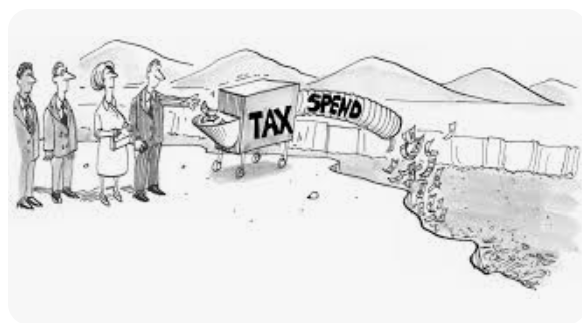 tax spend
By Alaattin Aktas, DUNYA Daily columnist, AI adaptation
In the world of economic commentary, it is rare to find a complex systemic issue that can be distilled into a single sentence. However, the current state of Turkey’s fiscal management offers just such a rare opportunity. If one were to summarize the operational philosophy of the Ministry of Finance today, it would be this: borrow, spend, and pay. This cycle has become the defining characteristic of the nation’s economic machinery, creating a loop that appears increasingly difficult to break.
To understand how this functions, one must look at the internal mechanics of the Ministry of Finance. The Ministry is a vast organism composed of various units with distinct, often conflicting, roles. Some units are tasked with the arduous labor of tax collection. Others are responsible for public spending—and they do so with remarkable vigor. However, because the taxes collected consistently fail to cover the sheer volume of expenditures, a third group of units must step in to secure loans. When those loans mature, yet another group facilitates the payments, only to realize the coffers are empty once more. This triggers a return to the taxpayers for more revenue, but the appetite for spending remains insatiable.
The Reality of the “Debt Rollover”
The Ministry’s primary occupation has shifted from strategic fiscal planning to a perpetual struggle with debt servicing. With the data for the first quarter of 2026 now finalized, a comparison with the last fifteen years of fiscal performance reveals a sobering trend. While the act of paying back debt is constant, the act of borrowing more to cover those payments is growing in scale.
In fiscal terminology, we often look at the “classical debt rollover ratio”—the total borrowing divided by total debt service (interest plus principal). In the first quarter of this year, that ratio stood at 81%. On the surface, this looks manageable: for every 100 liras of debt paid, 81 liras were borrowed. However, this classical ratio is deceptive. It masks the true pressure on the budget because interest payments are handled directly through budget appropriations, whereas the principal must be rolled over through new debt.
When we isolate the principal payments to calculate the “real debt rollover ratio,” the picture changes dramatically. In the first quarter of 2026, the real ratio reached 148%. To put it in concrete terms: the government made principal payments totaling 918.4 billion liras, but to do so, it had to borrow a staggering 1.36 trillion liras. This means for every 100 liras of principal debt retired, 148 liras of new debt were taken on.
Türkiye’s Treasury Borrowing Surges to TRY 1.6 Trillion in First Quarter
Why the Gap Persists
The reason for this aggressive borrowing is no secret: the budget is fundamentally out of balance. The gap between revenue and expenditure is widening, driven by either insufficient tax collection, excessive public spending, or, most likely, a combination of both. When the government borrows significantly more than the principal it pays off, it signals that the borrowed funds are being used to finance daily operations and interest, rather than just replacing old debt.
Under these conditions, a reduction in the total debt stock is mathematically impossible. The debt is not just persisting; it is compounding. This creates a “debt trap” where the Ministry of Finance is forced to run faster just to stay in the same place. The mantra of “borrow-spend-pay” becomes a self-fulfilling prophecy.
The Path to Escape
The solution to this fiscal quagmire is well-understood by economists, though it remains a bitter pill for policymakers. To break the cycle, the government must:
-
Broaden the Tax Base: Revenue must be sought from sectors and groups that currently escape the tax net, rather than placing more weight on those already taxed to their limit.
-
Rationalize Spending: A rigorous audit of public expenditures is required to eliminate “unnecessary” costs and reduce the overall spending burden.
-
Lower Interest Costs: Once the budget approaches a state of balance, the need for massive borrowing will subside. Lower demand for credit usually allows the state to borrow at lower interest rates, further easing the fiscal pressure.
On paper, these steps are straightforward. In practice, they are monumental challenges. The difficulty lies in the fact that these are not merely technical economic adjustments; they are fundamental political choices. Changing the way money is spent and who is taxed requires a shift in political priorities that often clashes with short-term electoral goals.
Beyond Currency Fluctuations
Critics often argue that these figures should be viewed through the lens of foreign currency, particularly the US dollar, suggesting that Turkish Lira figures are skewed by inflation. However, the data remains record-breaking even when adjusted for exchange rates. Whether one measures the debt in Liras or Dollars, the core issue remains the same: the imbalance between what is coming in and what is going out.
The focus should not be on the unit of measurement, but on the equilibrium—or lack thereof—between payment and borrowing. As long as the “real rollover ratio” stays well above 100%, the Ministry of Finance will remain trapped in this endless loop of borrowing to pay for the privilege of spending.
Related articles

ANALYSIS: September Inflation Data Challenges TCMB’s Rate Cut Plans
Moody’s Warns Political Tensions Threaten Turkey’s Economic Gains

Turkey’s Wealth Fund Debt Sparks Fresh Transparency Debate