EU Moves to Limit Türkiye’s Role in Future Defence Projects
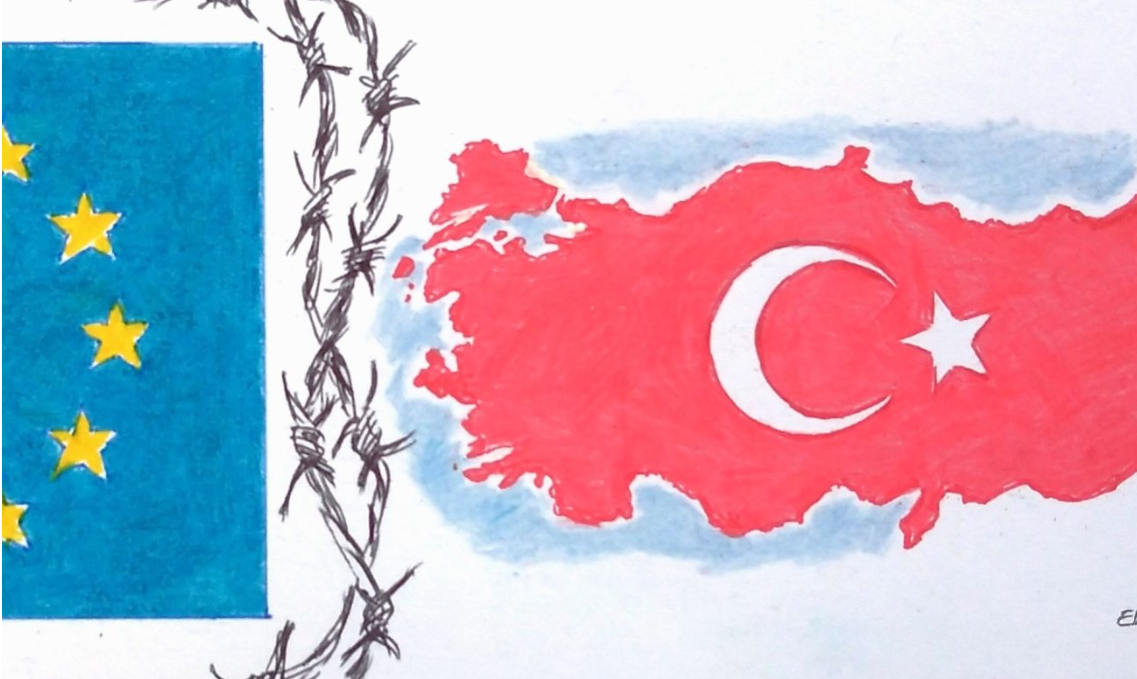 eu turkey out
Editor’s note: This has become a hot topic in X space, compelling PA Turkey to publish numerous articles on the subject. For interested readers, more on EU can be found in our Politics page, just click this link
A key European Parliament committee has voted to restrict Türkiye’s participation in the defence components of the next Horizon Europe programme. While not a final decision, the move signals a deeper strategic divide within the EU over Ankara’s role in Europe’s future security architecture.
Parliament Vote Signals Strategic Shift
The European Parliament’s Security and Defence Committee (SEDE) has taken a notable step toward limiting Türkiye’s role in European defence cooperation. In a vote of 29 to 5, with one abstention, lawmakers backed an amendment excluding Türkiye from defence-related elements of the Horizon Europe programme for 2028–2034.
Despite the strong political signal, the measure does not amount to a full exclusion. Türkiye remains eligible to participate in civilian components of the programme, including research in science, climate, health, digital technologies, and industry. The restriction applies specifically to defence, security, and dual-use technologies.
A Political Message Beyond Technical Scope
The vote highlights a growing divide within Europe over how to position Türkiye:
- One camp views Ankara as a difficult but indispensable strategic partner
- Another sees Türkiye as a country that should be kept out of sensitive security frameworks
This split reflects broader uncertainty about the future of Europe’s defence architecture and its external partnerships.
Defence Policy and Strategic Autonomy
The EU is under increasing pressure to strengthen its own military and industrial capabilities. The war in Ukraine, doubts about long-term US security guarantees, and renewed discussions around “strategic autonomy” are pushing member states to rethink defence cooperation.
In this evolving landscape:
- Research and innovation are becoming tools of geopolitical competition
- Technologies such as AI, drones, cybersecurity, and space systems are now strategic assets
- Participation in such programmes is no longer a technical issue but a political one
This explains why access to Horizon Europe’s defence pillar has become contentious.
Türkiye: Essential but Politically Complex
Türkiye occupies a critical position in European security:
- It has NATO’s second-largest army
- It sits at the crossroads of Europe, the Middle East, and the Black Sea
- Its defence industry has expanded rapidly, offering cost-effective alternatives to European systems
However, political tensions continue to shape EU attitudes:
- Disputes over Cyprus and the Eastern Mediterranean
- Concerns about rule of law
- Frictions over foreign policy under President Recep Tayyip Erdoğan
These issues have led some EU members to push for limiting Türkiye’s role in sensitive areas.
Divisions Within the EU
Member states remain divided on how to approach Türkiye:
More restrictive approach:
- Greece
- Cyprus
- France
- Austria
More pragmatic approach:
- Spain
- Italy
- Germany (to a degree)
This divergence complicates efforts to build a unified European defence strategy.
Not a Final Decision
The SEDE vote is part of a longer legislative process and does not represent a final EU position. Future outcomes will depend on:
- Broader European Parliament negotiations
- Positions of member states
- The European Commission’s stance
- Geopolitical developments
Türkiye has already responded by emphasizing that it has not been excluded from the programme as a whole, but acknowledges the political implications of the move.
A Broader Structural Issue
The dispute over Horizon Europe reflects a deeper structural tension:
- Türkiye seeks recognition as a strategic partner
- The EU prefers selective cooperation while maintaining political leverage
This creates a transactional relationship, particularly since the 2015 migration deal, which has proven insufficient in defence cooperation.
The Core Paradox
Europe faces a fundamental contradiction:
- It increasingly needs Türkiye’s military and industrial capabilities
- Yet it hesitates to fully integrate Ankara into its strategic frameworks
This tension raises questions about the viability of Europe’s ambitions for strategic autonomy.
The Horizon Europe debate is less about research funding and more about Europe’s long-term security vision. Whether Türkiye is treated as a partner or kept at arm’s length will shape not only bilateral relations but also the future of European defence.
Sources: Defense 24, Turkish press sources, Grog
Related articles
Germany Pushes Greece to Allow Turkey Into EU’s €150 Billion SAFE Defense Program

Why Türkiye Is Falling Behind on NEET Youth
Turkey, Finland and Sweden agree on further talks on NATO membership