



Report: PKK Expanding Presence in Iran, Building “New Qandil” Base in South Azerbaijan
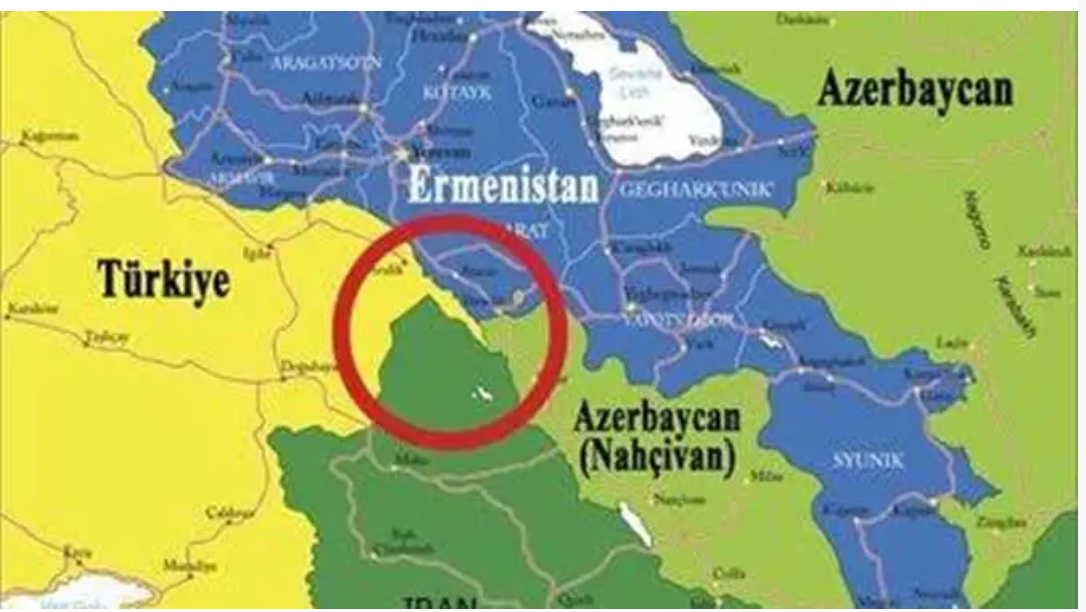 nahcivan harita
A report in Türkiye’s Türkiye Gazette claims that the PKK’s Iranian affiliate, PJAK, is expanding its presence in northwestern Iran and establishing a new operational base similar to the organization’s long-standing headquarters in Iraq’s Qandil Mountains. Security sources cited in the report say more than 2,000 militants have reportedly crossed from Iraq into Iran, raising concerns about regional security and the safety of strategic transport corridors linking Türkiye, Azerbaijan and the wider Turkic world.
Report Claims PKK/PJAK Moving Infrastructure Into Iran
According to the report, the Kurdistan Free Life Party (PJAK)—the Iranian affiliate of the PKK—is shifting part of its organizational structure from northern Iraq into Iranian territory.
Sources speaking from the Iranian city of Urmia said the group has begun transforming a mountainous zone stretching from Maku to Urmia into a new operational corridor.
The area reportedly includes the following locations:
-
Maku
-
Kotur
-
Salmas
-
Urmia
The report claims militants are operating in rocky terrain and cave networks similar to those used by the PKK in Iraq’s Qandil Mountains.
Some estimates cited in the article suggest that more than 2,000 fighters have crossed into Iran from the Iraqi Kurdish city of Sulaymaniyah in recent months.
Strategic Terrain Favors Guerrilla Activity
Security analyst Rıza Araz, speaking from Urmia, said the mountainous geography of northwestern Iran provides an environment well suited for guerrilla-style organizations.
According to Araz, the militants have selected rural areas along the Iranian-Turkish border as potential bases of operation.
“These areas consist of steep mountains and deep cave systems that allow militants to establish protected positions,” he said.
If such positions are consolidated, Araz warned that the security of Türkiye–Azerbaijan–Nakhchivan transit routes could face increased risks.
Türkiye has been battling PKK militants in the Qandil Mountains of northern Iraq for more than three decades, and analysts say the emergence of a similar structure in Iran could complicate regional security dynamics.
Claims of Past Iranian Tolerance Toward PKK Camps
The report also cited an unnamed Iranian security official who suggested that Iranian authorities had previously tolerated PKK-linked activities as part of a strategic calculation related to Türkiye.
According to the official, camps reportedly existed in several areas including:
-
Dambat (Maku region)
-
Silvana (near Urmia)
-
Kotur (near Khoy)
-
Keneresh (Hana–Piranshahr region)
-
Shahidan (Urmia)
The official claimed that Iranian authorities at times turned a blind eye to the presence of militants and that injured fighters had occasionally received medical treatment in local hospitals.
These claims could not be independently verified.
Concerns Over Urban Networks
The report further alleged that PKK/PJAK structures are not limited to rural areas but may also have established networks in urban centers, particularly in Urmia.
According to Araz, militants may have stockpiled weapons and ammunition suitable for urban warfare scenarios, although independent confirmation of such claims remains unavailable.
He also claimed that mountain villages near the Turkish border have become hiding places and logistics hubs for militant groups.
Cooperation With Other Kurdish Organizations
The article states that PJAK may also be coordinating with other Kurdish political and armed groups active in Iran.
Among the groups mentioned were:
-
Iranian Kurdistan Democratic Party (KDPI)
-
Komala
These organizations have historically maintained armed wings operating from bases in northern Iraq.
According to the report, these groups could be dividing operational zones across parts of Iran’s West Azerbaijan province, although details remain unclear.
Strategic Corridor Seen as Vulnerable
Analysts quoted in the report warned that the region’s geography gives it significant strategic importance.
The Dilucu–Sederek border crossing, which links Türkiye with Azerbaijan’s Nakhchivan exclave, lies within a narrow corridor roughly 13 kilometers wide.
This route represents Türkiye’s only direct land connection to Nakhchivan and an important gateway toward the broader Turkic world.
Security experts cited in the report argue that militant activity in nearby mountains could potentially threaten the safety of this corridor.
Potential Impact on Regional Transport Projects
The region also lies close to the planned Zangezur Corridor, a proposed transport route intended to connect Azerbaijan to Nakhchivan through Armenia.
The corridor is viewed by Türkiye and Azerbaijan as a major strategic project linking the South Caucasus with Central Asia.
According to analysts quoted in the report, militant activity in northwestern Iran could complicate the security environment surrounding these infrastructure initiatives.
However, no independent confirmation has been provided regarding the scale or operational status of the alleged militant presence.
Regional Security Concerns Growing
The claims emerge at a time when tensions across the region have been heightened by the ongoing conflict involving Iran.
If confirmed, the establishment of new militant infrastructure in Iran’s northwest could add another layer of complexity to an already volatile geopolitical landscape.
Regional analysts say the situation highlights the importance of border security, intelligence cooperation and regional diplomacy in preventing further escalation.
PA Turkey intends to inform Turkey watchers with diverse views and opinions. Articles in our website may not necessarily represent the view of our editorial board or count as endorsement.
Follow our English YouTube channel (REAL TURKEY):
https://www.youtube.com/channel/UCKpFJB4GFiNkhmpVZQ_d9Rg
Twitter: @AtillaEng