Will Turkish Troops Deploy to Gaza? Trump Pushes International Stabilisation Force as Ankara Prepares Brigade
 baris gucu
U.S. President Donald Trump says an international stabilisation force — coordinated by Washington — will deploy to Gaza “very soon” to implement his post-war plan. Turkey has already begun preparing a military brigade of up to 2,000 soldiers, positioning itself as a key player in Gaza’s security and reconstruction. Israel strongly opposes Turkish boots on the ground, while the United Nations is weighing a resolution that would authorise the force to “use all necessary measures,” including disarming Hamas. Negotiations remain tense, with Ankara insisting the mission must focus on humanitarian assistance and border security rather than military confrontation.
Trump: “A stabilisation force will be on the ground very soon”
U.S. President Donald Trump said this week that he expects an international stabilisation force to deploy to Gaza “very soon,” signaling that the White House is moving ahead with a multi-national security and reconstruction plan for the enclave.
“It’s going to be very soon. And Gaza is working out very well,” Trump said, adding that “very powerful countries” had volunteered to intervene if needed.
The deployment is part of Trump’s 20-point Gaza peace plan, which produced a ceasefire and hostage-release agreement in October. Yet despite the ceasefire, Israeli airstrikes and severe restrictions on humanitarian aid continue, leaving Gaza in a state of humanitarian collapse.
UNSC prepares to debate mandate for two-year transitional administration
Negotiations are underway at the United Nations Security Council over a draft resolution that would:
-
Authorise a stabilisation force of 20,000 troops
-
Allow the mission to “use all necessary measures” to fulfil its mandate
-
Establish a two-year transitional governance authority
-
Protect civilians and secure border crossings
-
Support the training of Palestinian police forces
Secretary-General António Guterres stressed that the force must have “full international legitimacy” and that any deployment must be grounded in Security Council authorisation.
According to diplomats, the draft has been shared with key regional states, including Egypt, Qatar, the UAE, Saudi Arabia and Turkey.
A senior U.S. official told Reuters that Washington expects negotiations to begin immediately.
Turkey positions itself as a lead nation — despite Israeli objections
While the U.S. continues consultations, Ankara is already preparing troops.
According to reporting from Middle East Eye, Turkey is finalising plans to deploy a peacekeeping brigade of around 2,000 soldiers, drawn from units experienced in peacekeeping and conflict zones. Additional personnel from engineering, logistics and explosive ordnance disposal units are expected to join.
Several Turkish officials confirm:
“This will be a coordinated international effort, not a unilateral deployment.”
Turkish participation is central to Trump’s plan, with Ankara expected to assume responsibility for securing large areas of Gaza once Hamas relinquishes control. Turkey’s foreign minister Hakan Fidan has repeatedly said that Ankara is ready to contribute provided the mission has a UN mandate.
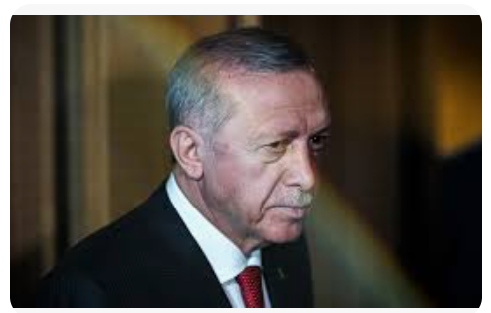
President Recep Tayyip Erdoğan has gone further, signalling that Turkey is prepared to send troops if necessary to enforce the ceasefire and support reconstruction.
Despite Turkey’s involvement in negotiating the truce — and its influence over Hamas — Israel has firmly rejected Turkish involvement. Prime Minister Benjamin Netanyahu and Foreign Minister Gideon Sa’ar have both stated that they will not accept Turkish troops in Gaza.
Israeli government spokesperson Shosh Bedrosian reiterated on Sunday:
“There will be no Turkish boots on the ground.”
A geopolitical clash over who controls post-war Gaza
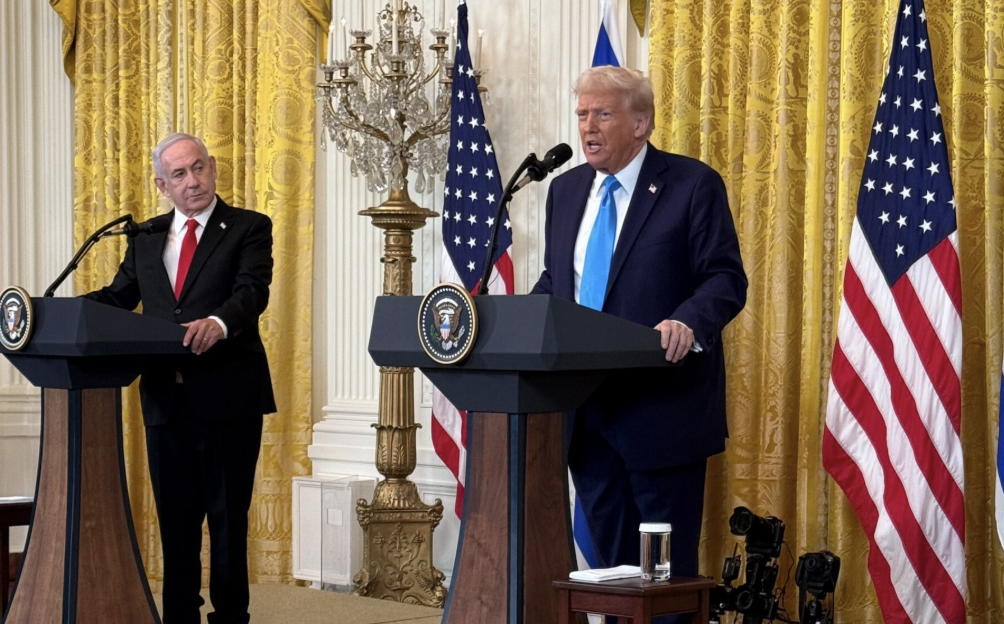
Israel insists it must retain “security responsibility” and maintain a perimeter around Gaza — a position Netanyahu publicly stated during a joint press event with Trump months earlier.
But Trump’s plan proposes a different power structure:
-
Gaza security and border control would be overseen by the international stabilisation force
-
A U.N.-supported transitional administration would manage governance
-
Turkey, along with select partners, would be responsible for reconstruction and police training
This creates a rare alignment between Washington and Ankara, while simultaneously opening a new point of tension between Turkey and Israel.
A Turkish source familiar with negotiations said:
“Israel wants the stabilisation force structured so it can undermine or block decisions whenever it chooses.”
Another issue is the mission’s rules of engagement. Draft documents viewed by MEE show that the proposed UN resolution authorises the force to disarm Hamas “by force if necessary.”
This language alarms Turkey and Egypt, both of which fear being dragged into direct confrontation with Palestinian factions.
Ankara has pushed back, arguing that:
-
The mission should prioritise humanitarian relief and border control
-
Demilitarisation should happen through negotiation, not force
-
No regional army should be used to enforce Israeli security objectives
Turkey quietly facilitates deal on return of Israeli soldier’s remains
Despite rising tensions with Israel, Ankara recently played a discreet role in returning the remains of Israeli soldier Hadar Goldin, killed in Gaza 11 years ago.
Turkish officials say the action demonstrates Hamas’s compliance with the ceasefire and Ankara’s ability to act as a reliable mediator.
At the same time, Turkey is reportedly working on a separate deal to secure safe passage for approximately 200 Hamas fighters trapped in tunnels.
The main question: Are Turkish soldiers actually going to Gaza?
For now, deployment depends on:
-
A UNSC mandate
-
U.S. approval
-
Israeli acquiescence
Turkey has volunteers from over 1,000 soldiers already registered for the mission, contingent on political green light.
Meanwhile, the U.S. Central Command has stated that no American soldiers will deploy to Gaza, despite Trump coordinating the force.
In other words, Washington wants Ankara and regional partners to be the boots on the ground — and Ankara is prepared to accept that responsibility.
But there are still three competing visions:
| Actor | Goal in Gaza |
|---|---|
| Trump | Build international peacekeeping force, demilitarise Hamas |
| Turkey | Humanitarian mission + reconstruction, not forced demilitarisation |
| Israel | Retain full security control, reject Turkish involvement |
The coming UN negotiations will determine which vision prevails.
What’s next?
-
UNSC debates the draft resolution this week
-
Final mandate details expected within two to three weeks
-
Deployment timetable could follow immediately afterward
If approved, the mission would become the most ambitious Middle East peacekeeping operation since the 1990s.
PA Turkey informs Turkey watchers with diverse views and opinions. Articles may not represent the editorial board’s view or constitute endorsement.
Follow our English-language YouTube: REAL TURKEY https://www.youtube.com/channel/UCKpFJB4GFiNkhmpVZQ_d9Rg • Twitter: @AtillaEng • Facebook: Real Turkey Channel.
Related articles
Netanyahu Draws a ‘Red Line’ on Turkish Troops in Gaza as U.S. Sides with Israel
BESA Analysis | The Armed Man on the Bosphorus: Turkey in 2026
Most Turks Oppose Trump’s Gaza Proposal, MetroPOLL Survey Finds