Why Hungary’s April 12 Elections Matter for Türkiye and the Future of Democracy
 rte orban
By Yavuz Baydar
Summary
Hungary’s upcoming elections are being closely watched worldwide as a test of whether entrenched autocratic leaders can be removed through democratic means. For Türkiye, the vote carries deeper significance, offering a mirror to its own political trajectory and raising critical questions about opposition strategy, institutional erosion, and the future of electoral democracy.
A Small Country, A Global Test Case
This Sunday’s elections in Hungary may prove to be a defining moment for global politics. Though Hungary is a relatively small country, the implications extend far beyond its borders.
Across ideological lines—left, right, liberal, and conservative—observers are asking the same fundamental question:
Can leaders who come to power through elections truly be removed through them?
At the center of this question stands Prime Minister Viktor Orbán, who has ruled Hungary for 16 years and reshaped its democratic institutions. Whether he leaves power or consolidates it further will be seen as a critical signal for the future of democratic systems worldwide.
A Mirror for Türkiye
For Türkiye, the Hungarian election is not just a foreign political event—it is a reflection of its own recent political evolution.
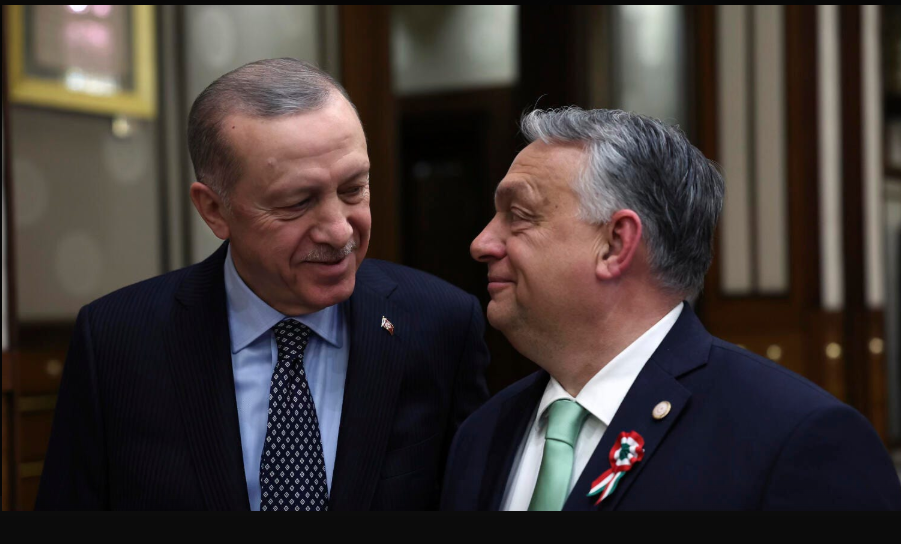
The governance model constructed in Budapest bears striking similarities to the centralized system developed in Ankara over the past decade. Under President Recep Tayyip Erdoğan, Türkiye has seen:
- Increasing centralization of power
- Blurring of state and party structures
- Weakening of checks and balances
- Growing pressure on opposition and media
Orbán, in turn, has closely followed and adapted elements of this model within the European Union.
From Reform to Consolidation of Power
Both Erdoğan and Orbán began their political careers with promises of democratic reform.
In Türkiye, early efforts toward EU accession led to sweeping legislative changes. However, as power became increasingly concentrated, democratic institutions weakened:
- Media independence eroded under pressure
- Judicial systems were reshaped with loyal appointments
- Public resources were redirected toward pro-government business networks
In Hungary, Orbán pursued a more subtle strategy, using state advertising and regulatory pressure to marginalize independent media while strengthening loyal oligarchs.
Different Methods, Same Objective
A key difference between the two leaders lies in how they handle political challengers.
In Türkiye, prominent opposition figures have faced legal pressure and imprisonment. Kurdish leader Selahattin Demirtaş has remained jailed for years despite international rulings, while Istanbul Mayor Ekrem İmamoğlu faces ongoing legal challenges and political restrictions.
In Hungary, Orbán operates within the constraints of EU membership, limiting his ability to use direct judicial repression. Instead, he has relied on indirect mechanisms of control.
A Serious Challenge Emerges
For the first time in years, Orbán faces a credible electoral threat.
Opposition figure Peter Magyar and his Tisza party have surged ahead in polls, reportedly leading by double digits. Some projections suggest the opposition could secure a parliamentary supermajority, opening the door to constitutional reform and democratic restoration.
Magyar’s strategy has differed sharply from past opposition efforts. Rather than engaging in cultural or identity-based conflicts, he has focused relentlessly on:
- Corruption
- Abuse of public resources
- State capture
His background within the system has also insulated him from government propaganda.
Lessons from Past Failures
Both Hungary and Türkiye have seen opposition alliances fail in recent years.
In Hungary (2022) and Türkiye (2023), broad coalitions united diverse parties but struggled with:
- Lack of coherent messaging
- Weak leadership structures
- Overreliance on identity politics
These weaknesses, combined with state resource advantages and media dominance, contributed to electoral defeats.
Global Stakes
Hungary has become a symbol for far-right movements globally.
From the United States to Europe, political actors are closely watching the outcome. Orbán’s survival would reinforce the belief that centralized, illiberal governance models can endure within democratic frameworks.
Conversely, a defeat would challenge the notion of “electoral invincibility” often associated with long-standing leaders.
Recent Signs of Democratic Pushback
There are precedents for democratic recovery:
- In Brazil, Luiz Inácio Lula da Silva defeated Jair Bolsonaro in 2022
- In Poland, Donald Tusk unseated the ruling Law and Justice party in 2023
In both cases, success was driven by:
- Clear political messaging
- Strong leadership
- Active voter engagement
Implications for Türkiye
The Hungarian election raises critical questions for Türkiye’s political future:
- Can the opposition develop a clear, anti-corruption-focused program?
- Is there leadership capable of unifying broad coalitions?
- Will economic issues take precedence over cultural divisions?
- Can electoral security and voter mobilization be strengthened?
Polling in Türkiye suggests that while dissatisfaction exists, political polarization and voter fatigue remain significant barriers to change.
A Defining Moment
Hungary’s election represents more than a national contest—it is a global experiment.
If Orbán loses, it will demonstrate that democratic systems can still correct themselves. If he prevails, it may reinforce skepticism about the effectiveness of elections in removing entrenched power.
For Türkiye, the outcome may not only offer insight—but also urgency.
PA Turkey intends to inform Turkey watchers with diverse views and opinions. Articles in our website may not necessarily represent the view of our editorial board or count as endorsement.
Follow our English YouTube channel (REAL TURKEY):
https://www.youtube.com/channel/UCKpFJB4GFiNkhmpVZQ_d9Rg
Twitter: @AtillaEng
Facebook: Real Turkey Channel: https://www.facebook.com/realturkeychannel/***