US weighs full troop withdrawal from Syria as SDF collapses, signals end of Kurdish force partnership
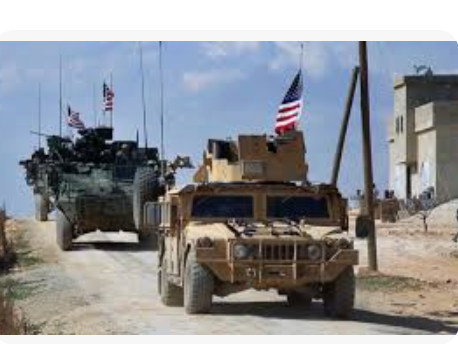 syria us troops
Summary:
The United States is actively considering a complete withdrawal of its remaining military forces from Syria following the rapid collapse of the Syrian Democratic Forces (SDF), Washington’s longtime local partner against ISIS. As Syrian government forces regain control of the northeast and the Trump administration signals an end to military backing for Kurdish-led forces, US officials argue that the original rationale for the deployment has largely expired. The shift could mark a major strategic turning point for Syria, Türkiye, and the wider region.
Pentagon reassesses mission after rapid developments on the ground
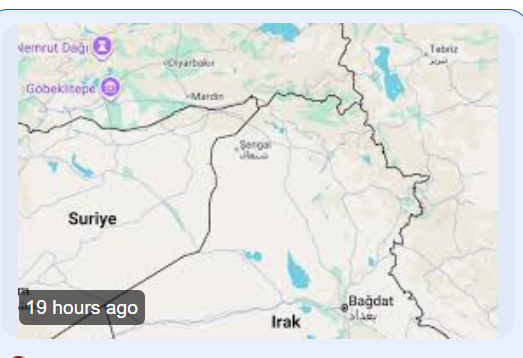
The Pentagon is weighing a full withdrawal of US troops from Syria after what officials describe as “head-spinning” developments on the ground, according to a report citing three unnamed US officials. The reassessment follows the swift disintegration of the Syrian Democratic Forces, whose core component is the Kurdish YPG, as Syrian government troops moved to reclaim large parts of the country’s northeast.
For years, the US military presence in Syria has been anchored in a partnership with the SDF to combat the Islamic State. That arrangement now appears increasingly untenable. With the SDF’s command structure fracturing and its fighters either retreating or negotiating with Damascus, US officials reportedly see little justification for maintaining troops if their local partner force formally disbands.
A Pentagon spokesperson declined to confirm the report, stating only that the Department of Defense does not comment on hypothetical scenarios or future operations. Still, the discussions underscore how quickly Washington’s posture in Syria is shifting.
US troop presence and Trump’s long-standing skepticism
The United States currently maintains around 1,500 troops in Syria, concentrated largely in the northeast. Their mission has focused on counterterrorism operations against ISIS, intelligence gathering, and support for SDF-controlled detention facilities holding thousands of suspected ISIS militants.
President Donald Trump has long questioned the value of this deployment. Shortly after beginning his second term in January last year, Trump said he would “make a determination” on the future of US troops in Syria. Senior officials now suggest that decision point may have arrived, driven by the collapse of the SDF and the re-emergence of a centralized authority in Damascus willing to take responsibility for security.
End of US military support for Syria’s Kurdish forces
In parallel with discussions on troop withdrawal, the Trump administration has effectively signaled an end to US military support for Syria’s Kurdish-led forces. US Special Envoy for Syria Tom Barrack said this week that the original basis for the US-SDF partnership no longer exists.
In a detailed public statement, Barrack argued that the SDF had played a crucial role in defeating ISIS, detaining thousands of militants, and guarding camps such as al-Hol and al-Shaddadi. However, he noted that this partnership was forged at a time when Syria lacked a functioning central government capable of acting as a counterterrorism partner.
“That situation has fundamentally changed,” Barrack said, praising the new Syrian government under President Ahmed al-Sharaa and its willingness to cooperate with the United States and the Global Coalition against ISIS.
Damascus regains control, offers integration to Kurds
Syrian government forces have steadily expanded their presence in the northeast as the SDF’s resistance weakened. President al-Sharaa’s administration has framed this push not only as a military operation, but also as part of a broader political reintegration strategy.
Last week, al-Sharaa signed a decree aimed at safeguarding Kurdish rights within Syria, including protections against ethnic and linguistic discrimination. The decree recognizes Kurdish as a national language and declares Nowruz a national holiday, symbolic steps intended to reassure Kurdish communities after years of conflict.
Al-Sharaa also called on displaced Kurdish Syrians to return to their towns and villages, stating that there would be no preconditions other than laying down their weapons. The message, echoed by US officials, is that Kurds now face a choice between integration into a unified Syrian state or isolation amid shifting regional dynamics.
US urges Kurds to integrate into the Syrian state
Barrack has repeatedly urged Kurdish leaders to seize what he described as a “unique window” to integrate into Syria’s post-Assad political order. He argued that participation in national institutions under al-Sharaa would offer Kurds far more durable rights and security than the de facto autonomy the SDF enjoyed during the chaos of the civil war.
“The opportunities now available are far beyond the semi-autonomy the SDF held amid civil war conditions,” Barrack said, emphasizing that the US has no interest in sustaining a long-term military presence in Syria.
According to US officials, Washington’s priorities are now limited to two objectives: ensuring the security of ISIS detention facilities during the transition and facilitating talks between Damascus and remaining SDF elements.
ISIS detainees and security concerns
One of the most sensitive issues surrounding a potential US withdrawal is the fate of ISIS detainees held in northeastern Syria. A US official said this week that American forces are not directly guarding ISIS prisons, noting that fewer than 200 low-level detainees escaped from al-Shaddadi earlier this week.
Syrian government forces, the official added, quickly recaptured many of those detainees as they moved in to secure the facility. US officials argue that Damascus is now both willing and capable of assuming full responsibility for detention centers and camps, a role Washington previously believed the Assad-era state could not fulfill.
Strategic implications for Türkiye
For Türkiye, the collapse of the SDF and a possible US withdrawal from Syria would mark a major strategic turning point. Ankara has long viewed the YPG—the dominant component of the SDF—as an extension of the PKK, which it designates as a terrorist organization.
A US exit would remove one of the most contentious issues in US-Türkiye relations over the past decade. Turkish officials have consistently argued that American military support for the SDF undermined Türkiye’s national security and destabilized its southern border.
If Damascus can effectively prevent the re-emergence of PKK-linked structures in northeastern Syria, Ankara could see the new landscape as an opportunity for a more stable border and a recalibration of its Syria policy.
A victory for Damascus, a shift in regional balance
From Damascus’s perspective, a US withdrawal would represent a significant strategic victory. Regaining control over the northeast would allow the Syrian government to reassert sovereignty over territory rich in agricultural resources and energy infrastructure.
More broadly, the move would signal the end of a chapter in which US-backed non-state actors played a central role in Syria’s security architecture. Analysts say this could accelerate Syria’s reintegration into regional diplomatic frameworks and reshape the balance of power involving Türkiye, Iran, Russia, and Arab states.
What comes next
While no formal decision has been announced, the convergence of signals—from the Pentagon’s reassessment, to the end of US military backing for the SDF, to Washington’s public praise for Damascus—points toward a major drawdown or full withdrawal in the near term.
Much will depend on how smoothly Syrian government forces assume control of former SDF areas, whether ISIS detainees remain securely contained, and how Kurdish political actors respond to integration offers.
For now, US officials insist that Washington’s role in Syria is nearing its conclusion. As one senior official put it, the original mission “has largely expired,” and the United States is preparing for a post-SDF, post-deployment phase in Syria’s long and turbulent conflict.
Source: Al Arabiya, Wall Street Journal
PA Turkey intends to inform Turkey watchers with diverse views and opinions. Articles on our website may not necessarily represent the view of our editorial board or count as endorsement.
Follow our English YouTube channel (REAL TURKEY):
https://www.youtube.com/channel/UCKpFJB4GFiNkhmpVZQ_d9Rg
Twitter: @AtillaEng
Facebook: Real Turkey Channel: https://www.facebook.com/realturkeychannel/