Pro gov’t commentator: If the SDF Resists, Operations May Shift to East of the Euphrates
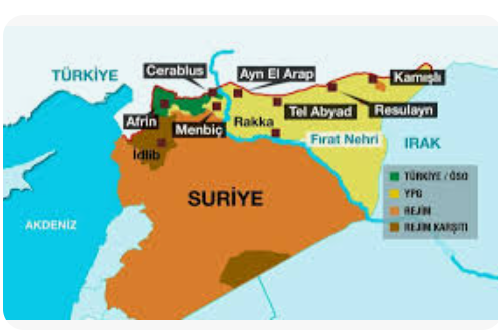 firatın dogusu
Summary:
Turkish columnist Abdulkadir Selvi writes that if the Syrian Democratic Forces (SDF) continue to resist compliance with the March 10 Memorandum, military operations could expand from Aleppo toward areas east of the Euphrates. Selvi argues that the swift operation in Aleppo was intended as a warning, signaling that a broader campaign remains an option if negotiations fail.
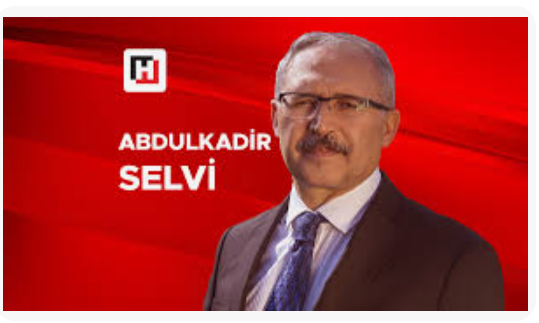
According to Selvi, operations targeting the Syrian Democratic Forces began from Aleppo on January 8 after the group failed to adhere to the March 10 Memorandum. Within 48 hours, the neighborhoods of Ashrafieh and Sheikh Maqsoud were cleared of militants, marking a significant escalation.
Aleppo as the Operational Pivot
Selvi describes Aleppo as the fixed point of a broader strategic arc. Following earlier operations that extended from Aleppo toward Damascus and culminated in the collapse of the Assad regime, the same operational logic is now being applied in reverse. If the SDF continues to resist, Selvi writes, the next phase could involve clearing SDF-held areas east of the Euphrates.
He notes that the SDF was given time to comply with the March 10 Memorandum, but progress stalled due to what he characterizes as maximalist demands.
Clashes and Civilian Evacuations
According to Selvi, beginning January 6, attacks were launched from Ashrafieh and Sheikh Maqsoud—areas allegedly under the influence of the PKK leadership in Kandil—targeting civilians, Christian neighborhoods, hospitals, and public institutions.
In response, authorities issued repeated calls to protect civilians, opening evacuation corridors and urging residents to leave safely before operations began. Despite interruptions caused by gunfire from PKK and YPG elements, Selvi writes that evacuations were largely successful.
The operation in Ashrafieh reportedly began on January 8, with Syrian forces entering the area within eight hours. Selvi claims tunnels and command centers used by militants were uncovered during clearing operations.
Kandil’s Role and Negotiations
Selvi reports that negotiations were conducted to secure a withdrawal from Sheikh Maqsoud without clashes. Although initial reports suggested militants had agreed to evacuate, buses prepared for the transfer were allegedly fired upon.
He claims that while the SDF leadership appeared closer to compromise, the PKK’s Kandil-based command ordered fighters to remain and resist. Even after Sheikh Maqsoud was fully encircled, Selvi writes that instructions from Kandil urged militants to continue fighting.
Message to the SDF
Selvi argues that the rapid takeover of Ashrafieh and Sheikh Maqsoud delivered a clear message: if areas west of the Euphrates could be cleared within 48 hours, similar action could be taken east of the river should the SDF fail to comply with the memorandum.
He writes that Turkey, the United States, and the Syrian government had pursued a negotiated solution for an extended period but that these efforts were repeatedly undermined.
Turkey’s Role and Coordination
According to Selvi, Turkey played a central role in ensuring the operation was conducted with precision and minimal civilian harm. He says Recep Tayyip Erdoğan was kept informed in real time, with coordination among the Foreign Ministry, National Defense Ministry, and intelligence services.
Selvi adds that Turkey’s intelligence chief held talks with U.S. and Syrian officials and conveyed messages to the SDF through appropriate channels, urging withdrawal to avoid further conflict.
Civilian Protection Emphasized
Selvi maintains that extraordinary measures were taken to prevent civilian casualties. Heavy weapons were reportedly avoided in populated areas, and close-quarters operations were conducted instead. He claims no civilians were killed and that care was taken to protect Kurdish residents whom militants allegedly attempted to use as human shields.
He also notes that efforts were made to prevent a mass displacement similar to the 2014 Kobani crisis.
What Comes Next?
Selvi writes that operations east of the Euphrates will not begin immediately. Following the Aleppo operation, the SDF is expected to be given another opportunity to negotiate and comply with the March 10 Memorandum.
If the SDF agrees, Selvi says, further military action may be avoided. However, if resistance continues, he argues that Turkey, the United States, and the Syrian government could jointly support a major operation east of the Euphrates, potentially as early as February. In that scenario, control over oil fields and border crossings could also become part of the equation.
PA Turkey intends to inform Turkey watchers with diverse views and opinions. Articles on our website may not necessarily represent the view of our editorial board or count as endorsement.
Follow our English YouTube channel REAL TURKEY: https://www.youtube.com/channel/UCKpFJB4GFiNkhmpVZQ_d9Rg
Twitter: @AtillaEng
Facebook: Real Turkey Channel: https://www.facebook.com/realturkeychannel/
Related articles
Hannah Lucinda Smith: The Secrets Behind Erdoğan’s Staying Power
Former VP Mike Pence: Religious Freedom Emerges as First Test for Syria’s Transitional Government
OPINION: Al-Sharaa’s Blitzkrieg: Is the Kurdish Entity in Syria Reaching Its End?