Fidan Says No Defense Pact Signed Yet as Turkey Pushes Regional Security Diplomacy
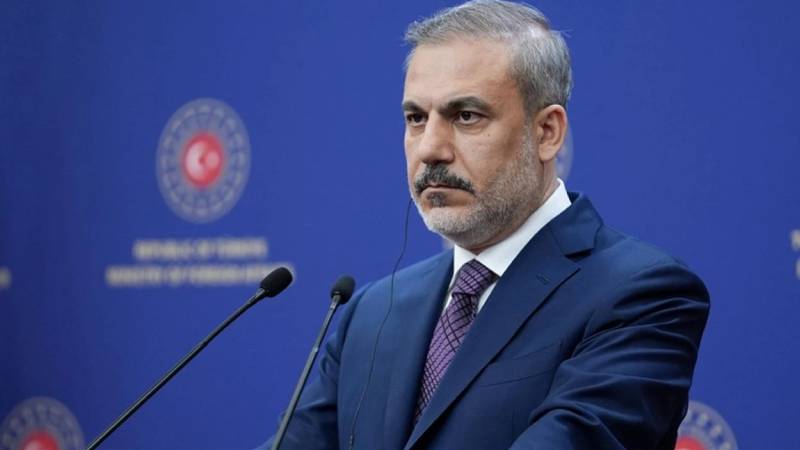 Hakan Fidan
Turkey’s Foreign Minister Hakan Fidan has firmly rejected claims that Ankara has entered into a formal defense pact with Pakistan or other regional partners, stating that while discussions are ongoing, no agreement has been signed. Speaking to journalists on January 15, 2026, Fidan sought to clarify speculation in international media, emphasizing caution, diplomacy, and regional stability as Turkey’s guiding principles.
“At this moment, there are talks and discussions, but we have not signed any agreement,” Fidan said, underlining that dialogue should not be confused with finalized commitments. He added that enhanced regional security cooperation could resolve many existing challenges, but stressed that Turkey is approaching the process deliberately and strategically.
A Global System Under Pressure
Fidan’s remarks extended far beyond defense diplomacy. He offered a broad assessment of the international system in 2025, describing it as being under unprecedented strain. According to him, global governance mechanisms are struggling to cope with overlapping crises, ranging from armed conflicts and economic volatility to rapid technological transformation.
He argued that the erosion of shared rules and norms has reached a critical point, forcing states to rethink their strategic positions. Despite these pressures, Fidan emphasized that diplomacy remains the only sustainable tool for managing conflicts and restoring stability.
Gaza as the Ultimate Stress Test
One of the most forceful parts of Fidan’s briefing focused on Gaza, which he described as the clearest example of the international system’s failure. He stated that the situation in Gaza represents a severe test of global conscience and capacity, asserting that the scale of human suffering has exposed deep flaws in existing governance structures.
Turkey, he said, is working alongside friendly and allied nations to secure a lasting ceasefire and to prepare for Gaza’s reconstruction. These efforts, he noted, reflect Ankara’s belief that humanitarian responsibility and political solutions must advance together.
Humanitarian Aid and Governance in Gaza
Fidan confirmed that the second phase of the Gaza Plan is now underway. A central objective of this phase is the transfer of administrative responsibility to a Palestinian technical committee, which he described as a necessary step toward restoring order and functionality.
He also announced that a Peace Council is expected to begin operating, helping to guide political and reconstruction processes. At the same time, Fidan criticized ongoing restrictions on humanitarian aid, saying Turkey continues to coordinate the delivery of tents and emergency supplies despite logistical obstacles.
Russia–Ukraine War and Europe’s Security Future
Addressing the war in Ukraine, Fidan said the conflict has reshaped debates across transatlantic relations and European security architecture. Turkey, he explained, has maintained open channels with all parties, positioning itself as a diplomatic facilitator rather than an actor escalating tensions.
He reiterated Ankara’s view that prolonged conflict only deepens instability, while dialogue—however complex—remains the only path toward a durable settlement.
Syria: Progress Mixed With Persistent Risks
On Syria, Fidan described recent steps toward international reintegration as cautiously positive. He suggested that normalization efforts could support regional stability, but warned that unresolved issues remain.
In particular, he highlighted the Syrian Democratic Forces (SDF) issue as a continuing source of concern for both Syria and neighboring states. He also confirmed that trilateral talks involving the United States, Syria, and the YPG are ongoing. Turkey, he said, will take all necessary measures to safeguard its sovereign rights, while prioritizing dialogue as the preferred approach.
Iran and the Question of Regional Stability
Fidan said Turkey is closely monitoring developments in Iran, emphasizing Ankara’s role as both a neighbor and a long-standing partner. He noted that Turkey has openly shared its views with Iranian counterparts, particularly regarding the importance of resolving international disputes and avoiding regional escalation.
“Iran resolving its issues through diplomacy and staying away from regional instability is in Turkey’s interest,” he said, reiterating Turkey’s opposition to military intervention and its commitment to diplomatic engagement.
Defense Cooperation: Dialogue Without Commitments
Returning to the issue of defense cooperation, Fidan again stressed that reports of a signed defense pact involving Turkey, Saudi Arabia, and Pakistan are inaccurate. While discussions are taking place, he said, they should be understood as exploratory rather than binding.
These talks, he explained, are part of a broader effort to examine regional security frameworks, not to establish rigid alliances.
Regional Cooperation as a Strategic Vision
Fidan concluded by arguing that regional countries should aim to transform existing economic cooperation mechanisms into broader security platforms. Turkey, he said, has the diplomatic capacity to build balanced alliances that protect national interests while contributing to regional stability.
Related articles
Trump–Sharaa Summit: Breakthrough on SDF Integration and Sanctions Relief Signals New Phase in Syria–US Relations
Turkey condemns US over Syria strategy

Türkiye Claims SDG Is Backed by Israel as Fidan Threatens Military Force